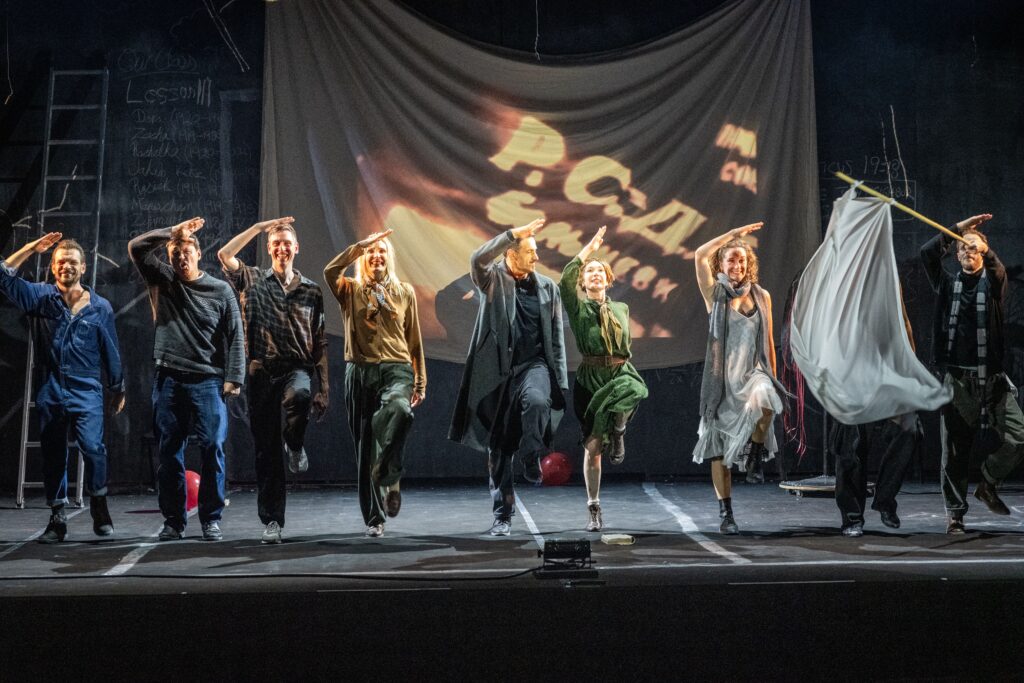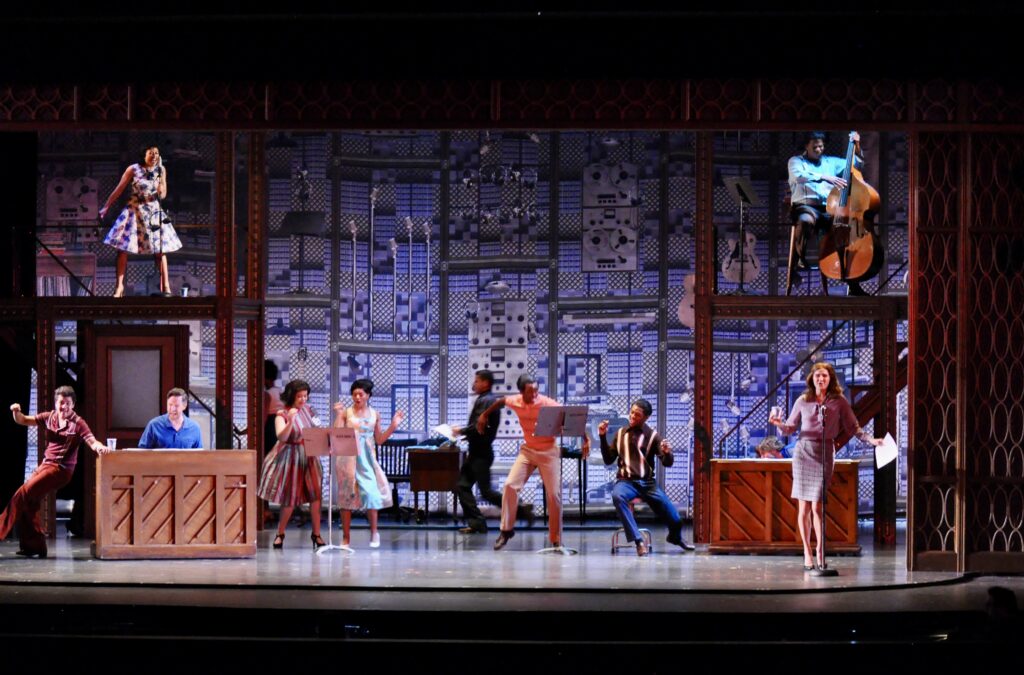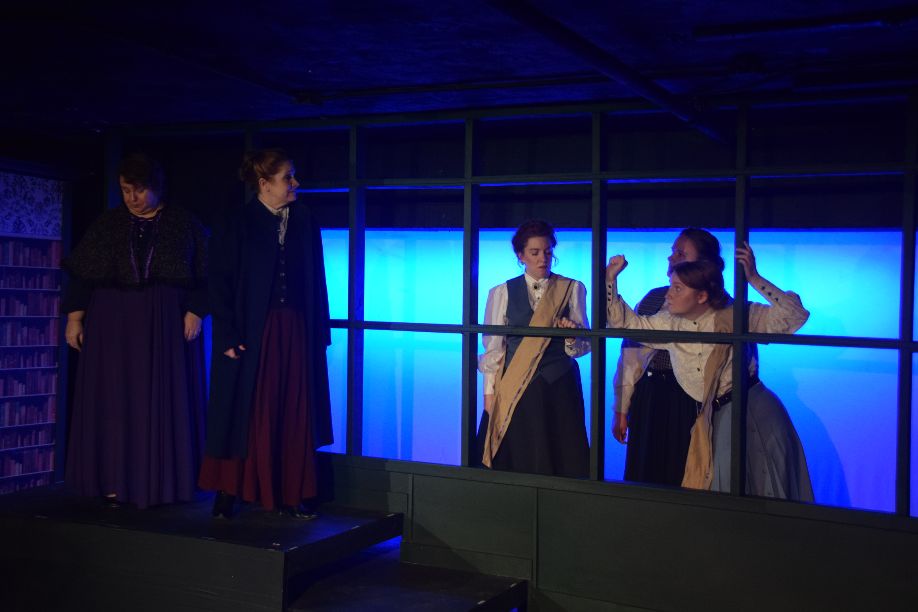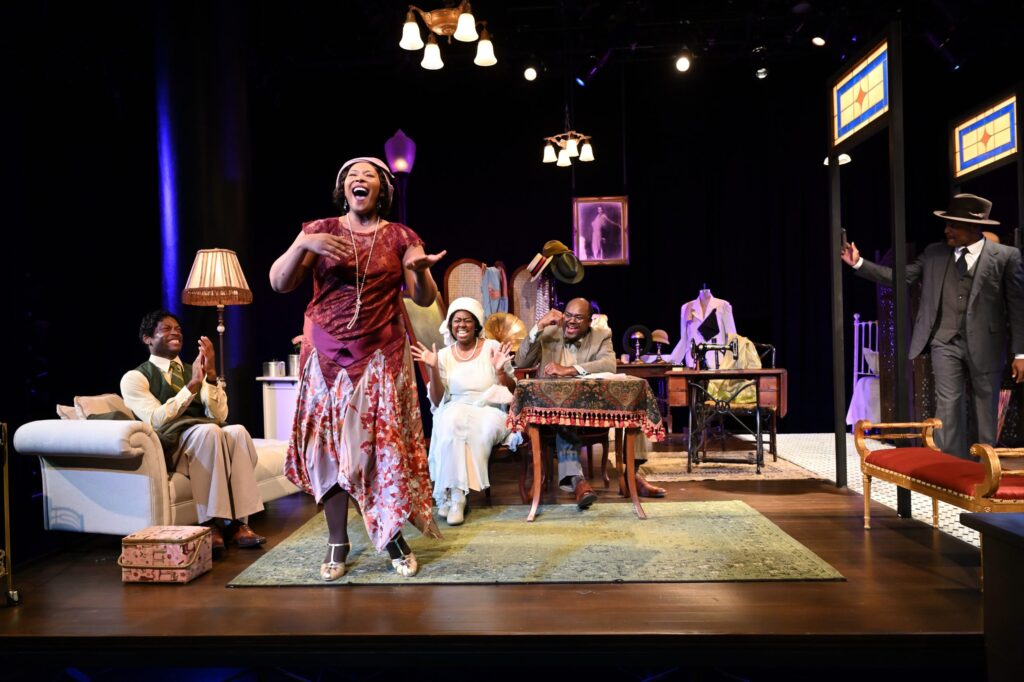
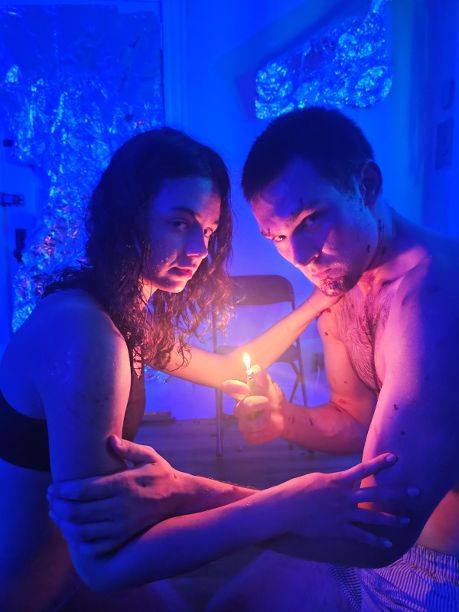
Abhann Productions presents Riverdance 30: The New Generation at the Boch Center Wang Theatre, April 8-13, 2025.
Under the loving and expert guidance of husband-and-wife production team John McColgan and Moya Doherty, a seven-minute dance number at the Eurovision Song Contest 1994 featuring Irish dance champions Jean Butler and Michael Flatley has blossomed into a full production – Riverdance – that opened in Dublin in 1995 to great popular acclaim. The high-stepping, highly successful, hit show has since been performed over 15,000 times in 49 countries and six continents, enchanting and entertaining 30 million audience members worldwide. Riverdance celebrates its 30th year milestone with a special anniversary tour in 35 major cities across the US, including an 8-show run in Boston from April 8 – 13.
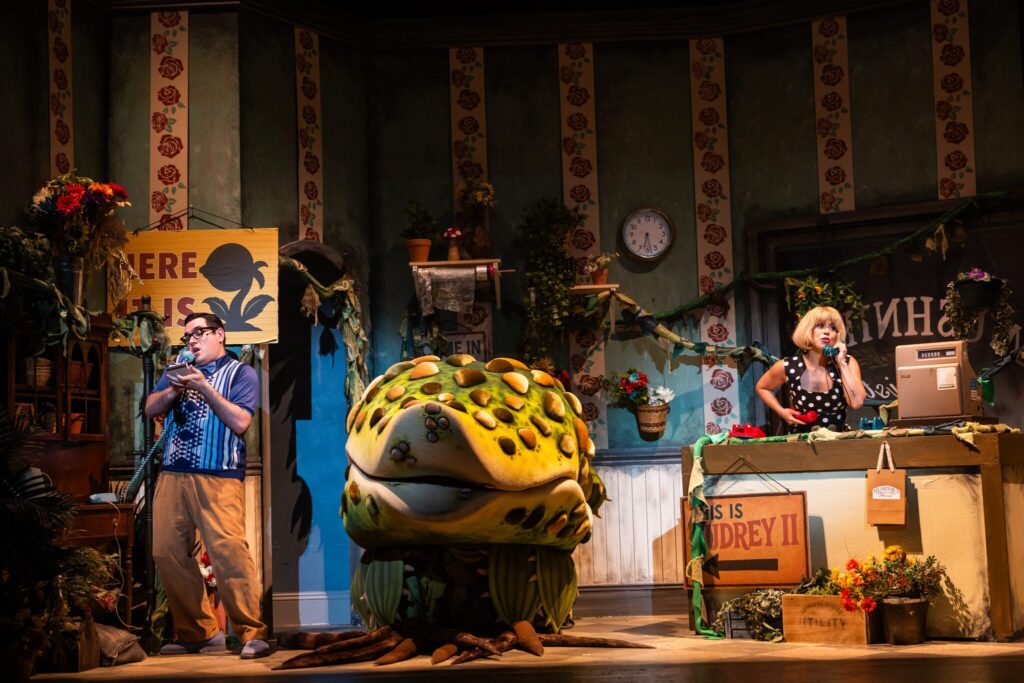
Cast of Broadway in Boston’s‘Shucked’ at Citizens Opera House Photos by Matthew Murphy and Evan Zimmerman
‘Shucked.’ Book by Robert Horn. Music and Lyrics by Brandy Clark and Shane McAnally. Directed by Jack O’Brien; Choreographed by Sarah O’Gleby; Music Supervision by Jason Howland. Presented by Broadway in Boston at Citizens Opera House, 539 Washington St., Boston through April 20.
By Shelley A. Sackett
If ever we were collectively in need of some levity, it’s now. Between the political roller coaster, serious Boston theater topics and frigid spring temperatures, we could all use a light, fun break. As if reading the tea leaves, Broadway in Boston has come to our rescue with its lighthearted, raucous production, Shucked.
Evelyn Howe, Jessica Pimentel, Yesenia Iglesias in The Huntington’s Don’t Eat the Mangos Photos by Marc J. Franklin
‘Don’t Eat the Mangos.’ Written by Ricardo Pérez González. Directed by David Mendizábal. Scenic Design by Tanya Orellana; Costume Design by Zoë Sundra; Lighting Design by Cha See; Sound Design by Jake Rodriguez; Original Music by Jake Rodriguez with Alexandra Buschman-Román and Jason Stamberger. Produced by The Huntington Theatre Company, Calderwood Pavilion, Boston Center for the Arts, 527 Tremont St., Boston, through April 27.
By Shelley A. Sackett
Don’t Eat the Mangos,Ricardo Pérez González’s one-act play, has a lot going for it. Set in 2019 in El Comandante, a neighborhood outside San Juan, Puerto Rico, Tanya Orellana’s bright island set plunks the audience smack into a festive, colorful vibe where curtains are doors and a commanding mango tree dominates the yard. We immediately meet three sisters, as different in personality as in looks, yet clearly cut from the same mold.
Cast of Boston Lyric Opera’s ‘Carousel’. Photo by Nile Scott Studios.
“Rodgers and Hammerstein’s ‘Carousel’”; 80th Anniversary Production. Music by Richard Rodgers. Book and Lyrics by Oscar Hammerstein II. Conducted by David Angus. Directed by Anne Bogart. Presented by Boston Lyric Opera, Emerson Colonial Theatre, 106 Boylston Street, Boston through April 13.
By Michele Markarian
From the moment two stern police officers open the large chain-link gates to reveal a cast of colorfully clad misfit New Englanders at a carnival, it’s obvious that this isn’t going to be a staid rehashing of “Carousel”, the much-beloved and oft-produced musical ultimately immortalized on film with Shirley Jones and Gordon McRae as the mismatched lovers. This “Carousel” sparkles with originality, grit and passion, as well as with the operatic voices and excellent acting and dancing skills of the talented cast. In short, it’s a beautiful pageant of a show that amplifies a very sad yet uplifting story.
Edward Nelson as Billy (center)
Billy Bigelow (Edward Nelson) is a loutish but attractive carnival barker that all the girls pine for. His boss, the widowed Mrs. Mullin (a brooding Sarah Heltzel), has a special claim on Billy, which is threatened when it’s clear a young woman in the crowd more than catches his eye, the feisty Julie (Brandie Sutton). Billy falls for Julie, marries her, and finds himself out of a job. Things go from bad to worse as Billy’s lack of income takes a toll on his fragile self-esteem. The shaky marriage between Billy and Julie is in direct contrast with Julie’s best friend, Carrie (the magnetic Anya Matanovic), and the stable Mr. Snow (Omar Najmi), a practical man with a plan. After learning he is going to be a father, Billy attaches himself to the corrupt Jigger (Markel Reed), gets involved in a robbery gone bad, and, seeing no way out, kills himself. Once dead, Billy is given one last chance to redeem himself to the daughter he’s never met, and to the wife he’s left behind.
Nelson as Billy and Brandie Sutton as Julie
The productions I’ve seen in the past have played up the Good Girl Meets Bad Boy dynamic, but the casting here is richer, more complex. Sutton’s Julie is feisty and outspoken, and her feeling for Billy convincingly comes across as maternal – she sees a wounded boy in the man and wants to make him better. When she sings “What’s the Use of Wond’rin” – a song about loyalty to your lover – to Carrie, she sings it with confidence, not resignation, even though “Common sense may tell you that the ending will be sad”. And Nelson, as Billy, is as wonderful an actor as he is singer, covering up Billy’s wounded vulnerability with anger and toughness. You can see him struggling to make sense of things, unlike the laid back and confident Jigger, who Reed gives a smart and funny edge to, despite his degeneracy.
It’s hard to cover up certain aspects of the script – lines like “He’s unhappy because he ain’t working. That’s why he hit me” are tough to hear. And in spite of his attractiveness, Billy is just so damn dumb! How many rounds of “21” is he going to play with Jigger before he figures out Jigger’s cheating? You could see why Julie feels the need to take care of him – God knows he needs it. And there’s a character onstage in orange coveralls reading a book called “Carousel” who sometimes interacts with the actors, showing them the book. Who was he? Why?
Anya Matanovič (as Carrie) and Brandie Sutton (as Julie)
The gorgeous voices and beautiful staging, though, far surpass any foibles of the script. The spirit of community and the idea that one can be salvaged through love is a powerful message that leaves one feeling refreshed and somehow relieved. If there’s hope for Billy Bigelow, there’s hope for us all. For more information and tickets, go to: https://blo.org/
Jade A. Guerra, Lorraine Victoria Kanyike in Central Square Theater and The Front Porch Arts Collective’s “Her Portmanteau”. Photos by: Maggie Hall Photography
“Her Portmanteau” by Mfoniso Udofia. Directed by Tasia A. Jones. Co-produced by Central Square Theater and The Front Porch Arts Collective, , 450 Massachusetts Avenue, Cambridge, through April 20th.
By Michele Markarian
I was hesitant about seeing this piece, the fourth in a series of nine under the umbrella of the Ufot Family Cycle by Mfoniso Udofia, as I hadn’t seen the other plays, and its length – an hour and forty-five minutes without an intermission – was off-putting. From the very beginning, when Jade A. Guerra, as Iniabasi Ekpeyong walks onto the stage with a suitcase and an air of wariness, I was completely sucked in. An hour and forty-five minutes never went by so quickly, as the rest of the audience and I were pulled into one of the more compelling, well-written, and well-acted family dramas this season.
Cast of GBSC’s ‘The Play That Goes Wrong‘. Photos by Maggie Hall Photography
‘The Play That Goes Wrong’ –Conceived and written by Henry Lewis, Jonathan Sayer, and Henry Shields. Directed by Tyler Rosati; Original Scenic Design by Peter Colao; Scenic Design by Danielle Ibrahim; Lighting Design by Katie Whittemore; Costume Design by E. Rosser; Sound Design by James Cannon. Presented by Greater Boston Stage Company at 395 Main Street, Stoneham through April 19th
By Mike Hoban
One of the beautiful things about live theater, in addition to the communal experience, is that literally anything can happen onstage. Dropped lines, missing props, doors that won’t open, and, sadly, even accidents that injure the actors (as happened with “Spider-Man Turn Off the Dark” in New York). All of these mishaps and more – way more – occur in rapid-fire succession during Greater Boston Stage Company’s (GBSC) riotous production of The Play That Goes Wrong, which also serves as an homage to the “show must go on!” determination of community and fringe theater troupes.
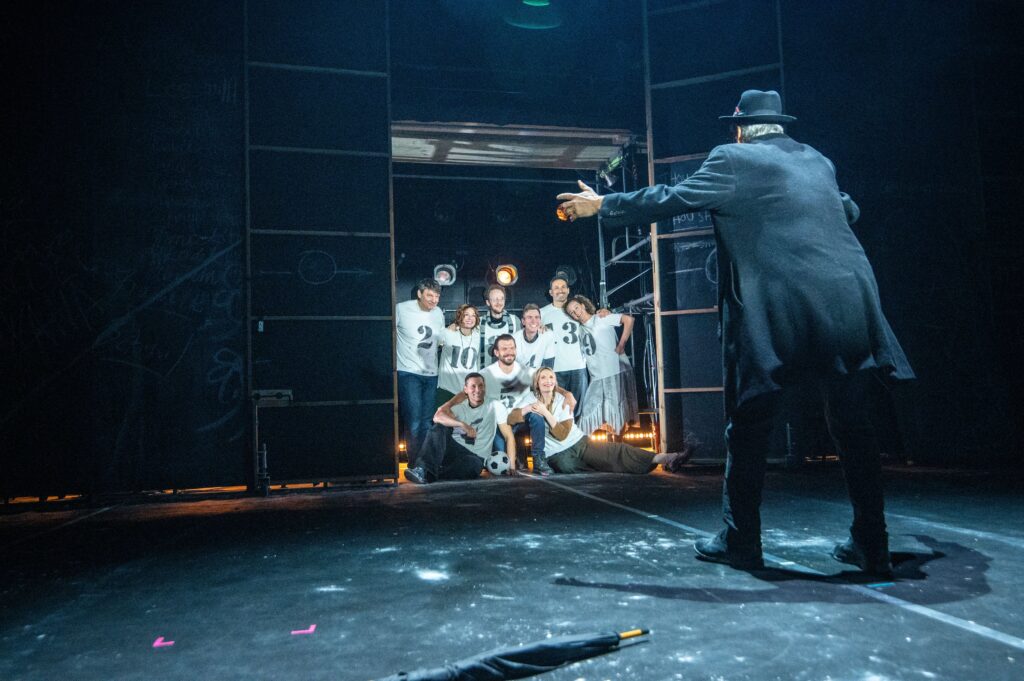
Robin Bloodworth, Jonathan Fielding, and Robert Kropf in Harbor Stage Company’s “My Dinner with Andre” Photo: Joe Kenehan
‘My Dinner With André’ – Based on the film by Wallace Shawn and André Gregory. Developed by Johnathan Fielding and Robert Kropf. Production Stage Management by D’Arcy Dersham. Scenic Design by Evan Farley. Lighting Design by John Malinowski. Produced by Harbor Stage Company, ‘My Dinner With André’ runs at BCA Plaza Black Box Theatre at 539 Tremont Street, Boston through March 30th.
By Shelley A. Sackett
A corner booth, fancy fare and tasty conversation — who doesn’t remember the cult frenzy caused by Louis Malle’s 1981 110-minute film that enchanted audiences, defied pigeon-holing and raised the bar on the “art” referred to as conversation?
This unconventional film should have been all but unwatchable. After all, it is simply a cinema verité version of a conversation between playwright Wallace Shawn and André Gregory, a well-known experimental theater director who seems to have dropped off the edge of the planet and whom Shawn has been trying to avoid for years.
Marianna Bassham, Nael Nacer in Huntington’s ‘The Triumph of Love’. Photos by Liza Voll
‘The Triumph of Love.’ Written by Pierre Carlet de Marivaux. Adapted by Stephen Wadsworth. Directed by Loretta Greco. Scenic and Costume Design by Junghyun Georgia Lee. Hair, Wig, and Makeup Design by Tom Watson. Lighting Design by Christopher Akerlind. Composer and Sound Design by Fan Zhang. Presented by The Huntington Theatre, 264 Huntington Ave., Boston through April 6, 2025.
By Shelley A. Sackett
Pierre Carlet de Marivaux’s “The Triumph of Love,” which premiered in 1732 and is at The Huntington through April 6, is like a trifle dessert, with light spongey layers of raucously funny deceptions, disguises and mistaken identities soaked in a sherry-spiked pastoral period set design. Instead of the traditional alternating tiers of sweet jams and custard, however, Marivaux has substituted a bitter concoction of calculated cruelty and manipulation. The end result is a sugar-coated confection that leaves a very bitter taste in the mouth.
Robin Bloodworth, Jonathan Fielding, andRobert Kropf in Harbor Stage Company’s “My Dinner with Andre” Photo: Joe Kenehan
My Dinner With Andre’ – Based on the film by Wallace Shawn and André Gregory. Developed by Johnathan Fielding and Robert Kropf. Production Stage Management by D’Arcy Dersham. Scenic Design by Evan Farley. Lighting Design by John Malinowski. Produced by Harbor Stage Company, ‘My Dinner With Andre’ runs from March 13th – March 30th at 539 Tremont Street, Boston, MA 02116.
By Charlotte Snow
Many great conversations happen at a table, over the course of a meal, when thoughts are shared and hearts are bared. The ritual of devouring sustenance and drinking in words can be deeply human. Harbor Stage Company’s My Dinner With Andre endeavors to serve a slice of life, but the meat and potatoes are far too small a portion and leave the audience famished.
Cast of the National Tour of ‘Parade’ at the Emerson Colonial Theatre. Photos by Joan Marcus
‘Parade’ – Book by Alfred Uhry; Music and lyrics by Jason Robert Brown; Co-conceived by Harold Prince; Directed by Michael Arden; Choreography by Lauren Yalango-Grant & Christopher Cree Grant; Music direction by Charlie Alterman. At the Emerson Colonial Theatre, Boston, through March 23rd.
By Shelley A. Sackett
It was with trepidation that I attended opening night of “Parade,” now at the Emerson Colonial Theatre through March 23. After all, the premise of the 2023 multiple Tony Award-winning musical revival is hardly uplifting. The book by Alfred Uhry (author of “Driving Miss Daisy”) is set in 1913 Atlanta and tells the true story of Leo Frank, a transplanted Brooklyn Jew and pencil factory supervisor who is married to his Jewish boss’s daughter, Lucille. As the newlyweds struggle to carve out their lives in the red hills of Georgia, Leo is falsely scapegoated for the murder of a 13-year-old white girl in his employ. The rest of the play dramatizes his trial, imprisonment, and 1915 mob lynching.