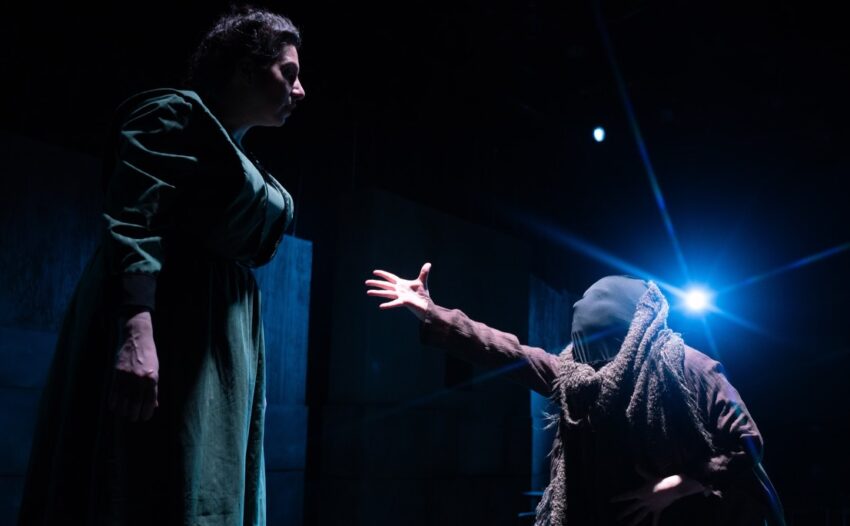
Zabel in Exile. By R.N. Sandberg. Directed by Megan Sandberg-Zakian. Sponsored by Judith Saryan and Victor Zarougian. Presented by Boston Playwrights’ Theatre, 949 Commonwealth Avenue, Boston, through March 8.
By Michele Markarian
For this audience member of Armenian heritage, Zabel in Exile is a cultural expedition into the Armenian psyche. The favoritism and privilege of boys and men. The devastation and tragedy of the death marches. The mystical visions of Death, dressed in garments of scarlet and black. My great-grandfather saw such a vision riding towards him on horseback and told his family it was coming for him. He was right; he died the next day along with his wife and three of his children. My thirteen-year-old grandmother escaped. Zabel is a memory play based on the life of Armenian writer Zabel Yessayan. She’s a very compelling character, and her life, though hard and full of peril, embodies the bravery and compassion of the Armenian spirit.
We first meet an older Zabel (Sarah Corey) in a Soviet prison, about to be executed as a spy, a crime she didn’t commit. Corey gives a tour de force performance, spanning decades of Zabel’s life, from a small child to a fierce aid worker to a sixty five year old woman. Anelga Hajjar, Robert Najarian, June Baboian, Grace Experience and Danny Bryck are the excellent ensemble playing multiple roles as Zabel retraces her tumultuous life, refusing help from a solicitous guard (Hajjar).
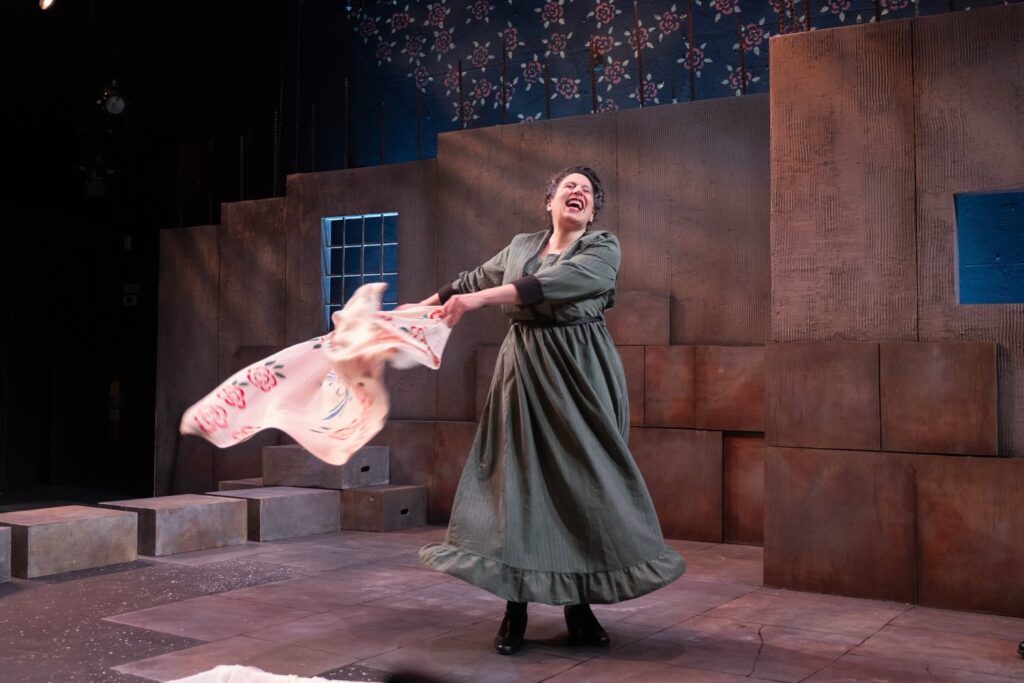
“You must be quiet. A good, quiet girl. Then maybe you’ll live”, is the advice little Zabel is given, as she disconsolately lay in bed, longing to get up. Born and raised in Constantinople, Zabel was a sickly child with a strong spirit, whom her father ultimately encouraged, even defending her against a schoolteacher who treated the students from poor families badly. Zabel has a soft spot for underdogs. As she declares, “Tyrants must be fought. Liars must be fought. The truth must come out,” one can’t help but feel a small surge of fierce hope about the current state of our own governmental affairs. Tragedy strikes at home early for Zabel – a baby brother, whose arrival sparks a cacophony of celebratory joy, dies at two months, leaving her mother barely functioning. Much to everyone’s disappointment, another girl is born a few years later.
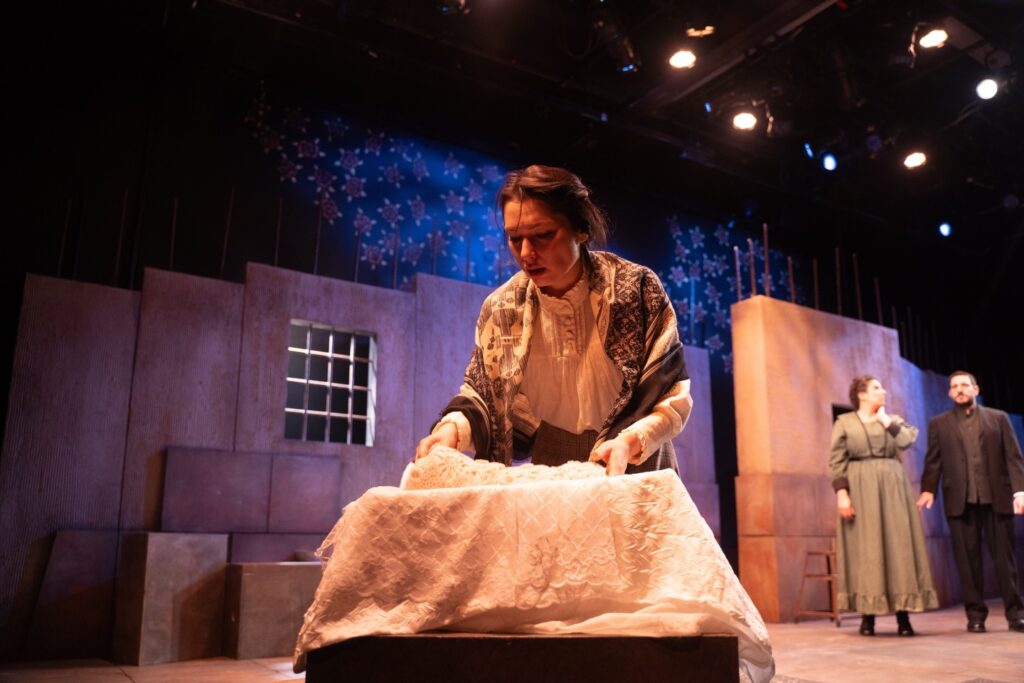
Zabel goes to Paris to study, where she marries a painter, has two children and establishes herself as a writer. She returns to Constantinople to the scene of the Cilicia massacres, which she writes about, but ultimately is targeted by the Turkish government as a person of interest and escapes through Bulgaria on April 24, 1915 (coincidentally Armenian Genocide Remembrance Day). Eventually, she returns to Turkey to assist in the heartbreaking aftermath of Cicilia’s remaining survivors, where she recounts to us merciless stories of cruelty. “Nationalism has been the scourge of our world”. Indeed, it has.
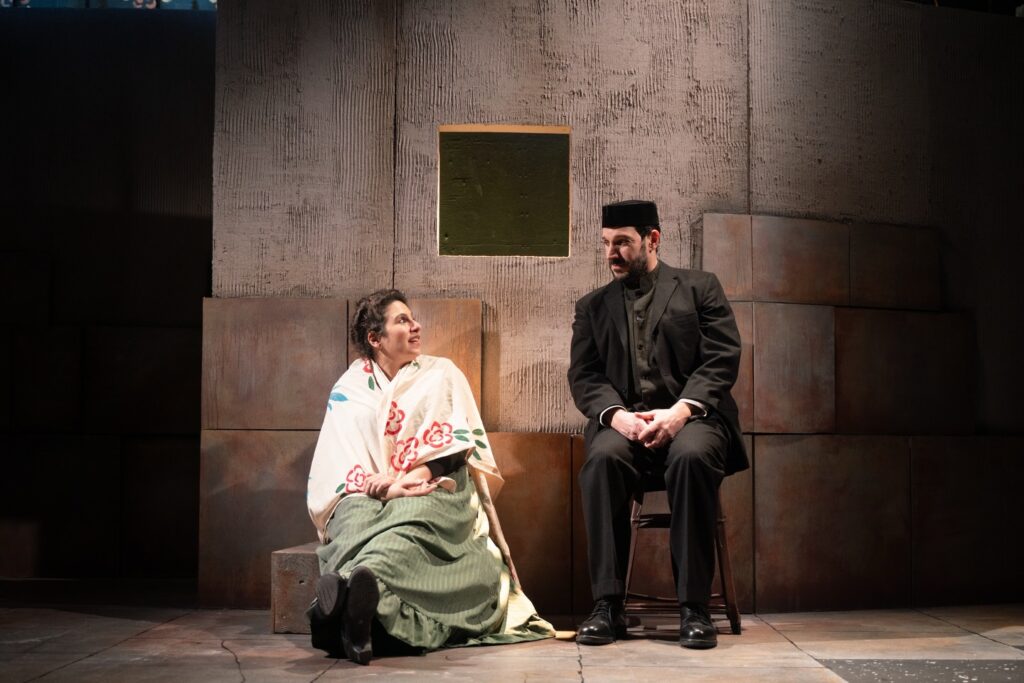
Death is never far off in Sandberg-Zakian’s deftly directed production, where Death sneaks up unannounced, sometimes dancing gracefully with our heroine. Zabel is resigned to her fate, or is she? “We must keep telling the truth”, she insists, even as she’s told by the guard to just confess to the lie of being a spy. Such was the cornerstone of Zabel’s faith – not a religious faith, but the faith in herself to keep fighting for veracity. It’s a moving, stirring story of remembrance and resilience, and when it was over, the stranger sitting next to me said, “I’m teary.”
“Me too,” I told her. Me too.
For more information and tickets, go to: https://www.bostonplaywrights.org/

“We must keep telling the truth” could be the invocation of our times. Zabel had “faith in herself to keep fighting for veracity”.