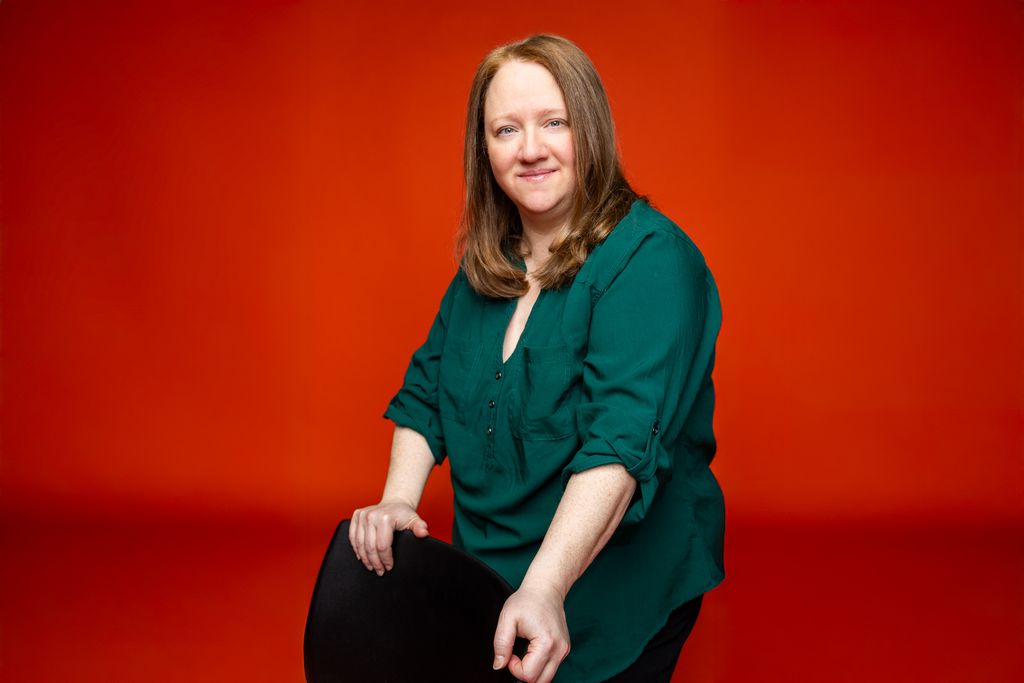
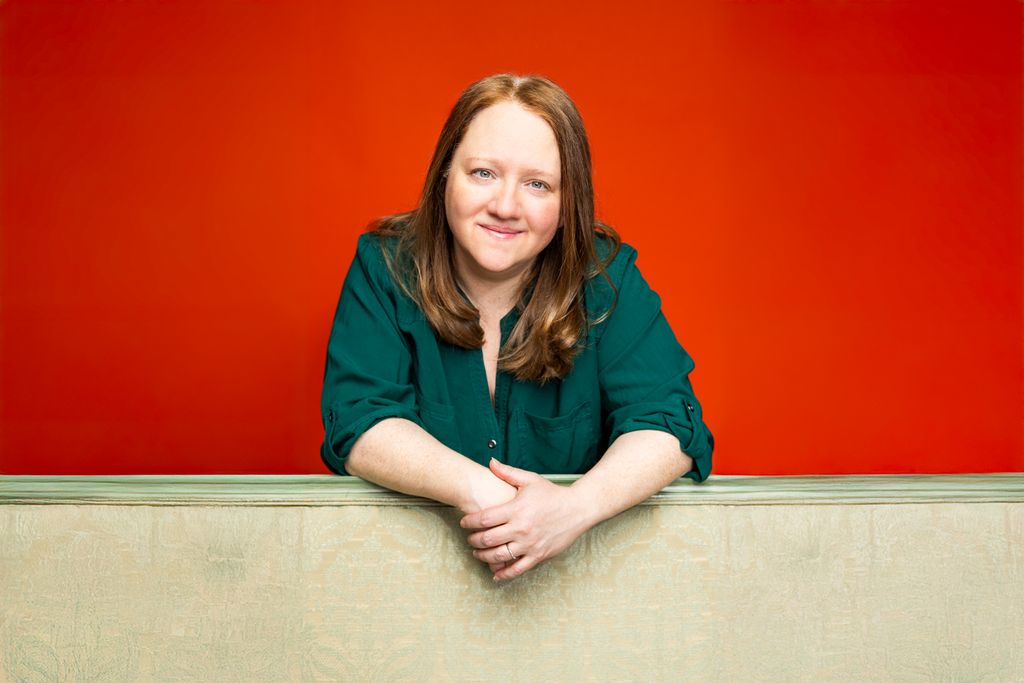
Chicago-based director Keira Fromm is no stranger to the work of playwright Joshua Harmon, author of Bad Jews, Significant Other, Admissions, and Prayer for the French Republic. Fromm is also a no stranger to premiering memorable work, having directed everything from Tanya Barfields’ lesbian romance Bright Half Life for About Face Theatre and David Auburn’s The Columnist at American Blues Theater to Halley Feiffer’s A Funny Thing Happened on the Way to the Gynecologic Oncology Unit at Memorial Sloan Kettering Cancer Center of New York City for Route 66 Theatre Company, all in their Chicago premieres, not to mention the U.S. premiere of British playwright Debbie Tucker Green’s harrowing hang for Chicago’s Remy Bumppo Theatre Company.
Now Fromm comes to Boston for the regional premiere of Harmon’s 2025 play We Had a World, produced at the Huntington Theatre. In the play, Harmon is a biographical character presented as both a child and an adult who reflects on tensions and stresses of his family life, but also the fertile ground his young mind was allowed to probe as his flamboyant grandmother Renee took him to museums and, sometimes, age-inappropriate movies — all the fodder that a blossoming artist needs in order to flourish.
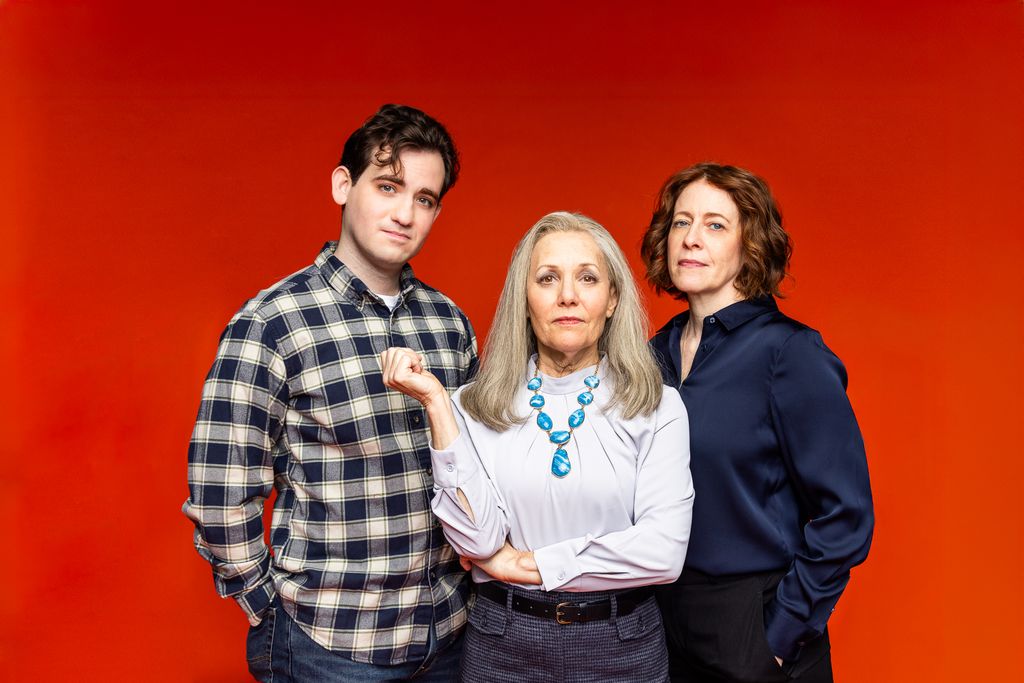
The Huntington’s production brings Will Conard to the stage as Joshua, with Amy Resnick playing Renee and Eva Kaminsky playing Joshua’s mother, Ellen — a daughter whose stress points are always brought into relief when faced with Renee’s irrepressible, and arguably irresponsible, shenanigans.
Fromm discussed early artistic influences, her past work, and what Harmon’s work has meant to her in a recent phone interview with Theater Mirror.
Kilian Melloy: You’ve directed at least one other of Joshua Harmon’s plays, Significant Other. When We Had a World premiered a year ago, were you already saying, “I want to direct that!”?
Keira Fromm: Well, yeah. Josh is one of my favorite writers, so I always take a great interest anytime he has a new play out, and I’m always sort of nudging him to send me his newest play to read, because he’s not only one of my favorite writers, he’s also one of the most varied writers in the American theater, and none of his plays, no two plays are like the previous play. So, I always know I’m going to encounter something new that I hadn’t before, so I’m always super eager to encounter it, and more often than not, yeah, it’s usually something that I’m sort of eager to get my hands on too and direct it.
Kilian Melloy: Did the Huntington reach out to you because they knew you’d worked with him on his material before, or how did you come to direct this regional premiere?
Keira Fromm: As you mentioned, I directed Significant Other. That was back in 2017, and that was the Chicago premiere of that play. So, Josh came out to visit, and he had participated in that process and was very generous with his feedback, and we remained in touch ever since. He had recommended me for the job. I had interviewed with the artistic director of the Huntington, Loretta Greco, and that’s how I came to be here.
Kilian Melloy: The play purports to be about Harmon’s real-life family and draws on episodes from his life. Supposedly, he wrote this at the request of his grandmother, who asked him to make a play that was “bitter and vitriolic,” but this seems too funny to be much of either.
Keira Fromm: You’re right: It is both very funny and it’s also very true. I think his grandmother knew that Josh had always been invested in writing about what he knows, and one of the things he knows best is his family. He also has a wicked sense of humor that always comes into play in all of his plays. That sense of humor had to come from somewhere, didn’t it? It comes from his family, absolutely.
Kilian Melloy: The play serves as an exploration of the formative influences on an artist. As an artist yourself, does it ring true to you when Renee takes a young Josh Harmon to R-rated movies and edgy museum exhibits?
Keira Fromm: Yeah, there’s some fun stuff in here, but yes, I think it all rings quite true. Having grown up in the same time period, and really in a very similar part of the East Coast, as Josh Harmon did, with a family of a very similar background, I had so many similar artistic experiences with my own family — also some quite age-inappropriate experiences. I can see how they informed me as a young artist and probably informed a curious mind in me as a young person.
Kilian Melloy: The family dynamics are complex in this play, so what specific chemistry were you looking for in casting the actors?
Keira Fromm: I was mostly looking for people who could capture both the humor and the depth of the characters that Josh Harmon created. There are a lot of emotional highs and lows in the play, and I wanted actors who could capture those extremes. Thankfully, we found those three people. They’re an incredibly talented bunch, and I’m really excited for patrons to meet the three of them in the context of the play.
Kilian Melloy: We Had a World is a coming-of-age story, in a way. It looks at the way children see the adults in their lives, and then their perceptions shift when they become adults. Will the lighting and other production elements underscore how Will Conard plays Joshua as a child, and then as an adult?
Keira Fromm: This is a memory play; that term might be familiar if you think of important plays in the American theater, like The Glass Menagerie, for example. We have a narrator character who is Joshua, who talks to the audience about these seminal events in his life and what he thinks about them, but also, we have these re-created moments where we see the obstacles that he and his family have to overcome. Those shifts in time and space will absolutely require some exciting use of light and sound and bodies in space that will be inherently theatrical.
I’ve got a whole incredible team of designers, a scenic designer, a lighting designer, sound designer and a costume designer, who have been working alongside me for many months, sort of imagining what this world will look like when it comes alive under lights and with costumes and with lights. That is the exciting stuff when we get to sort of move from a rehearsal space into the theater space and activate all the tools of our craft. That’s when the real kinetic, exciting, thrilling part of everything meshes together. Is it a challenge? Yes, but it’s an exciting one. That will be truly exciting when we kind of hit our stride in a couple of weeks and invite those aspects into play.
Kilian Melloy: There’s a recurrent motif of ecological anxiety in the play. Is this something that you are bringing forward?
Keira Fromm: Yeah, absolutely. The title of the play is “We Had a World” — that might lead you to think about further implications. Both the narrator Joshua, and the playwright Joshua, describe themselves as conservationists, and I believe that narrator Joshua’s anxieties about his grandmother’s fragile state, and the fact that she’s not going to be around forever, are mirrored by his feelings of worry about the longevity of the planet that we live on, and the precariousness of climate change. Those themes are very much enmeshed and alive in this play. Sometimes my world is very limited to the people I’m sharing this immediate space with, and very macro, to the people who are in my state, the people who are in my country, the people who are on my planet.
Kilian Melloy: In addition to being a memory play, is it also veering into a kind of meditation on how things reflect each other, or are reflected in each other — the global and the personal, as you’re saying?
Keira Fromm: There are some interesting conversations in there. I feel like we’ve had conversations around the table about that, just the role of personal versus [communal] in the play. I think all of Josh Harmon’s plays have a real sense of intimacy to them. I think this narrator character is very familiar to Josh’s plays. Significant Other certainly has a narrator character. Prayer for the French Republic has a narrator character. The fact that he’s having a conversation with an audience, a direct conversation, is certainly an intimate quality. But he’s really thinking about a larger conversation, too, right? Climate change and the planet’s longevity, that’s a larger, macro idea. So, there is a public versus private thing that’s happening there, too.
Kilian Melloy: Do you find directing a comedy like this to be refreshing, even with its ecological anxieties, given our contemporary social and political situation?
Keira Fromm: We Had a World is very exciting to go into the room with. I don’t think anybody, or not everybody, would say that their relationships with their family are easy-peasy and without conflict, but it’s also very funny. Josh’s plays in general give me a lot of hope. This play, especially, is the kind of play that, hopefully, you walk out of afterward feeling buoyed with a sense of possibility: That actionable change is possible. That you might want to turn on your cell phone — because you’ve been a responsible citizen and turned it off during the course of the play — and, because of the show and the tenderness of it and the content of it, you think, “I’m going to call my mom,” or, “I want to talk to my dad,” or, “I haven’t spoken to my siblings in a while, and I just would like to hear their voice.”
I think connection and reconnection is so important, and that is something that the play really drives home. You don’t have these relationships forever, and we are not islands unto ourselves. Connection is vital, and that’s a great thing to be reminded of — and that’s something that this play does really well. I think that’s very important.
Kilian Melloy: What do you kind of have on your radar or on the horizon after this?
Keira Fromm: I have a couple of exciting things going on. I’m working on a musical of all things, called Octet, an a cappella chamber musical by Dave Malloy, best known for Natasha, Pierre, & the Great Comet of 1812. It’s about addiction to technology, which is fascinating. That will be in Chicago in the spring. And then, a little bit later on in the year, I’ll be directing a play called Witch, which is a sort of Faustian parable by Jen Silverman at American Players Theater in Wisconsin.
“We Had A World” runs at the February 12 – March 15, 2026 at The Calderwood Pavilion, 527 Tremont St. For tickets and more information, visit the Huntington Theatre website

1 thought on “Director Keira Fromm on the Huntington’s “We Had a World””