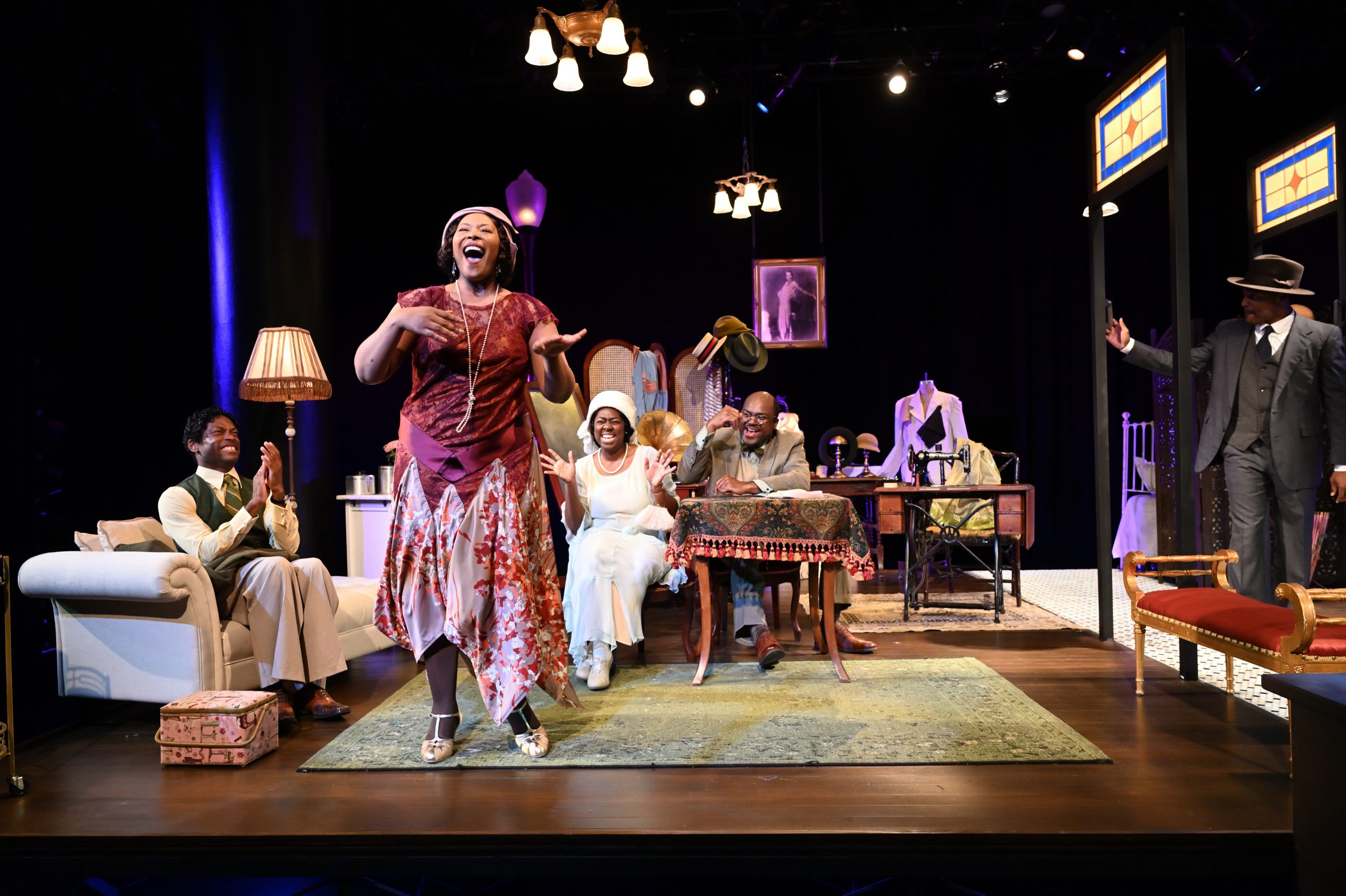
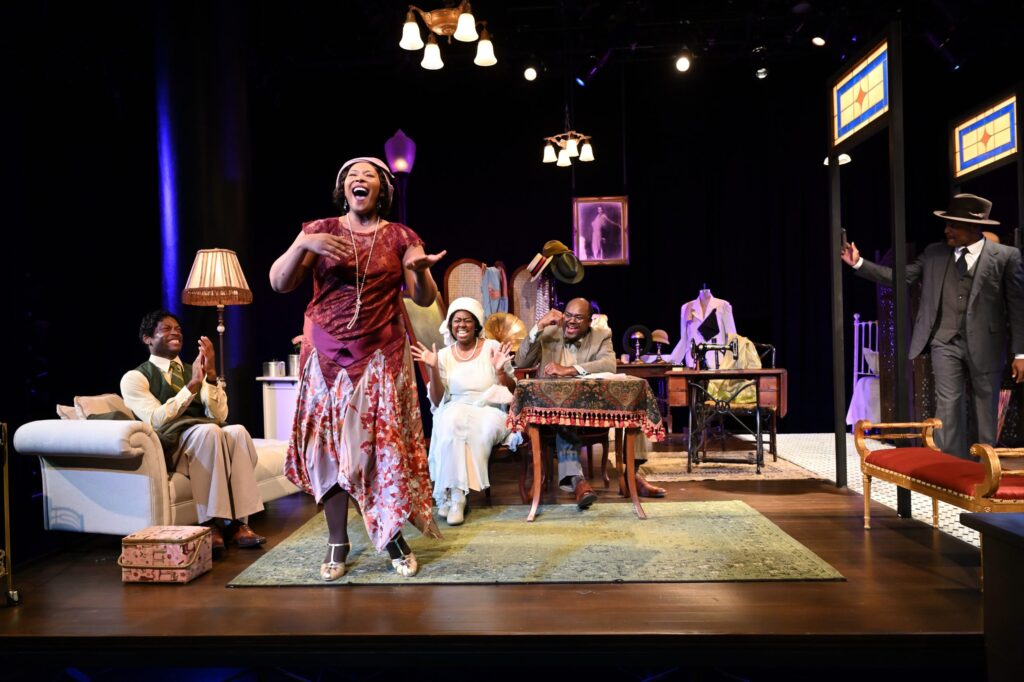
Blues for an Alabama Sky – Written by Pearl Cleage; Directed by Jackie Davis; Scenic Designer Michael McGarty; Costume Designer Amber Volmer; Lighting Designer Erica Maholmes; Sound Designer Larry D. Fowler, Jr; Fight Choreographer Mark Rose; Vocal Coach Rebecca Gibel; Stage Manager Kelsey Emry; and Megan Dilworth as Delia; Taavon Gamnbe as Guy; Cloteal L. Horne as Angel; Dereks Thomas as Sam; Quinn West as Leland (“Alabama”) . Presented by Trinity Repertory Theatre, Providence, RI through
By C.J. Williams
What type of world is it in which a storm can blow through and leave nothing changed? You might say magical realism, Alice-in-Wonderland, or someone’s dreamscape – but Blues for an Alabama Sky is set in hard-as-nails Harlem during Prohibition, and while the storm of the plot in a well-structured play ought to leave the characters comedically or tragically changed, it doesn’t. Thankfully, the audience still gets to experience a few high points: humor and horror.
Blues begins with the protagonist coming off a drunken encounter with her lover on a mob-owned music hall stage. Not only has she lost the man, she’s lost the singing gig that has kept her afloat, and her best friend, Guy (played with aplomb by Taavon Gamble), has lost his place as costume designer for taking her side. From the bombastic entrance to the final curtain, Angel (Cloteal L. Horne) crashes down on one thing after another: she’s a wrecking ball. And perhaps we can forgive her, as we learn bit by bit the way her heart has been broken by a world still steeped in the cruelty of not-long-past slavery, and ever-present racism.
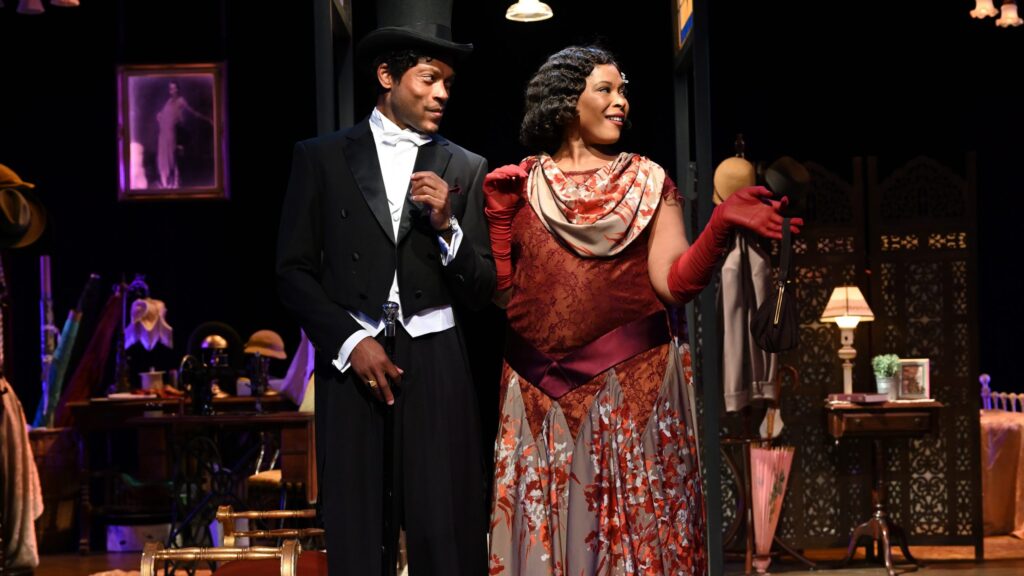
But sympathy and understanding grow stale when circumstances don’t elicit change. Bad raps don’t co-sign bad acts. Angel first refuses a potential gig as secretary (suggested by dowdy but earnest next-door-neighbor Delia); then insists on going back into singing; all the while, drinking alcohol that’s both illegal – and her roommate’s. She moons over the elegant Southern gentleman who helped Guy take her home after her drunken breakup. And she gets him – sort of. While played with grace and quiet earnestness by Quinn West, Leland Cunningham is a character whose path is not all Prince Charming.
A couple of side-plots and parallel themes arise as the play progresses: Delia’s plan for introducing an abortion clinic into the neighborhood, and Guy’s dreams of a job in Paris, as well as his challenges as a homosexual in 1920s Harlem. While timely, neither theme significantly grows Guy’s or Delia’s character. Played with an engaging earnestness by Megan Dilworth, Delia has limited – if any – arc to travel in Blues. The romance she strikes up with a slightly older doctor, Sam (friend of all three characters), is sweet, but the questions it raises around religion, abortion, and the relationship between men and women are mostly resolved by platitudes, not by story. The deepest questions and most important – about the inherent dignity of women, the vulnerability of mothers, and the facts of what a baby is prior to birth get conflicting answers from all involved: the playwright, the doctor, and Angel. Both Angel and Doctor Sam flip from calling Angel’s unborn kid a baby, or maybe not really, and then say it could be either, depending.
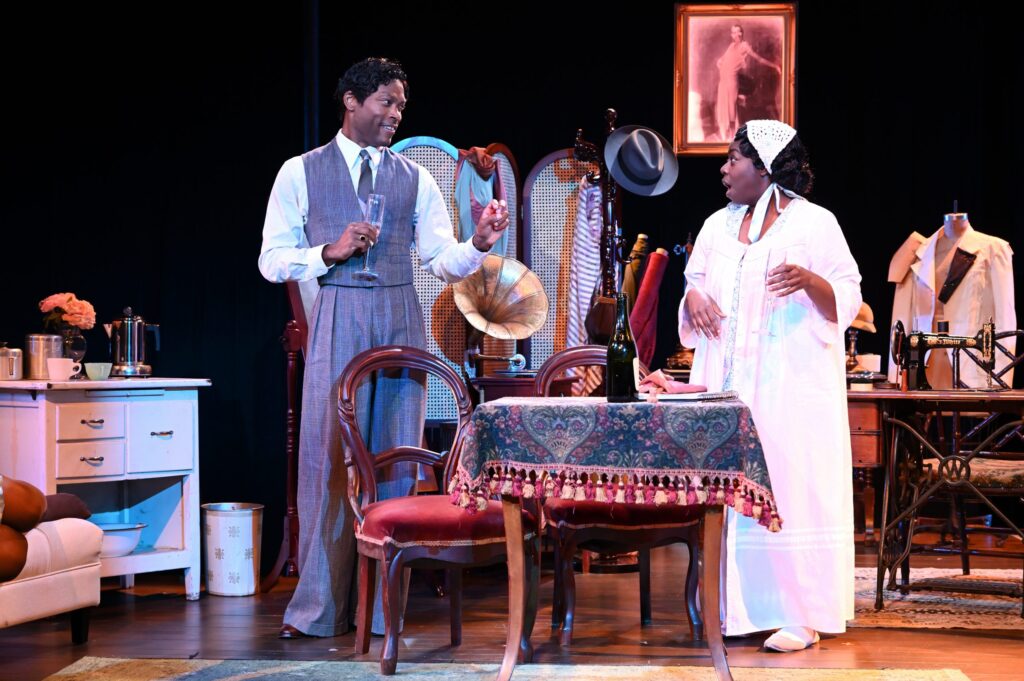
But aside from the issues of play structure and craft, the production stood out for its professionalism. If the themes had been developed a bit more keenly, and the timely issues better explored, the scene design and lighting certainly could not have been. Trinity Repertory, especially Larry D. Fowler, Michel McGarty, and Erica Maholmes (sound, scene, and lighting design), made effective use of the space. The lighting set the tone for each act, and the blocking kept the audience in the middle of things, from the entrance of Angel tumbling down the aisle to the exits of characters off the back of the stage or into the right and left seating.
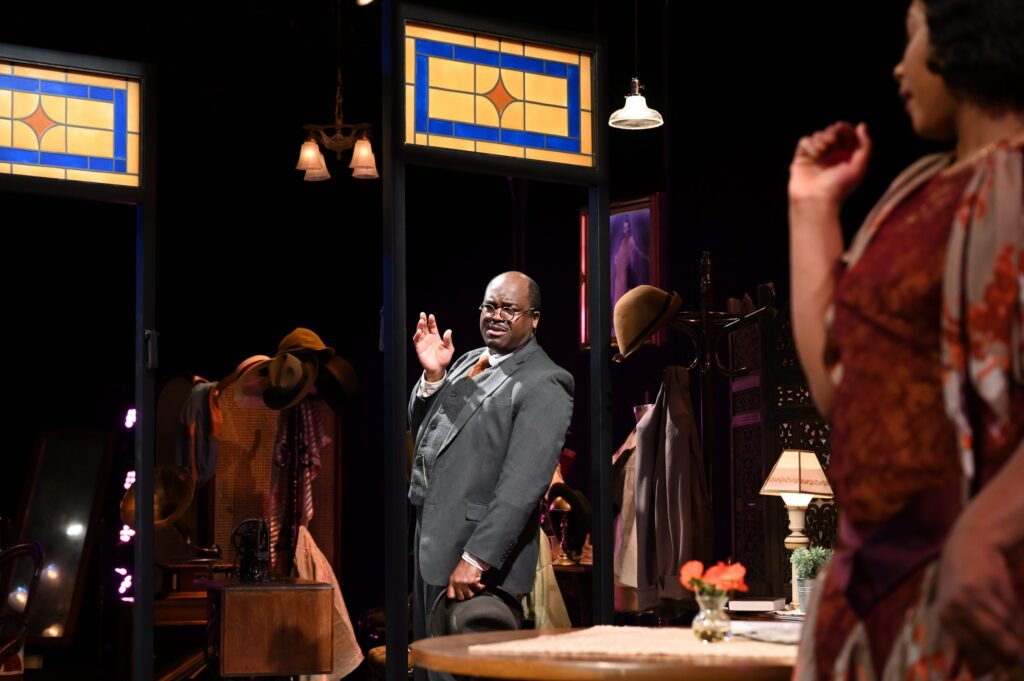
Finally, Gamble (Guy) and Thomas (Sam), as well as Dilworth (Delia) and West as Leland, all give passionate performances. Though the play may have bumped at times, the cast blew through their roles with the energy of Sam’s catchphrase, “Let the good times roll!” tempered by Angel’s melancholy Louisiana blues – delivered as if each breath mattered. But what type of world is it that can throw a storm of death and tragedy without remolding the character of its characters? It’s a question worth asking, because the answer is either one rooted in despair, or one of “sound and fury, signifying nothing.” And what’s the point of a story, except to show that the story of our lives is meaningful? For tickets and information, go to: https://www.trinityrep.com