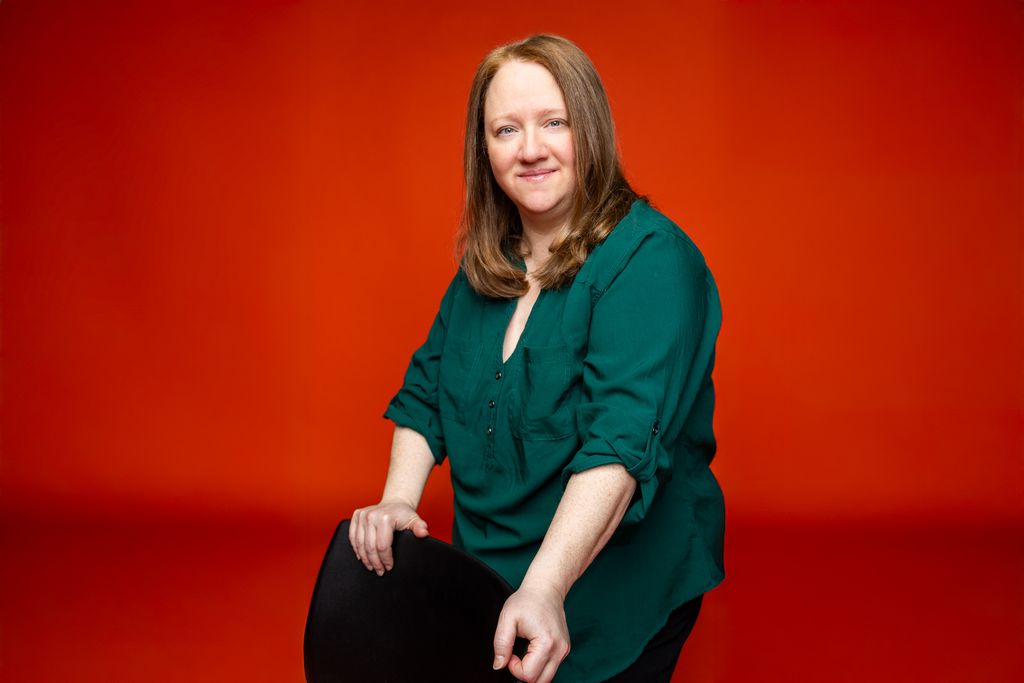
Theater Mirror’s Kilian Melloy Interviews The Huntington’s “We Had a World” Director Keira Fromm

Keira Fromm (Photos by Nile Hawver)

Chicago-based director Keira Fromm is no stranger to the work of playwright Joshua Harmon, author of Bad Jews, Significant Other, Admissions, and Prayer for the French Republic. Fromm is also a no stranger to premiering memorable work, having directed everything from Tanya Barfields’ lesbian romance Bright Half Life for About Face Theatre and David Auburn’s The Columnist at American Blues Theater to Halley Feiffer’s A Funny Thing Happened on the Way to the Gynecologic Oncology Unit at Memorial Sloan Kettering Cancer Center of New York City for Route 66 Theatre Company, all in their Chicago premieres, not to mention the U.S. premiere of British playwright Debbie Tucker Green’s harrowing hang for Chicago’s Remy Bumppo Theatre Company.

Now Fromm comes to Boston for the regional premiere of Harmon’s 2025 play We Had a World, produced at the Huntington Theatre. In the play, Harmon is a biographical character presented as both a child and an adult who reflects on tensions and stresses of his family life, but also the fertile ground his young mind was allowed to probe as his flamboyant grandmother Renee took him to museums and, sometimes, age-inappropriate movies — all the fodder that a blossoming artist needs in order to flourish.

The Huntington’s production brings Will Conard to the stage as Joshua, with Amy Resnick playing Renee and Eva Kaminsky playing Joshua’s mother, Ellen — a daughter whose stress points are always brought into relief when faced with Renee’s irrepressible, and arguably irresponsible, shenanigans.

Fromm discussed early artistic influences, her past work, and what Harmon’s work has meant to her in a recent phone interview with Theater Mirror.

Kilian Melloy: You’ve directed at least one other of Joshua Harmon’s plays, Significant Other. When We Had a World premiered a year ago, were you already saying, “I want to direct that!”?

Keira Fromm: Well, yeah. Josh is one of my favorite writers, so I always take a great interest anytime he has a new play out, and I’m always sort of nudging him to send me his newest play to read, because he’s not only one of my favorite writers, he’s also one of the most varied writers in the American theater, and none of his plays, no two plays are like the previous play. So, I always know I’m going to encounter something new that I hadn’t before, so I’m always super eager to encounter it, and more often than not, yeah, it’s usually something that I’m sort of eager to get my hands on too and direct it.

Kilian Melloy: Did the Huntington reach out to you because they knew you’d worked with him on his material before, or how did you come to direct this regional premiere?

Keira Fromm: As you mentioned, I directed Significant Other. That was back in 2017, and that was the Chicago premiere of that play. So, Josh came out to visit, and he had participated in that process and was very generous with his feedback, and we remained in touch ever since. He had recommended me for the job. I had interviewed with the artistic director of the Huntington, Loretta Greco, and that’s how I came to be here.

Kilian Melloy: The play purports to be about Harmon’s real-life family and draws on episodes from his life. Supposedly, he wrote this at the request of his grandmother, who asked him to make a play that was “bitter and vitriolic,” but this seems too funny to be much of either.
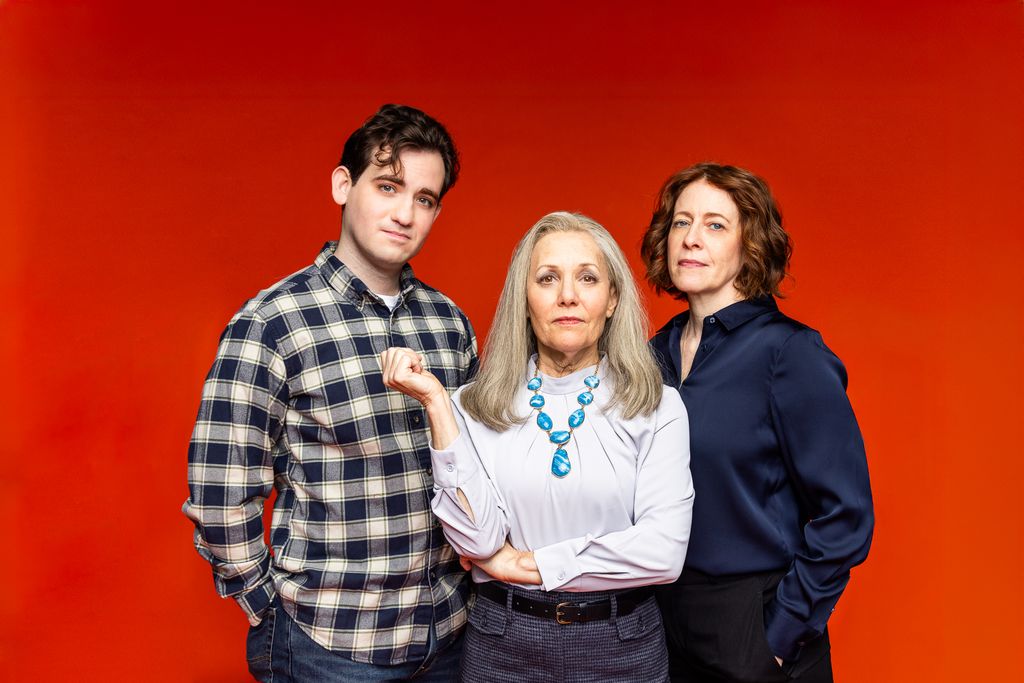
Cast of “We Had A World”. Will Conard, Amy Resnick, and Eva Kaminsky

Keira Fromm: You’re right: It is both very funny and it’s also very true. I think his grandmother knew that Josh had always been invested in writing about what he knows, and one of the things he knows best is his family. He also has a wicked sense of humor that always comes into play in all of his plays. That sense of humor had to come from somewhere, didn’t it? It comes from his family, absolutely.

Kilian Melloy: The play serves as an exploration of the formative influences on an artist. As an artist yourself, does it ring true to you when Renee takes a young Josh Harmon to R-rated movies and edgy museum exhibits?

Keira Fromm: Yeah, there’s some fun stuff in here, but yes, I think it all rings quite true. Having grown up in the same time period, and really in a very similar part of the East Coast, as Josh Harmon did, with a family of a very similar background, I had so many similar artistic experiences with my own family — also some quite age-inappropriate experiences. I can see how they informed me as a young artist and probably informed a curious mind in me as a young person.

Kilian Melloy: The family dynamics are complex in this play, so what specific chemistry were you looking for in casting the actors?

Keira Fromm: I was mostly looking for people who could capture both the humor and the depth of the characters that Josh Harmon created. There are a lot of emotional highs and lows in the play, and I wanted actors who could capture those extremes. Thankfully, we found those three people. They’re an incredibly talented bunch, and I’m really excited for patrons to meet the three of them in the context of the play.

Kilian Melloy: We Had a World is a coming-of-age story, in a way. It looks at the way children see the adults in their lives, and then their perceptions shift when they become adults. Will the lighting and other production elements underscore how Will Conard plays Joshua as a child, and then as an adult?

Keira Fromm: This is a memory play; that term might be familiar if you think of important plays in the American theater, like The Glass Menagerie, for example. We have a narrator character who is Joshua, who talks to the audience about these seminal events in his life and what he thinks about them, but also, we have these re-created moments where we see the obstacles that he and his family have to overcome. Those shifts in time and space will absolutely require some exciting use of light and sound and bodies in space that will be inherently theatrical.

I’ve got a whole incredible team of designers, a scenic designer, a lighting designer, sound designer and a costume designer, who have been working alongside me for many months, sort of imagining what this world will look like when it comes alive under lights and with costumes and with lights. That is the exciting stuff when we get to sort of move from a rehearsal space into the theater space and activate all the tools of our craft. That’s when the real kinetic, exciting, thrilling part of everything meshes together. Is it a challenge? Yes, but it’s an exciting one. That will be truly exciting when we kind of hit our stride in a couple of weeks and invite those aspects into play.

Kilian Melloy: There’s a recurrent motif of ecological anxiety in the play. Is this something that you are bringing forward?

Keira Fromm: Yeah, absolutely. The title of the play is “We Had a World” — that might lead you to think about further implications. Both the narrator Joshua, and the playwright Joshua, describe themselves as conservationists, and I believe that narrator Joshua’s anxieties about his grandmother’s fragile state, and the fact that she’s not going to be around forever, are mirrored by his feelings of worry about the longevity of the planet that we live on, and the precariousness of climate change. Those themes are very much enmeshed and alive in this play. Sometimes my world is very limited to the people I’m sharing this immediate space with, and very macro, to the people who are in my state, the people who are in my country, the people who are on my planet.

Kilian Melloy: In addition to being a memory play, is it also veering into a kind of meditation on how things reflect each other, or are reflected in each other — the global and the personal, as you’re saying?
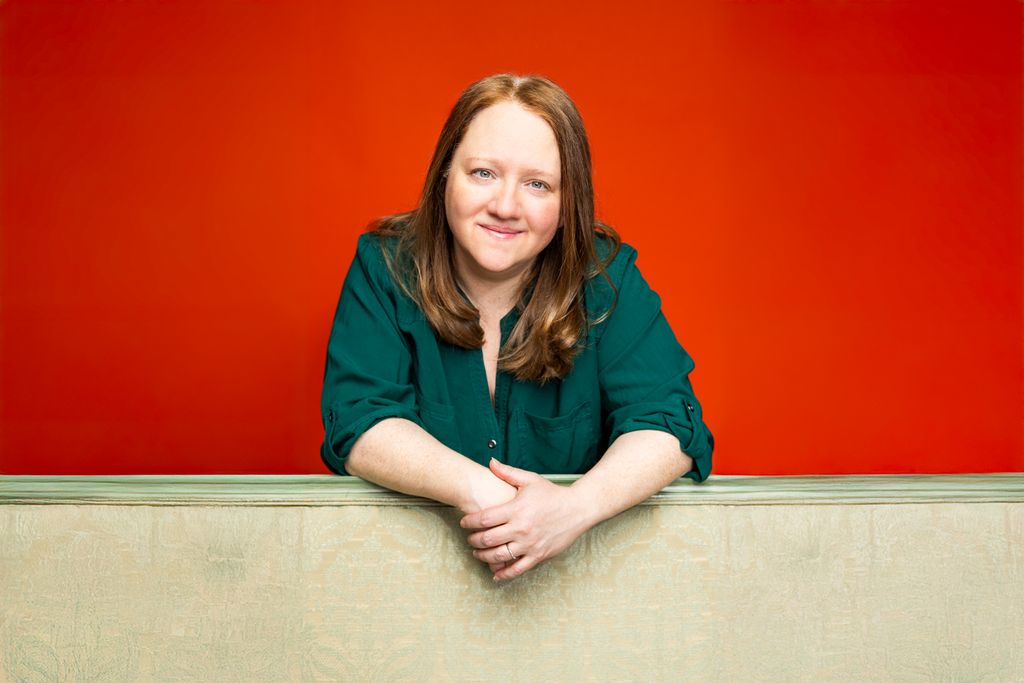
Fromm

Keira Fromm: There are some interesting conversations in there. I feel like we’ve had conversations around the table about that, just the role of personal versus [communal] in the play. I think all of Josh Harmon’s plays have a real sense of intimacy to them. I think this narrator character is very familiar to Josh’s plays. Significant Other certainly has a narrator character. Prayer for the French Republic has a narrator character. The fact that he’s having a conversation with an audience, a direct conversation, is certainly an intimate quality. But he’s really thinking about a larger conversation, too, right? Climate change and the planet’s longevity, that’s a larger, macro idea. So, there is a public versus private thing that’s happening there, too.

Kilian Melloy: Do you find directing a comedy like this to be refreshing, even with its ecological anxieties, given our contemporary social and political situation?

Keira Fromm: We Had a World is very exciting to go into the room with. I don’t think anybody, or not everybody, would say that their relationships with their family are easy-peasy and without conflict, but it’s also very funny. Josh’s plays in general give me a lot of hope. This play, especially, is the kind of play that, hopefully, you walk out of afterward feeling buoyed with a sense of possibility: That actionable change is possible. That you might want to turn on your cell phone — because you’ve been a responsible citizen and turned it off during the course of the play — and, because of the show and the tenderness of it and the content of it, you think, “I’m going to call my mom,” or, “I want to talk to my dad,” or, “I haven’t spoken to my siblings in a while, and I just would like to hear their voice.”

I think connection and reconnection is so important, and that is something that the play really drives home. You don’t have these relationships forever, and we are not islands unto ourselves. Connection is vital, and that’s a great thing to be reminded of — and that’s something that this play does really well. I think that’s very important.

Kilian Melloy: What do you kind of have on your radar or on the horizon after this?

Keira Fromm: I have a couple of exciting things going on. I’m working on a musical of all things, called Octet, an a cappella chamber musical by Dave Malloy, best known for Natasha, Pierre, & the Great Comet of 1812. It’s about addiction to technology, which is fascinating. That will be in Chicago in the spring. And then, a little bit later on in the year, I’ll be directing a play called Witch, which is a sort of Faustian parable by Jen Silverman at American Players Theater in Wisconsin.

“We Had A World” runs at the February 12 – March 15, 2026 at The Calderwood Pavilion, 527 Tremont St. For tickets and more information, visit the Huntington Theatre website

Yorick Ensemble’s ‘The Great Pistachio’ is a Modern Absurdist Gem

Ellen Keith and Tim Lawton in Yorick Ensemble’s ‘The Great Pistachio’

By Julie-Anne Whitney

The Great Pistachio (Boston premiere), by Nicholas Cummings; Direction, Scenic, Costume, and Prop Design by Rachel Hall; Lighting Design by Michael Jay; Fight Choreography by Sydney T. Grant; Puppet Design by Em Sheeran; Stage Managed by Ben Cantor-Adams. Produced by Yorick Ensemble at the BCA Plaza Black Box Theatre in Boston, MA. Runs through February 1, 2026.

If you’re looking for a good laugh – and a reason to keep going despite all the madness out there – head over to the BCA Plaza Black Box Theatre and catch The Great Pistachio, a new absurdist comedy about the pain of isolation, finding meaning in connection, and appreciating the importance of laughter and play in a dark and desperate world. 

Read more “Yorick Ensemble’s ‘The Great Pistachio’ is a Modern Absurdist Gem”

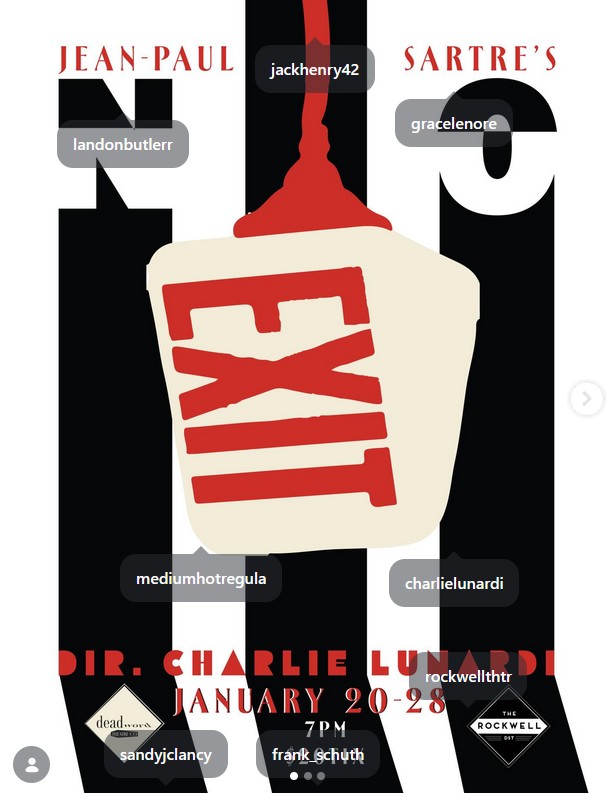
Deadword Theater Company’s “No Exit” Leaves Little to be Desired

‘No Exit’ by Jean-Paul Sarte. Directed by Charlie Lunardi. Stage Management from Jack Henry Yeatman. Scenic Design by Jayoung Hong. Sound Design by Z Toto. Lighting Design by Alyssa Gonzalez. Prop Design by Melinda Kalanzis. Costume Design by Gaby Obando. Deadword Theatre Company’s ‘No Exit’ runs from January 20th – 21st and January 27th – 28th at the Rockwell Theatre, 225 Elm Street, Somerville MA 02114. 

By Charlotte Snow 

“Hell is other people,” Garcin cries to heaven and earth in Jean-Paul Sartre’s No Exit. Even if you disagree with the statement, Deadword Theatre Company offers a strong argument to sway any nonbelievers that humans are designed to be fundamentally disconnected from each other. Every itch, every fidget, every unnerving little gesture is felt throughout this production’s run time, and it’s perfectly agonizing − in the best possible way.  

No Exit follows a triad of protagonists: Garcin, the disgraced journalist, Estelle, the vain socialite, and Inez, the antagonizing post-office clerk. Led by a mysterious nameless Valet, each of them is dumped into a small room featuring only sofas, no beds, no mirrors, and − of course – no exit. As they attempt to expose each other’s wrongdoings and personality flaws, they quickly come to realize that they are in Hell and meant to serve as each other’s torturers.  

Jean-Paul Sartre’s macabre masterpiece was met with praise and celebration when it first debuted in 1944. His ability to weave in his classic existentialist ideas with high-concept drama was as unique as it was successful. The concept of the greatest evil imaginable being the wrong deeds of other humans hit especially hard during the final stretches of World War II. I can only imagine that in his home country, this piece felt especially biting due to France being occupied by the Nazis for four years. Since its inception, No Exit has continued to be a staple of community and regional theater seasons due to its universality and inventiveness.  

As the audience enters the Rockwell theatre, they are greeted by Jayoung Hong’s slick set design, which menacingly merges the sensibilities of the Second Empire with modern monochromatism as moody jazz music eerily plays in the distance. Z Toto’s sound design, Alyssa Gonzalez’s lighting design, Gaby Obando’s costumes, and Melinda Kalanzis’ prop design beautifully meld together to create the unspoken secret 5th character of the play, Hell. The atmosphere is inviting but not kind, not quite cramped but certainly not cozy, and timeless in the sense that nothing is particularly old, new, or modern. 

Directing a play where none of the central characters leave the stage is no small task, but Charlie Lunardi boldly rises to the occasion. Each move the characters take feels fully motivated, and while there are moments of stillness, there’s never a sense of unintentional stagnation. Moments of comedy, sorrow, lust, and rage follow each other in quick succession, highlighting the circumstances of unrest. The play describes itself as a lifetime without being able to blink, and while this uncomfortable tension often arises, there are a few too many moments where that “unable to blink” energy drops, lags, or meanders. Most of the play is pedal to the metal; however, when the characters really get after each other, the energy of the audience leaning forward in their seats was palpable and electric.  

This play lives and dies on the cast’s chemistry. While there were slight moments when they did not fully connect with each other, the trio achieved the play’s objectives: three opposite characters who push and pull each other away. Landon Butler as Garcin shines when he is at his most venomous and insecure, no longer hiding behind a thinly veiled mask of nicety. Grace Lenore as Estelle and Sandy Clancy as Inez truly inhabited their characters and their many qualms and struggles with ease. Frank Schuth, as Valet, plays a small part but is a devilishly comedic, stoic juxtaposition to these three characters, who are slowly losing themselves to their own minds.  


While there are a few bumps in the show, and I personally yearn for a No Exit with a more contemporary setting, this production is a hellishly good time. Deadword Theatre Company is a group I follow closely, and I am delighted to say that this is their strongest theatrical offering to date. Due to the short runtime and limited seating in the Rockwell, I encourage you to sprint, not run, to get your tickets – or else there will be Hell to pay. For more information and tickets, go to: https://therockwell.org/

‘Library Lion’ Is As Much a Delight for Grownups as It Is For Kids

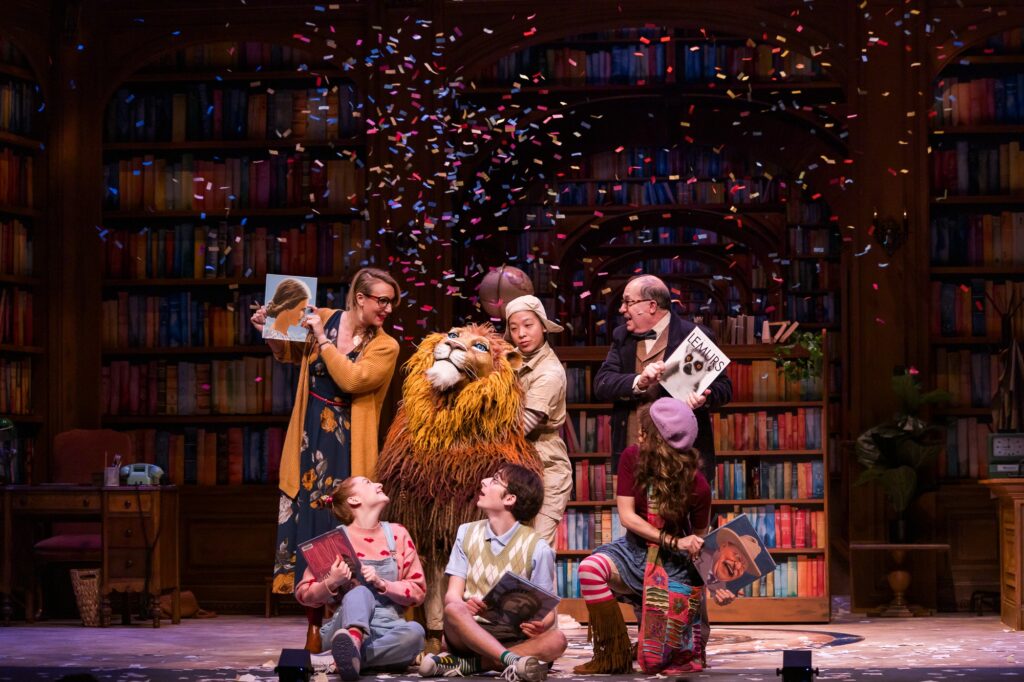
Cast of Adam Theater’s ‘Library Lion’ at BCA Calderwood Pavilion January 10-25
Photos by Nile Scott Studios

‘Library Lion’ — Adapted from the book “Library Lion” by Michelle Knudsen and illustrated by Kevin Hawkes. Directed by Ran Bechor. Book and Lyrics by Eli Bejaoui; Music by Yoni Rechter and Roy Friedman; Songs composed by Yoni Rechter; Puppet Design & Build by Jim Henson Creature Shop. Scenic Design by Cameron Anderson; Costume Design by Ula Shebchuv; Lighting Design by Daniel H. Jentzen; Sound Design by Irene Wang. Presented by Adam Theater at The Calderwood Pavilion, 527 Tremont St., Boston through Jan. 25.

By Shelley A. Sackett

Last Sunday, I was probably the only adult at the noon performance of Library Lion unaccompanied by kids and/or grandkids. For 70 uninterrupted minutes, I was treated to an uplifting, high-quality production of one of the most delightful musical shows I’ve seen in a while. Plus, I had the dual luxuries of watching a room full of youngsters and eavesdropping on their comments without having to be “in charge” of any of them.

Read more “‘Library Lion’ Is As Much a Delight for Grownups as It Is For Kids”

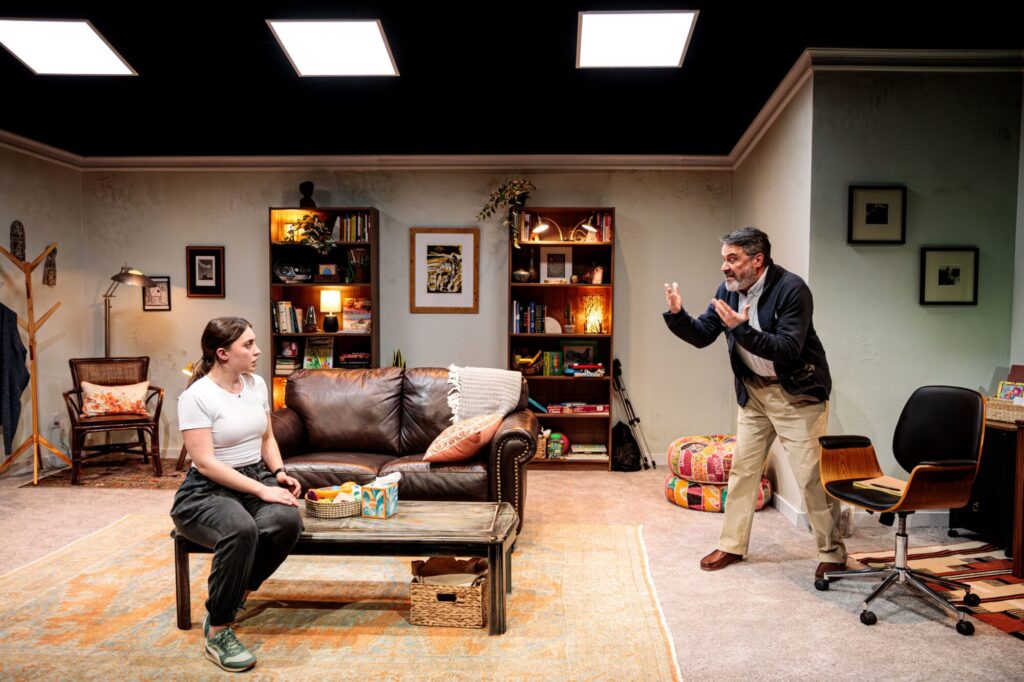
A Therapy Session Becomes a Cat-and-Mouse Thriller in SpeakEasy’s ‘Job’

Josephine Moshiri Elwood and Dennis Trainor Jr. in Speakeasy Stage’s ‘JOB’
Photos by Benjamin Rose Photography

‘Job’ — Written by Max Wolf Friedlich. Directed by Marianna Bassham. Scenic Design by Peyton Tavares; Lighting Design by Amanda E. Fallon; Sound Design by Lee Schuna; Costume Design by E. Rosser. Presented by SpeakEasy Stage Co., Calderwood Pavilion, Boston, through Feb. 7.

By Shelley A. Sackett

Playwright Max Wolf Friedlich wastes no time establishing the life-or-death stakes in his two-person thriller, Job. The lights come up in media res. A woman holds a gun pointed directly at a man’s head. Jane (Josephine Moshiri Elwood) is shaking, enraged and desperate. Lloyd (Dennis Trainor, Jr.), clearly shaken, holds a clipboard and a pen. “Let’s just talk this through,” Lloyd entreats, right before the first of many, many abrupt blackouts, flashes and eerie sounds.

Read more “A Therapy Session Becomes a Cat-and-Mouse Thriller in SpeakEasy’s ‘Job’”

Adam Theater’s “Library Lion” Roars Triumphantly

Cast of Adam Theater’s ‘Library Lion’ at BCA Calderwood Pavilion January 10-25
Photos by Nile Scott Studios

‘Library Lion’ – Based on the book by Michelle Knudsen. Book and Lyrics by Eli Bejaoui. Music by Yoni Rechter and Roy Friedman. Song Composition by Yoni Rechter. Directed by Ran Bechor. Stage Management from Kendyl Trott. Puppet Design and Build by Jim Henson Creature Shop. Puppet and Movement Direction by Kate Brehm. Scenic Design by Cameron Anderson. Lighting Design by Daniel H. Jentzen. Adam Theater’s ‘Library Lion’ runs from January 10th to January 25th at the Calderwood Pavilion, 527 Tremont Street, Boston, MA 02116. 

By Charlotte Snow 

If you ask any working theatre professional, “When did you first fall in love with theatre?” Many will answer “as a child,” having either seen or been in a Theatre for Young Audiences play. TYA may, in fact, be the invisible backbone responsible for (and continues to) uplift theater culture. At its worst, theatre for young audiences panders to kids and is insufferable to adults. At its best, it strengthens the bond between kids and adults while delivering a positive message along with a spoonful of whimsy. I’m happy to report that Adam Theater’s Library Lion falls into the latter category. 

Read more “Adam Theater’s “Library Lion” Roars Triumphantly”

Theater Mirror’s Kilian Melloy Interviews “Stokely & Martin” Playwright Najee A. Brown

Najee A. Brown

Najee A. Brown’s Stokely & Martin imagines a pivotal dinner conversation between Dr. Martin Luther King Jr. and leaders of the Student Nonviolent Coordinating Committee (SNCC) — Stokely Carmichael, Cleveland “Cleve” Sellers, and Willie Ricks — in 1966, at a moment when the civil rights movement was fracturing over questions of tactics, philosophy, and the meaning of Black Power.

Brown, the Artistic Director of the Multicultural Arts Center, wrote and now directs the production. The script comes with an imprimatur of authenticity: The dinner table conversation (a “strategy room” session, Brown explained during our interview) is informed by interviews Brown did with Willie Ricks, who attended just such gatherings. “They knew strategically what they had to do,” Brown notes, “and they did more planning than they did marching. Now I feel like we do more marching and maybe some planning that I don’t know about, or no planning at all.”

Read more “Theater Mirror’s Kilian Melloy Interviews “Stokely & Martin” Playwright Najee A. Brown”

“Wonder” Delivers a Joyful Ride to a Kinder Landscape

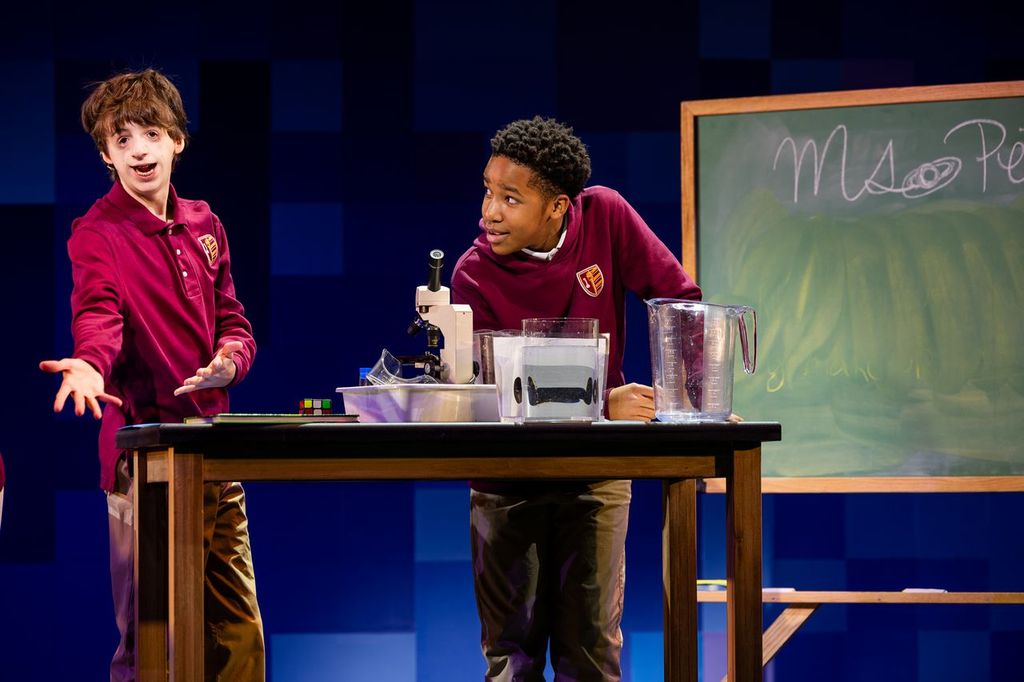
Garrett McNally and Donovan Louis Bazemore in ‘Wonder’ at the A.R.T.
Photos by Hawver and Hall

“Wonder”. Book by Sarah Ruhl. Music and Lyrics by A Great Big World (Ian Axel and Chad King). Directed by Taibi Magar. Presented by American Repertory Theater, 64 Brattle Street, Cambridge, through February 8.

By Michele Markarian

“I like ice cream, outer space and video games,” Auggie (Garrett McNally), a typical seventh grader, tells us at the beginning of “Wonder”. Auggie, however, has a facial difference that sets him apart from other kids, making him a target of bullying and ostracization. For years, his mother, Isabel (Alison Luff), has been homeschooling him, but now she fears he has more to learn than what she can teach him. To counter this, Isabel has enrolled Auggie in middle school, much to his dismay. While his oversized space helmet and invisible friend Moonboy (Nathan Salstone) keep him feeling safe at home, they won’t serve Auggie well at school. Auggie’s sister Via (Kaylin Hedges) is also on edge. As the sibling of someone whose facial differences account for a lot of his parents’ attention, Via doesn’t always get her fair share; the fact that her best friend Miranda (Paravi) isn’t speaking to her for unknown reasons doesn’t help. Miranda, as it turns out, is having a hard time dealing with her parents’ divorce. As one of Auggie’s teachers, Mr. Browne (Raymond J. Lee) likes to say, “Be kind, for everyone is fighting an invisible battle.” 

Read more ““Wonder” Delivers a Joyful Ride to a Kinder Landscape”

Theater Mirror Reviewers ‘Best Of’ Lists for 2025

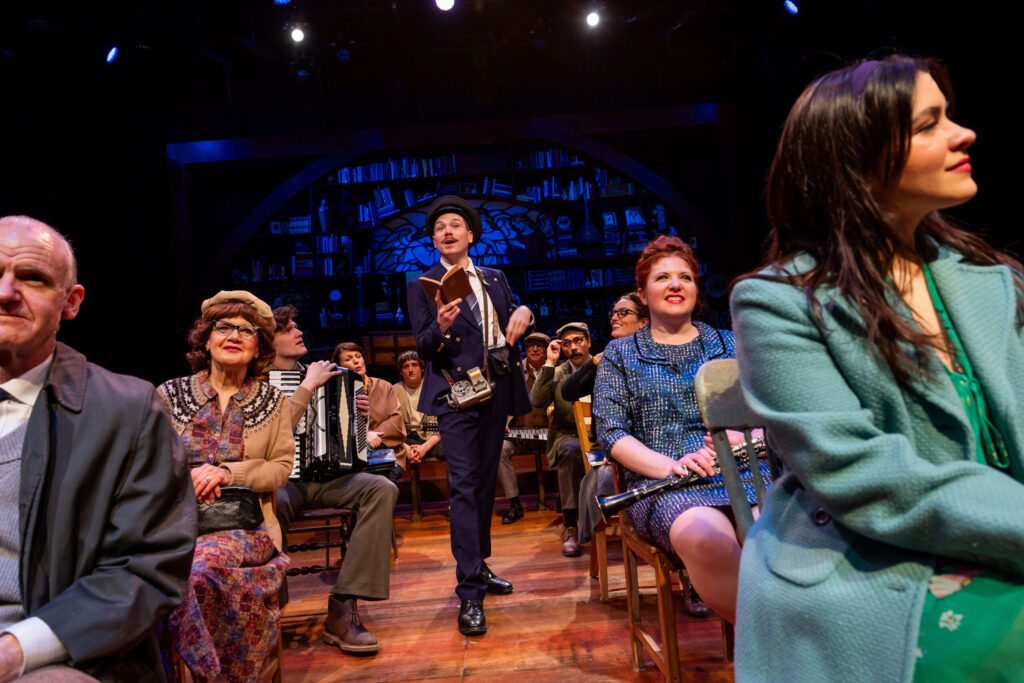
Cast of Speakeasy’s ‘A Man of No Importance’. Photos by Nile Scott Studios

As we close the door on what has been an enormously challenging year for most Americans, it was comforting to know that even in a world gone mad, Greater Boston theater companies were there to provide much-needed refuge for theatergoers, if only for a few hours at a time.

This may have been the strongest overall year for theater since COVID first hit, with a mix of pure-entertainment musicals like A.R.T.’s Two Strangers Carry a Cake Across New York (A.R.T.) and Lyric Stage’s Hello Dolly! balanced with plays (and musicals) with much weightier material, like Arlekin Players’ Our Class, and the national tour of Parade at Emerson Colonial. There were also a number of older plays that spoke to the issues bedeviling America today, including attacks on the LGBTQ+, Jewish, and immigrant communities.

Read more “Theater Mirror Reviewers ‘Best Of’ Lists for 2025”

Apollinaire’s Thriller ‘Is This a Room’ Asks, ‘Who Is The Real Patriot in Today’s Murky World?’

Cristhian Mancinas-García, Bradley Belanger, Brooks Reeves, and Parker Jennings in Apollinaire Theatre Company’s “Is This a Room.”

‘Is This a Room” — Written by Tina Satter. Directed by Danielle Fauteux Jacques. Concept and Original Direction by Tina Satter. Presented by Apollinaire Theatre Company, 189 Winnisimmet St., Chelsea, through Jan. 18.

By Shelley A. Sackett

Whatever you do, do not under any circumstances listen to any of the excellent podcasts and interviews with Reality Winner, the subject of Apollinaire’s gripping Is This a Room, until after you’ve seen the play — and see it you must.

For 70 minutes, the verbatim transcript of an F.B.I. interview of a 25-year-old woman suspected of violating the Espionage Act is the most unlikely script in this thrilling mystery that packs a wallop and imbues a by-the-books encounter with emotional and psychological depth and humanity.

Read more “Apollinaire’s Thriller ‘Is This a Room’ Asks, ‘Who Is The Real Patriot in Today’s Murky World?’”