
Rising theater director Logan Ellis has become a director who bridges worlds — between classical music and theater, between scrappy DIY companies and regional powerhouses, and between personal vulnerability and political urgency. Fresh out of school, he and some friends founded Theatre Battery in Kent, Washington, turning vacant mall storefronts into free community art spaces in one of the state’s most culturally diverse areas. Fifteen years later, Ellis has earned his MFA from Yale School of Drama, become Associate Producer at Skylight Theatre Company in Los Feliz (a neighborhood in Los Angeles), continued as Producing Artistic Director and Co-Founder at Theatre Battery, and pivoted into film.
Now Ellis comes to Huntington Theatre Company to helm Fun Home, Jeanine Tesori and Lisa Kron’s Tony-winning musical adaptation of Alison Bechdel’s groundbreaking graphic novel memoir. It’s a homecoming of sorts: A mentor of Ellis’, Loretta Greco, is the Huntington’s artistic director (she calls him “One of the country’s most exciting emerging directors” in the show’s press release). What’s more, the musical resonates deeply with Ellis’s own experience as a queer artist.
Fun Home delves into Bechdel’s youth at two stages: When she was a little girl, and when she was a college student. Both younger versions occupy the stage along with the grown-up Bechdel, who is shown creating her famous graphic novel memoir. There’s an acerbic irony to the very name Fun Home, since Bechdel’s father, Bruce, was a closeted gay man whose obsession with restoring old houses was only one of the things that diverted his attentions from his wife and children. The emotionally remote Bruce, in addition to being a schoolteacher, ran a funeral home, which, for Alison and her brothers, became shortened to the “fun home” of the title.
Other ironies abound. “My dad and I both grew up in the same small Pennsylvania town,” college-age Alison (referred to as Medium Alison in the play) ruminates early on. “And he was gay, and I was gay. And he killed himself, and I became a lesbian cartoonist.” So she did: Bechdel is also the author of the celebrated (and sometimes censored) comic strip Dykes to Watch Out For. Between the cartoonist’s sharp nib, Kron’s deft book and lyrics, and Tesori’s energetic music, the play has been at least as much a success as the graphic novel, even becoming a finalist for the Pulitzer Prize. It’s a memoir of anguish, certainly, but also of youthful joy and midlife resolutions.
Ellis took some time during rehearsals to talk about the paradox of memory, Alison Bechdel’s commonality with another comics hero, Superman, and why radical honesty might be the only way forward.
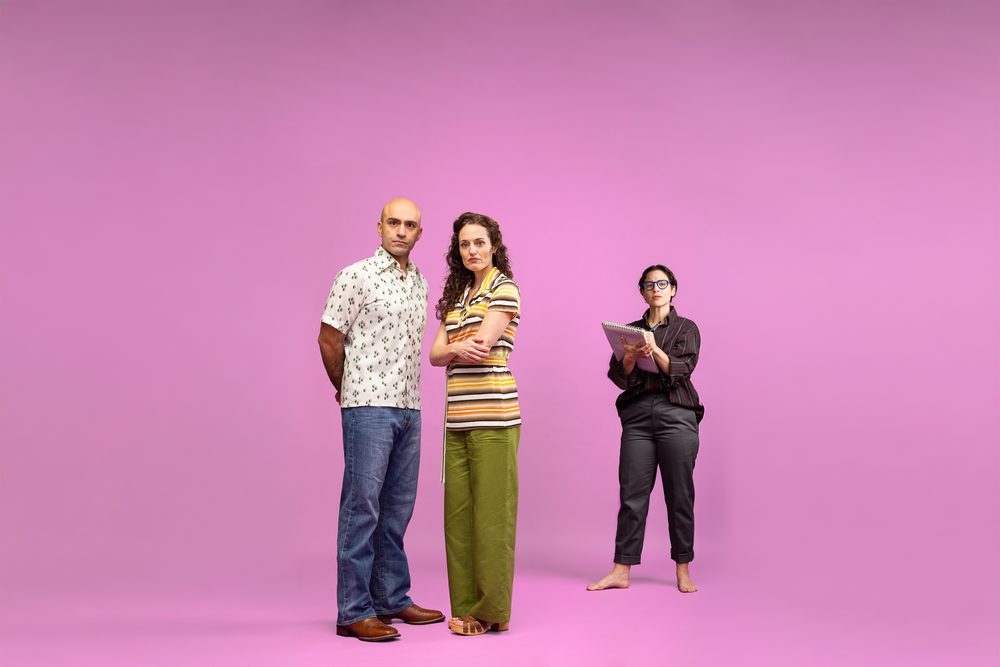
Kilian Melloy: This play is about familial connection, heritage, and legacy, but more than that, it’s about identity. In your view, how much of Allison’s identity is derived directly from her father?
Logan Ellis: I’ve been taking a lot of inspiration from the words of Alison Bechdel herself on this exact subject. The distance between two people who share DNA and a house — depending on how you look at it, it can be a gulf or it can be zero space. What I feel is part of our job is to capture a paradoxical moment. Alison said that when she came out at 19, around 1980, she did it because she wanted to distance herself from her parents and establish her own identity. That effort backfired, because by coming out, it was revealed to her that she was even closer than she thought to her father’s experience. I think Medium Allison is caught in the moment of the shock of that, coupled with the immediacy of his sudden death shortly thereafter. It can be completely reasonable that it has taken a couple of decades before that person is ready to lower the guard and admit, “I might be more like my father than I thought.” Rather than saying, “How close or far are they?” I think it’s this paradoxical stretching and contracting that we’re interested in.
Kilian Melloy: How much does the graphic novel influence the look and the movement of the play?
Logan Ellis: The comic book is an incredible tool for tapping into the images of it. One of the things we’ve been talking about is how the play is about a person questioning their inheritance from their parents. In that spirit, I was like, “Who are the aesthetic parents of Fun Home that influence the things that exist in the DNA of it?” Obviously, the original Broadway production is the daddy of all revival productions. The original cast recording is ubiquitous, and with the privilege of working with our incredible music director, Jesse Rosso, who is a colleague of Jeanine Tesori, we’ve been realizing that the Broadway recording — and also what was written in the score — has some discrepancies that are challenging to the ear if you’ve listened to that recording a bunch of times. We’ve had the cool opportunity to become conscious of that aesthetic inheritance.
We’ve also been thinking about the book [by Lisa Kron], because it is the basis of this incredible adaptation. In the comic book, there’s so much circumstantial information about the family and their relationships to each other, things that feel true in the musical but are a little bit below the surface. Being able to bring that into the room sheds light on the intentions the characters have towards one another, because the musical is so tightly edited and written. Also, I know Lisa Kron is a fan of Thornton Wilder. Our Town is one of the theatrical ancestors of Fun Home. There are so many similar elements, like the three ages of a woman in her life, the examination of small-town life, the movements inside of a household that end up leading towards death, and then also this climactic encounter between a child and a parent that are now separated by death. We took a lot of aesthetic inspiration from that play when we were designing the space with Tanya Orlando, the scenic designer, thinking about what is essentially there in this collision of memories, and also an understanding of the theater as the place where the living and the dead can speak to each other. That’s something I think is present in many American plays, and also something that is very apropos for the Huntington, which is a big proscenium theater that has been remodeled and is so gorgeous and comfortable. When I sit in that theater, I feel a ghostly presence, and I feel such a history in the air between the audience and that fantastic big stage.

Lyla Randall and Nick Duckart; photo by Nile Hawver
Kilian Melloy: There must be challenges — and perhaps the opening of creative doors — when you’ve got three versions of one character interacting with the story and sometimes, perhaps, with each other.
Logan Ellis: I think that comes down to the casting process. We are extraordinarily fortunate with the trio we have of Sarah [Bockel], Maya [Jacobson], and Lyla [Randall]. There’s a meeting that’s going to happen between their craft and their physical presence, the way that they approach their voices, and the way that they understand the circumstances of the character. That’s already happening in an organic way, because even from the first day of rehearsal, they were singing together, led by Sarah Bockel, who is playing [present-day] Alison.
Kilian Melloy: You are very much involved with two other theater companies, both on the West Coast — one in Kent, Washington, where you’re from, and the other in Los Angeles. How did you come to be directing this production?
Logan Ellis: When I graduated from Ithaca College, I was home for the summer and wasn’t sure what was going to happen. A bunch of my friends from high school were also home, including some that were still in high school, and we decided that — with no money, nothing to start with — we were going to start a theater company. That was the beginning of Theatre Battery, which just had its 15th season. That same year, I got an internship at Magic Theater in San Francisco. Loretta Greco was the artistic director, and she saw something in me and wanted to mentor me. I moved to San Francisco and became her personal and artistic assistant. I worked freelance in the Bay Area for six years, growing my own company in Kent at the same time.
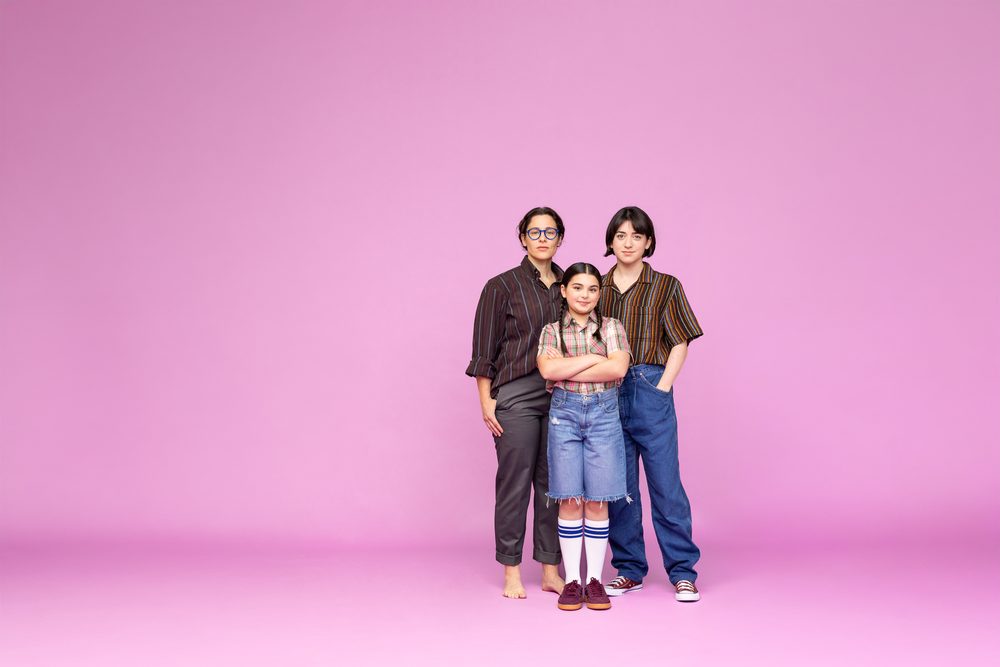
I decided I would like to go to graduate school and was fortunate to be accepted into the Yale School of Drama, an unbelievable, life-changing experience. I graduated in 2020, which was the year the pandemic started. I didn’t exactly have job prospects, but I was able to move home. The city [of Kent] commissioned me to create a documentary series — interviews with different [city] leaders about what was happening with COVID and Black Lives Matter. That put me on this path of working in film. One of my colleagues from Yale, Elise Paulino, had gotten a series regular job at HBO, and she was like, “We should start a film production company together.” I started spending a lot more time in Los Angeles, making films with her and with other friends and artistic collaborators, and then got involved with the Skylight Theatre.
At the beginning of this year, I got a phone call from Loretta — like, “Hey, I’m doing Fun Home. Would you like to do it?” And I was like, “Well, that’s just crazy, and I would totally love to do it.”
Kilian Melloy: Theatre Battery focuses on producing work that is culturally and politically relevant. Given today’s attacks on the queer community, was that part of the appeal to directing Fun Home?
Logan Ellis: That is 100% an element that draws me to this. Alison Bechdel has mentioned that she didn’t expect Fun Home would be a success as a novel. A lot of the stuff she had written prior to that, like Dykes to Watch Out For, had been focused on her own community, the queer and lesbian community. There is something unbelievably powerful about couching political views inside of a totally personal narrative. Through her story, she was able to reveal in an undeniable, immediate, and personal way how the political oppression of queer people led to people in this family that really love each other doing harm to themselves and to each other through habitual and cyclical lies and deception.
I share Alison Bechdel’s fervent desire that our decades of progress towards civil rights for LGBT people, and growing rights for women and equality [will] endure. One of the things that has come up quite a bit is that different generations of queer people use different language. Even between now and 10 years ago, when [Fun Home] premiered on Broadway, we have a different vocabulary to talk about gender identity and gender expression and sexual orientation. The growth of that language can create separations, conflict, and misunderstandings. I think it’s through a consistent curiosity about our history that we’re able to come into a greater understanding of all the work that has come before, how that leads us where we are, all the things that haven’t been solved, and the mistakes that have happened that we need to honor and accept.
Kilian Melloy: It seems like Fun Home isn’t a play that appeals only to queer audiences. Why do all sorts of audiences seem to like it so much?
Logan Ellis: One of our great paradoxes and challenges as Americans is epitomized by Alison Bechdel’s relationship to Superman. There’s a lyric in the first song when she and her father are playing airplanes. She says, “I’m Superman!” Alison Bechdel has talked about how she’s a person who identifies as woke, and she claims that word. She speaks about how Superman’s X-ray vision is able to see through the lies and propaganda and systemic deceptions that have taken place in order to centralize power. The paradox of Superman, who is an iconic American symbol, is that question of, “Are we about facing the truth, or not?”
That Superman image is also one we’ve been talking about as the idea of a child having a role model that is not assigned to her, in terms of a character that a girl should be modeling herself after. That’s an exciting window into why this is important.
This interview has been edited for length and clarity. Fun Home runs November 14 – December 14 at The Huntington Theatre, 264 Huntington Ave. in Boston. For tickets and more information, visit the Huntington’s website.