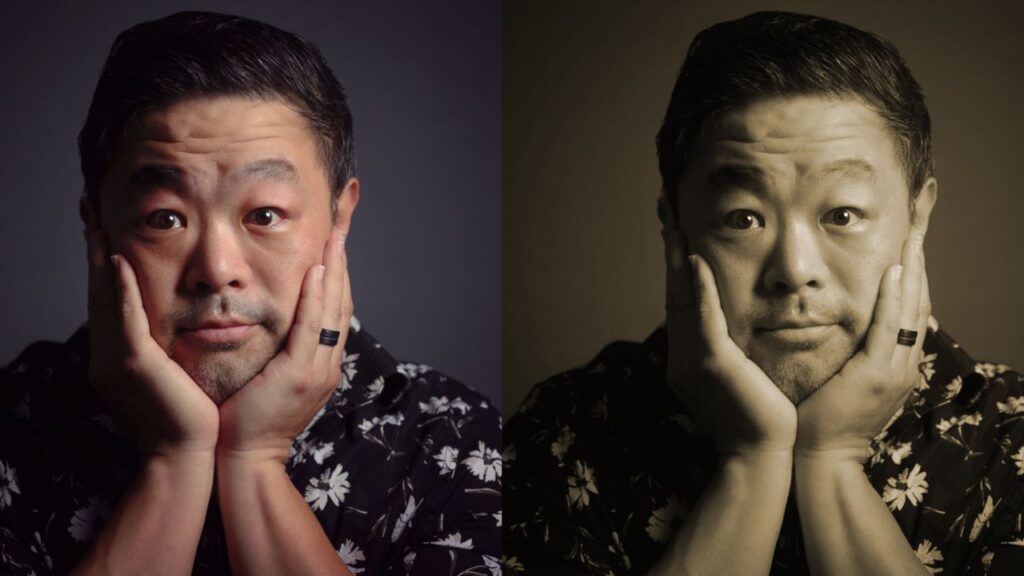
You might know comedian Chris Grace from his role on Superstore or his appearances on Broad City, Pen15, and other TV shows. But beyond the screen, he’s a busy standup comedian with such a packed itinerary that, he tells Theater Mirror, he hasn’t been home since July… and he won’t be back until just before Thanksgiving.
One of Grace’s most recent stops was the Edinburgh Fringe Festival, where he created new material nonstop — a show every day, he says, for each day he was there. Now he’s getting ready to come to Boston, bringing his solo show Sardines (a comedy about death) to the Huntington Theatre for a six-week run, Sept. 30 – Nov. 16. (Find out more at https://www.huntingtontheatre.org/whats-on/sardines/ .)
Earlier this year, Grace was headed to The Kennedy Center with another solo show: Chris Grace as Scarlett Johansson, a pointed commentary about the famed actor’s infamous turn as a character in the 2017 film adaptation of the Japanese anime Ghost in the Shell. Such inappropriate casting is nothing new to Hollywood; just look at notorious roles like Mr. Yunioshi, portrayed by Mickey Rooney in Breakfast at Tiffany’s, or Emma Stone in Aloha. Given the current administration’s obsession with transgender people and drag shows, one wondered if Grace’s Kennedy Center gig was going to happen; after all, he dons a red wig and portrays Johansson in the course of the show, and other theatrical works had been canceled for less provocative material. (Among the casualties was a touring production of the children’s musical Finn, seen by some as a metaphor for the trans experience.)
Theater Mirror caught up with Chris Grace as he lingered outside a coffee shop in London — a rare spot, evidently, of connectivity for our Zoom call.
Kilian Melloy: Last time we talked, you were about to go to the Kennedy Center and do your solo show about Scarlett Johansson. How’d it go?
Chris Grace: It went great. I think I just got in under the wire before they started to really amp up their conservative message. If you look at the Kennedy Center Instagram, it’s the programming that I think people feared that they were going to have. I think it might have been that they just fulfilled the rest of the obligations that they had contractually committed to, and now they get to do what they want to do.
Kilian Melloy: God, imagine. You could have had a double header with the J6 choir if the timing had been a little different.
Chris Grace: I could have been there with the induction of Kiss.
Kilian Melloy: A natural double bill. Your new show, Sardines, is billed as “a comedy about death.” Would it also be fair to say it’s a comedy about loss?
Chris Grace: Yeah, that’s fair. It’s sort of about, “How do you live life, not only sustaining those losses, but knowing that those losses are in the future for everybody?”
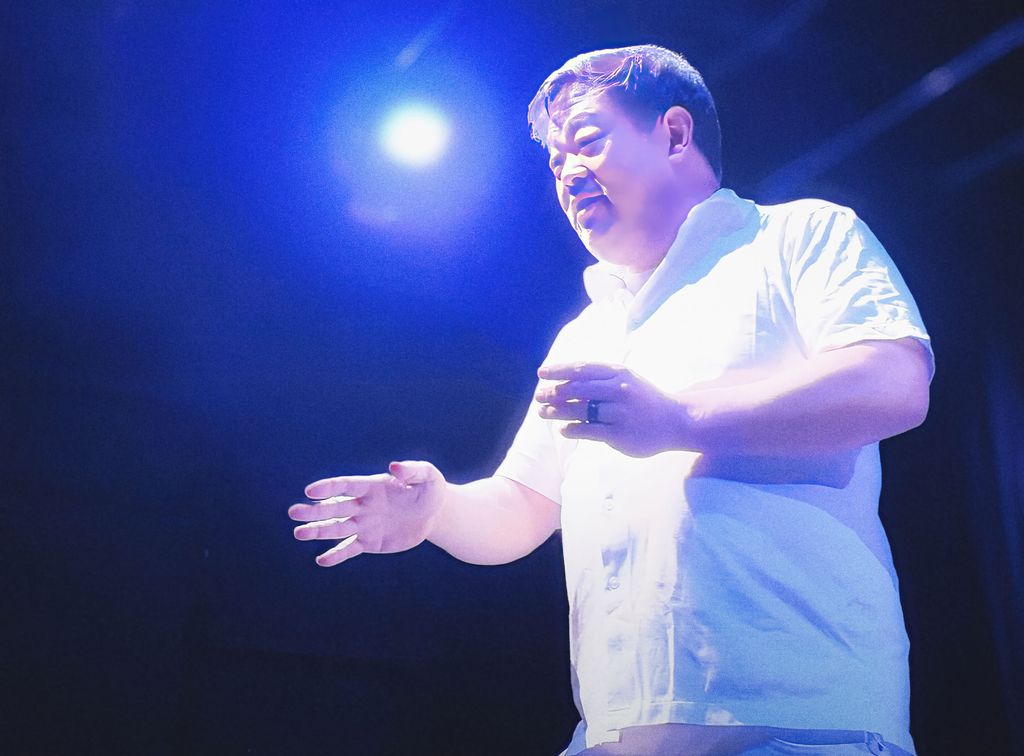
Kilian Melloy: It seems appropriate in a show about loss that you forego props.
Chris Grace: Yeah, this is definitely a different theatrical approach, but this is more about… I think ritual is too strong a word for it, but it is about coming together, for the people in the room to sit with the idea of mortality.
Kilian Melloy: By not having props you invite the audience to imagine the things you’re describing. You’re letting them personalize the imaginary slideshows about your family, or your account of a 911 call, and they can relate to those stories through their own experiences.
Chris Grace: That emergency call was something I thought about years ago… there was a time where I was like, “Oh, I can try to get the actual recording,” and balancing the confrontational nature of playing something like that to an audience with the old trope of, like in horror movies, your imagination is stronger than something that you actually see in front of you. It’s like when [the shark in] Jaws is not in Jaws for a lot of the movie. Like, death is the shark from Jaws in my show.
Kilian Melloy: Like many comedians, you make stories about your loved ones a key part of the show. Does that ever come back and bite you?
Chris Grace: No, it hasn’t really. I don’t ask a ton of permission before these shows are made, but the people that I’ve talked about have all seen the shows, and they all support it. I think part of that is trust that I can communicate the stories of people’s lives in a way that doesn’t dishonor them. I also think the [stories] that are comedic, most of the time it’s me in this situation, and not about them. And honestly, it’s also convenient for a lot of them to die, because then they won’t get mad at me.
[Laughter]
Kilian Melloy: Would you say the trope is true that comedy is rooted in sadness or in grief, and also that a good joke is going to have to cost you something personally?
Chris Grace: My comedy definitely is rooted in sadness — always has been. I’m sure that not every “knock, knock” joke is rooted in grief, but I think that it’s rooted more in what you see in the world as truth. If you’re being really truthful about our lives, sadness is just going to be a part of it. I don’t need art to pretend that the world isn’t what it is. That’s what I like about it.
It’s funny, because I think a lot of people want art to be escapist. They want things to be super-positive. But for me, the escapism in art is that if I see a piece that I really connect with, I get to imagine for one to two hours that I live in a world where other people are connected with me, and that other people are empathetic and compassionate, and want to talk about our real lives. That’s a form of escapism to me, because the world isn’t 100% full of empathetic, compassionate people. The simple fact of sitting in the theater experiencing that catharsis is escapist.

Kilian Melloy: It seems like the world around us is all too happy to give us comedic material on a daily basis, especially now. There’s so much, in a dark humor sort of way, to spin into laughter.
Chris Grace: I still think it’s important for people that are concerned about the world and concerned about our government to be joyful, because in the end if you feel a certain way about, let’s say, progressing politics, we still need to attract people to the idea, right? And if we’re sourpusses all the time, no one’s gonna want to want to hang out with us. There has to be some strength and energy in the good things in life. Otherwise, we just won’t have the energy and the passion to fight all of the evil.
Kilian Melloy: You talk about processing your losses through your art. After a year or more of performing this show, do you find that it’s a different experience now?
Chris Grace: I don’t know if I’m less sad than I was a year ago, but I feel the show is much more in my bones now. I have these two big songs I can sing. One of them is about Scarlett Johansson, and one of them is about death. [Chuckles] I carry them with me in a way that, if I wanted to, I could just do the show here on a street corner in London. That’s a really neat thing, because it’s like the conjuring of theater. Having the show in my bones means I can cast that little spell wherever I go.
Kilian Melloy: Obviously, audiences are laughing at your stories, but do you get gasps of horror? Do you get people who are sobbing in the third row?
Chris Grace: That definitely happens. There are some moments in the show that are pretty intense. It’s not that I like the idea that people are crying at the show, but it’s reassuring that they’re engaged. But people yawn and fall asleep, too.
[Laughter]
Kilian Melloy: You touch on something probably everyone shares, to some extent, which is the primal fear of dying and missing everything that’s going to happen in the world afterwards. That seems like the ultimate FOMO.
Chris Grace: It’s not even FOMO. It’s almost the reverse of nostalgia, in a way. I still have a genuine curiosity and wonder at all of the things in the world. I still have lots of joy in my life, and I feel very glad to be alive.
Kilian Melloy: What do you want audiences to take away from the show?
Chris Grace: I want them to have this feeling when they leave the show that there’s this thing they’ve been wanting to do, or there’s an email they’ve been wanting to send, or there’s an apology they’ve been wanting to make to somebody, and to just go ahead and do it. We don’t have that much time. I think we fool ourselves into thinking we have a lot of time, and you get reminders pretty regularly, especially as you get older, that no time is promised to you. We need to seize the day now.
I think now there’s a lot of paralysis in the world; I feel it too. Whether it’s scrolling on your phone, or you’re reading a newspaper, or thinking about things that make you anxious, that paralysis is one of the worst feelings in the world. Unfortunately, there doesn’t tend to be a moment where you suddenly feel ready to pierce that paralysis. Hopefully, my show is a shot over the bow — like, “Hey, let’s go. There’s no time to waste.”
Kilian Melloy: What are you working on now that we might see in the future?
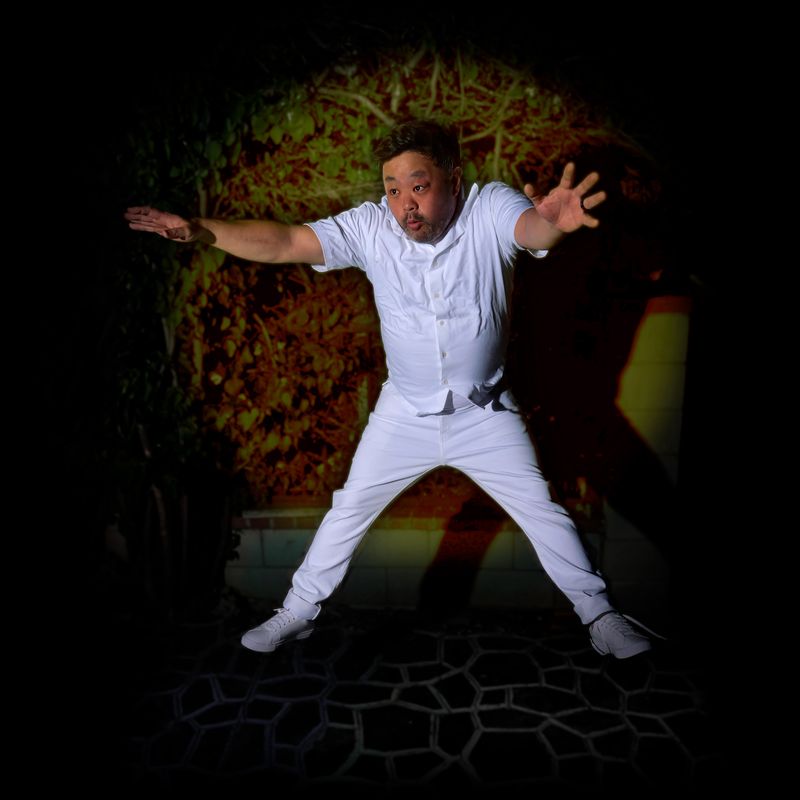
Chris Grace: I just did a new Edinburgh show this past year that was called 27 Hours. I created a new show every day of the month at Edinburgh. That was really fun. That was my favorite fringe I’ve ever done, actually. I have no idea what’s going to come of it, but I just put myself in a position to be relentlessly creative for the entire month. I can’t believe that I did it, but I survived. So, the rest of this year, essentially, I’m going to do Sardines at the Huntington, and then in probably November and December, I’m going to just collapse at home and relax. I don’t remember when we talked, but I left L.A. on July 10 to do Scarlett at the Kennedy Center, and I haven’t been home yet. I won’t be home until the Monday before Thanksgiving. It’ll end up being an incredible four or five months on the road of doing all these different kinds of art, and that’s been really great, but I probably need some time to figure out what’s next.
Sardines (a comedy about death) will run at The Huntington Theatre Sept. 30 – November 16. For tickets and more information, visit: https://www.huntingtontheatre.org/whats-on/sardines/ .