More than two decades ago, the sexual abuse scandal that rocked the Catholic church exploded into headlines by way of articles published by The Boston Globe. The allegations were beyond shocking, with people coming forward to share stories of abuse at the hands of priests their families had seen as the virtual personification of God. As more details came to light and more people came forward with their stories, a horrifying pattern emerged of a church hierarchy that simply shuffled alleged abusers from one parish to another — a practice guaranteed to put more young people in harm’s way.
That scandal served, perhaps, as a direct forerunner to widespread calls for accountability that followed, chiefly the #MeToo movement, which saw allegations (mainly from women, but also from men) bring down powerful Hollywood figures like Harvey Weinstein. But the momentum didn’t stop there; workplace harassment, too, became a focus of intense scrutiny.
Putting a stop to sexual abuse — to abuse of all sorts — is inherently noble, but any cause that gathers momentum has to ensure its velocity doesn’t outstrip its care in assessing claims and weighing evidence. Yes, victims need to be believed — and innocent people targeted with false claims for any number of reasons (vengeance, money) must also be protected. Even where no base motive comes into play, the axiom of “innocent until proven guilty” must hold sway; after all, in a climate of suspicion, even well-intentioned claims can be tainted by bias, prejudice, personal distaste, or circumstantial evidence that, to a hypervigilant or punitive eye, can seem to add up to more than its sum.
None other than playwright John Patrick Shanley — the screenwriter for lighthearted comedic fare like “Joe vs. The Volcano” and the perennial classic “Moonstruck” — distilled the essence of this enormously thorny subject into a brisk, powerful work of theater (which Shanley also adapted into a film). Titled “Doubt” (and subsequently retitled “Doubt: A Parable”) and set four decades before the so-called “pedophile priest scandal” broke, the play pits a strict nun, Sister Aloysius, against the parish priest, Father Flynn, and illustrates the importance of both institutional vigilance and investigative skepticism.
Sister Aloysius has her reasons for disliking Father Flynn, finding his personal habits and his theological approach a bit too slack to suit her worldview. Upon hearing from another nun — Sister James, a teacher at the parochial school where Sister Aloysius is the principal — that the school’s only Black student, Donald Muller, came back to class in a seemingly dejected state after a private meeting with Father Flynn, Sister Aloysius assumes the worst. Since she is a woman in a deeply patriarchal setting, Sister Aloysius must proceed with delicacy, but that does nothing to quell the intensity of her convictions against Father Flynn. Sister James, attempting to be a leavening voice, is caught between the two of them; she’s sympathetic to Father Flynn’s more modern approach to spiritual guidance, but she’s also deeply committed to the well-being of the students in her charge.
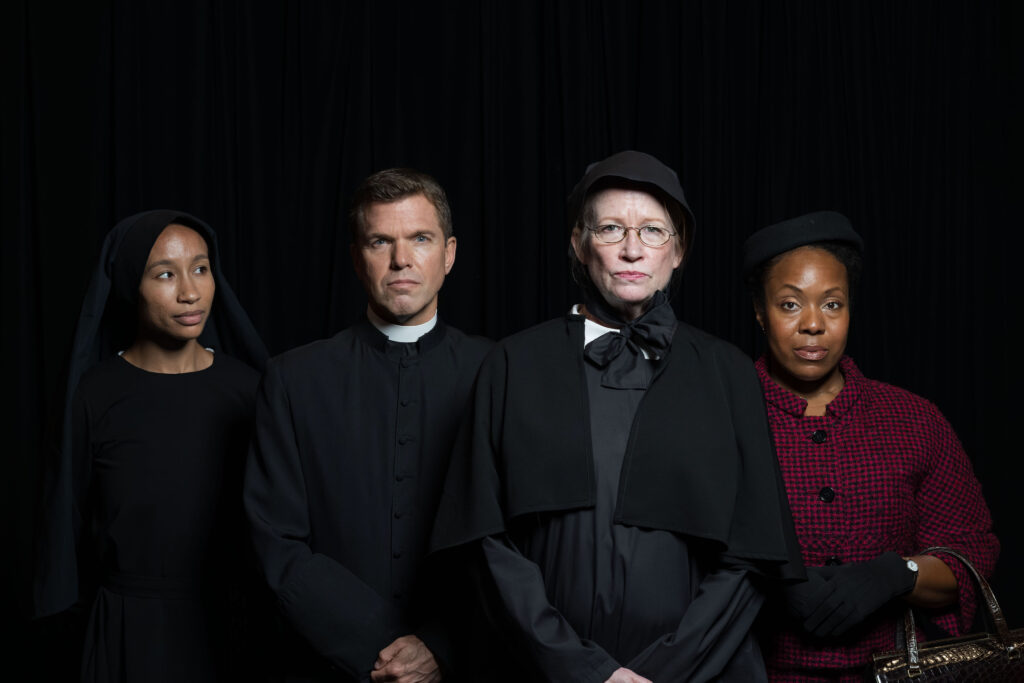
Broadway star and two-time Tony nominee Johanna Day stars in the Hanover Theater & Conservatory production of “Doubt: A Parable,” which begins performances on Sept. 18 and runs through Oct. 5. Jamie Wax, co-creator of the musical “Evangeline,” plays Father Flynn. Rebecca-Anne Whittaker, an alumna of both Vassar College and the MFA acting program at Brown/Trinity Rep, plays Sister James, and Lynette R. Freeman plays Mrs. Muller, the mother of the boy in question.
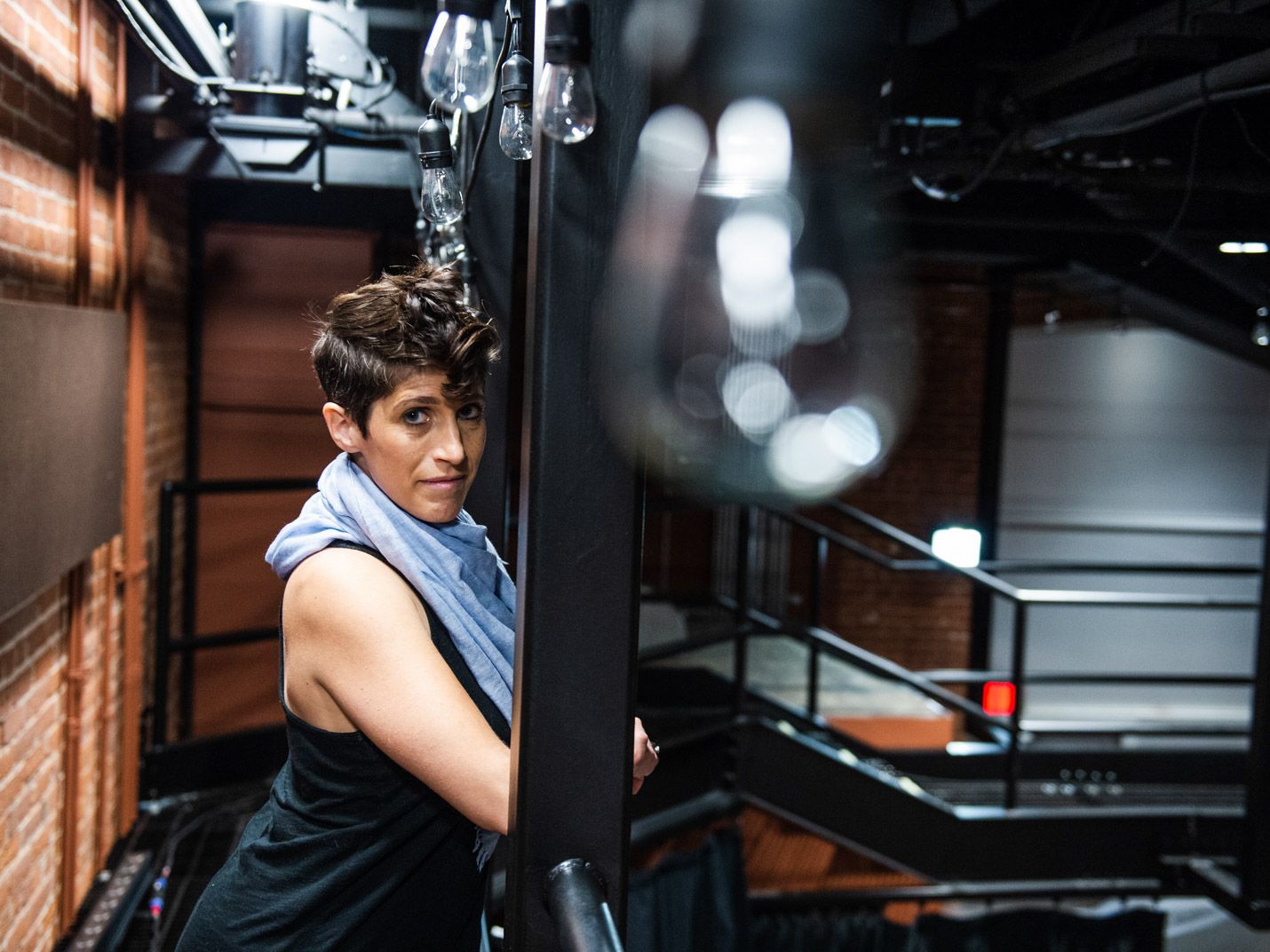
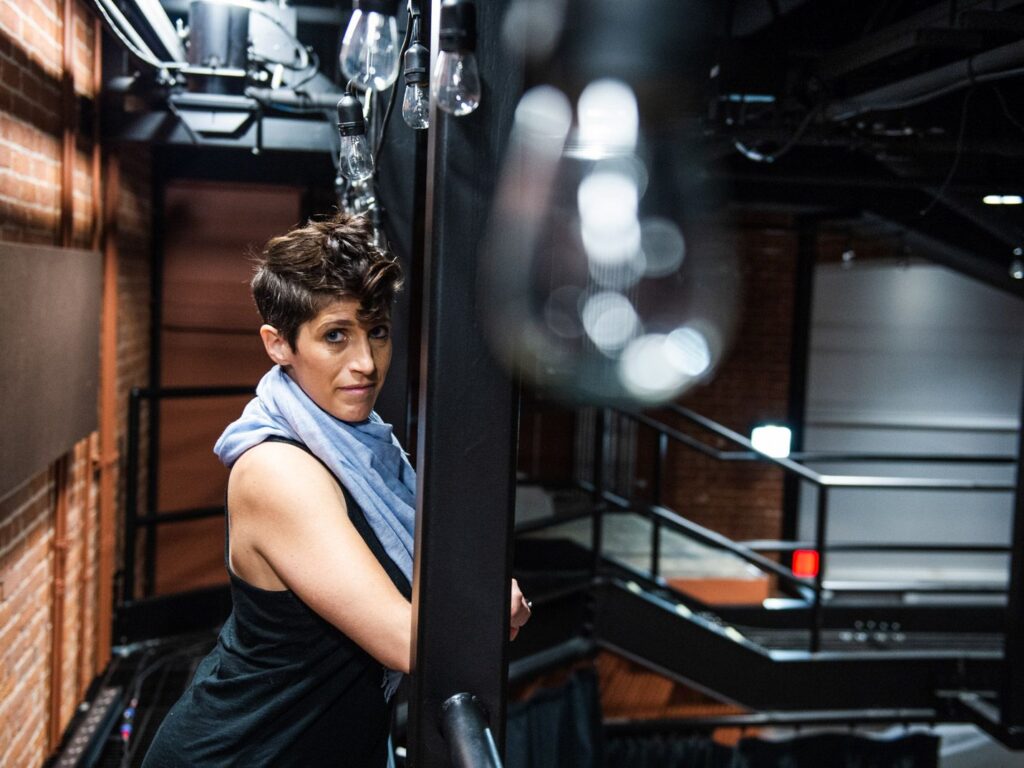
Livy Scanlon, late of the esteemed and now defunct Bridge Rep (where she served as founding Producing Artistic Director under the name Olivia D’Ambrosio), directs. Theater Mirror had the chance to ask Livy about bringing “Doubt” to the stage without a loss of the artistic surety she has so ably demonstrated in the past.
Kilian Melloy: We’ve spoken in the past, when you were with Bridge Rep. May I ask about the name change?
Livy Scanlon: Sure thing! I took Scanlon when I married my wife. I reverted from Olivia to Livy, because I’ve always preferred it. Moving into middle age, I suppose I’m embracing my authenticity.
Kilian Melloy: It seems that Bridge Rep is now on a long hiatus. Or is it more permanent?
Livy Scanlon: We wrapped Bridge Rep with our production of Who Is Eartha Mae?, created and performed by Jade Wheeler, which I will produce for a second time as part of THT Rep’s 25-26 season!
Kilian Melloy: And now to the production of “Doubt” you are directing… The play might remind us of the Catholic Church’s abuse scandal, but it also speaks to the thorny dialectic around the #MeToo movement, and even to the subject of social media gossip, ostracization, and cancel culture. Two decades after the play’s premiere, how are you tying the text into that fundamental tension in contemporary America?
Livy Scanlon: Without giving away my director’s secrets, we’re leaning into the ambiguity baked into Shanley’s writing, inviting the audience to wrestle with the same trust–suspicion divide that underlies today’s debates about power, justice, identity, and accountability. The play constantly asks us to weigh cynicism against faith. Our approach is to let both impulses breathe onstage, so the audience feels that tension rather than resolving it.
Kilian Melloy: The way the script is written, Sister Aloysius — played in this production by Johanna Day — can seem like she’s on a vicious crusade against Father Flynn. But we also see moments of her humor and vulnerability. What is Ms. Day bringing to the role?
Livy Scanlon: Johanna has an inherently warm presence and is brilliant at playing the contradictions — she can be cutting one moment and deeply compassionate the next. She’s also hilarious. We’re emphasizing her humanity so the audience sees a whole person, not a caricature.
Kilian Melloy: Reading the script, it’s easy to feel like the cards are stacked against Father Flynn, who is on the defensive from the start.
Livy Scanlon: Again, without tipping our hand, what I can offer is that Jamie’s portrayal of Flynn is sympathetic and relatable, a choice designed to complicate the audience’s response and prevent swift judgments.
Kilian Melloy: Sister James seems like an audience stand-in, more so than either of the others. Is that how you see her and how you are directing Rebecca-Anne Whittaker?
Livy Scanlon: As director, yes, I interpret Sister James as an avatar for the audience, wrestling with the proclivity to believe in goodness even when confronted with suspicion. That said, actors can’t act ideas — rather, they create vivid characters from which the audience must make inferences. Rebecca-Anne is terrific in the role, playing James with complexity, vulnerability, and quiet strength, all of which draw the audience into the character’s dilemma.
Kilian Melloy: Playwright John Patrick Shanley has made an interesting choice in presenting only one male character – the accused Father Flynn – on stage. Other men and boys mentioned in the play are painted in generally negative terms: Troubled, predatory, violent. How does this dynamic play into the play’s message and possibilities for interpretation?
Livy Scanlon: We learn about the other men primarily through Sister Aloysius, who certainly colors them through the lens of patriarchy. The primary exception, of course, is Donald Muller, who’s portrayed as vulnerable.
Kilian Melloy: One of the play’s most striking scenes is when Mrs. Muller (Lynnette R. Freeman), the mother of Donald, meets with Sister Aloysius and seems to write off the possibility of her son being molested as the price for a chance at a better life.
Livy Scanlon: Lynnette brings extraordinary nuance to Mrs. Muller. We’ve talked a lot about survival, pragmatism, and maternal sacrifice. We’ve also discussed how Mrs. Muller is the only character representing the secular world, and how that informs her point of view. She plays the role with heartbreaking clarity. Truly a show-stealer!
Kilian Melloy: The church’s focus on male authority is on full display here. How does this balance (or unbalance) the play’s dynamics? How are you addressing it?
Livy Scanlon: To me, all four characters are outsiders. We ultimately learn that even Father Flynn, who enjoys the most power within the hierarchy of the Church, has been run out of multiple parishes. If anything, the play demonstrates how patriarchy ultimately oppresses all of us – even members of society who ostensibly benefit from its structure.
Kilian Melloy: In the end, we don’t really know anything – and that’s the point. How comfortable are you with that, and do you have a preferred thesis from which you’re basing your direction?
Livy Scanlon: I have a clear narrative in my mind, which I have shared with the actors and used in guiding their performances. However, our job is to make space for multiple potential truths to coexist, leaving the audience unsettled but deeply engaged. I hope the show will encourage them to reflect on who, in this day and age, they leap to judge and why.
For tickets and more information about Hanover Theatre & Conservatory’s production of “Doubt: A Parable,” visit their website: https://thehanovertheatre.org/event/doubt/