
By Killian Melloy
“But that’s another story.”
It’s a line of dialogue Kenneth, the main character and narrator of “Primary Trust,” uses often. Kenneth has been through a lot, and he touches on painful memories only glancingly, leaving it to the audience to try to imagine what he’s not saying. One of only a few Black people in the mostly white town of Cranberry, New York, Kenneth has endured the occasional brush with racism; he’s also someone who grew up in an orphanage. We can’t tell what’s going on in his mind, except for the inferences he makes, the way he sometimes has to put himself on hold and count in order to stay grounded, and what he reveals through his fourth wall-breaking asides and his conversations with his best friend, Bert, and Corrina, a waitress with whom he starts to become friendly.
It looks like more hard times are on the way when the used bookstore where Kenneth has worked for years goes up for sale. He has to leave his comfortable routine of working by day and drinking mai tais at a tiki bar with Bert by night. Stepping out of that comfort zone feels dangerous, of course, but it quickly leads to surprising rewards: After landing a new role at a local bank, Kenneth finds that he is a natural at the job. He’s soon excelling — but success and growth come with their own challenges, and not even Bert can overcome the horrors of Kenneth’s past. That’s something only Kenneth can do for himself.
Playwright Eboni Booth doesn’t let “Primary Trust” lapse into trauma porn, focusing on a matter-of-fact treatment of Kenneth’s difficult past and optimism for his future, all while finding the lighter side of his present. With rapid-clip dialogue and crisply-drawn characters, Booth creates an intimately personal and sympathetic world, and when the play springs major surprises — some quite early, others only after earning a weighty payoff — Kenneth’s world, and our understanding of it, grows by quantum leaps.
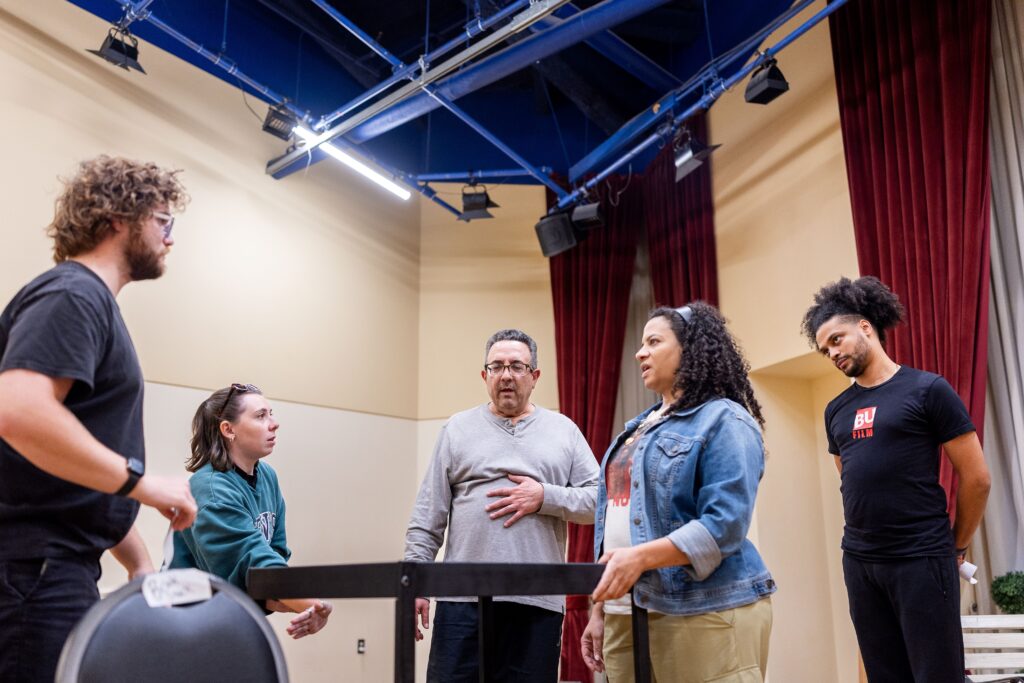
Dawn Simmons, the new artistic director of SpeakEasy Stage Company, is directing “Primary Trust,” which kicks off a new season and a fresh inauguration for the company after the departure of founding artistic director Paul Daigneault. The company is in good hands: Simmons brings a depth and breadth of experience to the role that’s only possible after years as a leading light in the Boston theater scene. (Simmons co-founded Front Porch Arts Collective with Maurice Emmanuel Parent, and she served as that company’s inaugural artistic director; her move to SpeakEasy means that Parent will now assume the role of artistic director at Front Porch. Parent will be directing Front Porch’s inaugural offering of the new season, “The Mountaintop.”)
“Primary Trust” feels like an auspicious beginning for Simmons, as well as for a new era at SpeakEasy. Theater Mirror caught up with her to get the inside view on the play’s production, her new role, and what the future holds.
Theater Mirror: Congratulations on becoming SpeakEasy Stage Company’s new artistic director. How did that come about?
Dawn Simmons: It was a very intense audition process. [Paul Daigneault] had mentioned that he was considering stepping down at some point; I think it was about the time that he was looking for a managing director, and he had asked if I might consider [the job]. But when he said that he might be stepping down, I told him I’d be gunning for the artistic director position. He sort of smiled, and I think I would categorize it as him saying, “Well, then you should go for it!”
So, I waited. He announced that he was retiring. A call was sent out. I applied and then went through many interviews with a search committee, with the staff, the board. [There were] some international candidates, and many national candidates. Jobs like this don’t come up often, so it was nice to hear that I was in fierce competition. I don’t want to say it was a slam dunk — I worked for it, and the work showed, and it made it an easy choice for them.
Theater Mirror: Are you still going to be directing for Front Porch and other companies, or do you think you’re going to lean into SpeakEasy for a while?
Dawn Simmons: I think what makes me valuable to SpeakEasy and to the community is to be out in the world. I have a show with Front Porch later this year; I am directing the Ufot Cycle show In Old Age. It’ll be my second time collaborating with Mfoniso Udofia. And I have a project coming up in my hometown of Buffalo right after this.
I’m excited to work over the next few years to see, “Okay, what can we do? Are there co-production opportunities for us?” It’s early days — I’m not even a full two months in, but I love being able to go out and then bring insight back to the company. I probably will not do it as much as I have been able to do in the past, but I’ll keep one hand in that freelance world, for sure.
Theater Mirror: Did you choose this season’s slate of plays at SpeakEasy together with Paul, or did you inherit a season that had already been determined?
Dawn Simmons: For the most part, it was chosen together with Paul. There was one show that was already on the docket, but it was a really beautiful back and forth about picking the season — him presenting shows, me presenting shows, and at the end of the day, are the rights available? That really dictates [how a season is put together], but I’m so proud of what we came up with.
Theater Mirror: “Primary Trust” is the first play of the new season. Why was this one chosen?
Dawn Simmons: Right now, our world is harder and harsher than it’s ever been. We’re more fractured. We’re siloed. I keep hearing this talk about rage culture. We’re in a rage ecology. People post something on social media, and one minute, that person is the most amazing. Then they’ll say one thing, they step out of line or do something, and we are ready to crucify them. Did you ever see Ghostbusters II? There is this scene where the Ghostbusters are down under New York City, and the subway system is flowing with this river of goo. And this river of goo is, like, concentrated hate, and it’s getting onto people and getting into the world, so people are short-tempered, short-fused, they lack empathy. It feels like right now, right? This play is the antidote to that. A young man who is actually kind of content in his loneliness starts to experience kindness late in his life. He has isolated himself for reasons which become apparent in the play. He is forced to come outside of himself, and, in doing that, the world meets him where he is. It lends him a hand. It is kind to him.
It feels like we need that now — that message, that hope of kindness, that reminder of what we used to be like. It’s also been part of what has been so great about my tenure in Boston. I hope it’s been marked with my own kindness to my community, and people’s [kindness] to me. I am very much an example of people who have lifted me up, and, I hope, a product of the people I have also lifted up. I love that as a message for how I begin my time here.
Theater Mirror: It’s stated at the start of the script that this is in a time before smartphones, which, needless to say, is also a time before social media and the river of hate you just mentioned. That’s an important choice that the author has made.
Dawn Simmons: We were having this conversation yesterday in rehearsal. I would love if, after this play closes, we could get three other companies that produced “Primary Trust” to get together and talk about what the conversation was they had in the rehearsal room. What period of time did they pick? There’s a lot of time right before smartphones. There are a couple of things in the script that help orient us as to the time, but I think the year that we picked so informs the rest of our storytelling. We’re at a time before smartphones, but not necessarily a time before cell phones, and there’s a little bit of the internet,[but] not in the everyday, pervasive way that we have now. It impacts a lot of the choices and a lot of the conversation.
Theater Mirror: One of the huge themes of the play is more or less stated in the title, but it’s only suggested in the dialogue: After you’ve been subjected to a major trauma, in whom or what can you put your trust?
Dawn Simmons: This is also part of it. We don’t trust each other. The people who should be teaching him that [trust] are not there for long, but again, the world serves him what he needs when he needs it. It’s so beautiful. The town that he lives in, Cranberry, New York, has this motto: “Welcome friends, you are right on time.” I think what we see is that everything [happens] in its time in this play. He was going to learn how to trust himself and that he could put his trust in other people, in his time.
Theater Mirror: When you’ve got a play like this, which has such surprises in store and so much to say about the experience of trauma, how do you calibrate emotional payoff and the precise colors with which you want to paint?
Dawn Simmons: I could not have a better partner than Eboni Booth. We have been marveling at how she is speaking to us through the text. She has calibrated everything so precisely. We just have to follow her timing, right? We keep going back to that phrase, “Welcome friend, you’re right on time.” She gives you each new piece of information, each new smile, each new devastation, each new promise of hope at the precise moment the play needs it — at the precise moment that Kenneth needs it. She knows the moment where the first tear is about to well up; she knows how to wipe it away before it even starts. She knows how to build up that well of emotion in you. I watched it happen in the first read with the cast. The producers that were in the room were like, “Oh my gosh, I am all of a sudden overwhelmed because I watched this man’s journey.” It’s all Eboni. There are so many reasons why I’m like, “Oh, this is why she got the Pulitzer. Oh, this is why she got the Pulitzer.” I have been really lucky to work on a couple of Pulitzer Prize pieces, and I understand it’s writing at another level. It feels simple until you’re inside it, and then you’re like, “This is tightly woven.”
Theater Mirror: What was the vibe or the chemistry you were looking for when you were casting?
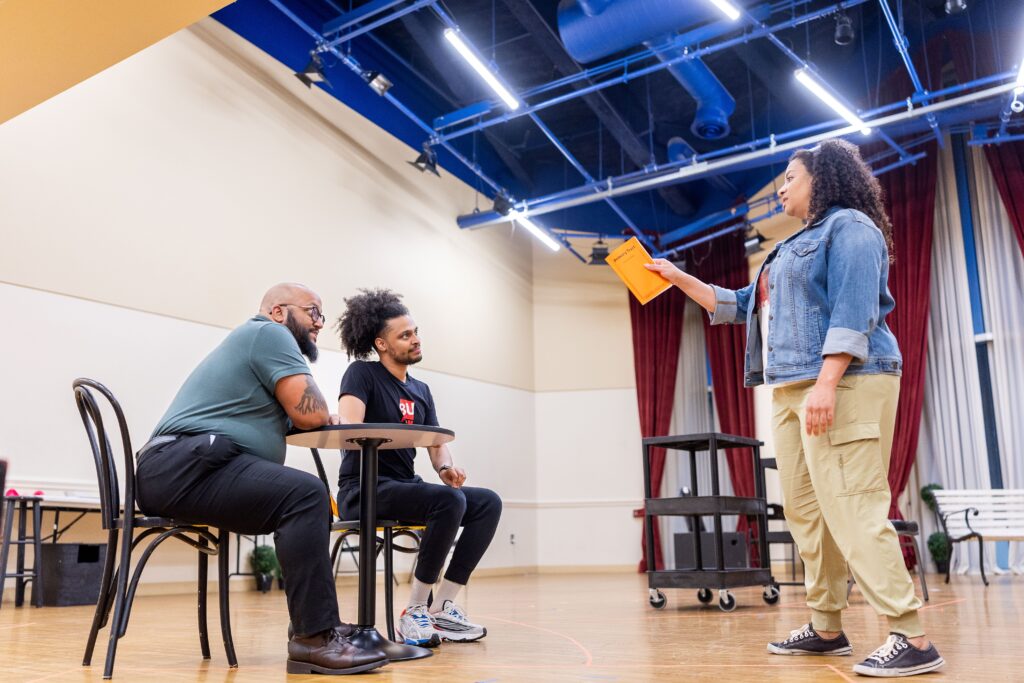
Dawn Simmons: I found something that exceeded what I was looking for. David Castillo, who is playing our Kenneth, has just a slightly different take on it that allows us to do what regional theater does best, which is to say, “We can honor this story and show you a slightly different window in, but we have a different point of entry.”
Arthur Gomez is our Bert. The minute they got in the room together, it was like watching two best friends, and yet you see some of the familial posturing, as well. You see that mentor/caretaker also come out [in Bert].
Corrina is just as lost as Kenneth. She is as outside of what we think of as normal as he is. I think the way that she moves and maneuvers in life helps her not put him in a corner. She has a curiosity about people, which is part of her quirk, and she has a gentleness towards him. It’s that thing, again, of right on time — what he needed as his situation was changing. The universe sent him someone to help him and make sure that he wasn’t alone. They have a really lovely chemistry for this show, and that chemistry is that of new friends: That moment when you meet somebody and you’re like, “I’m curious and interested. You spark a warm electrical current in me, and I want to know more.”
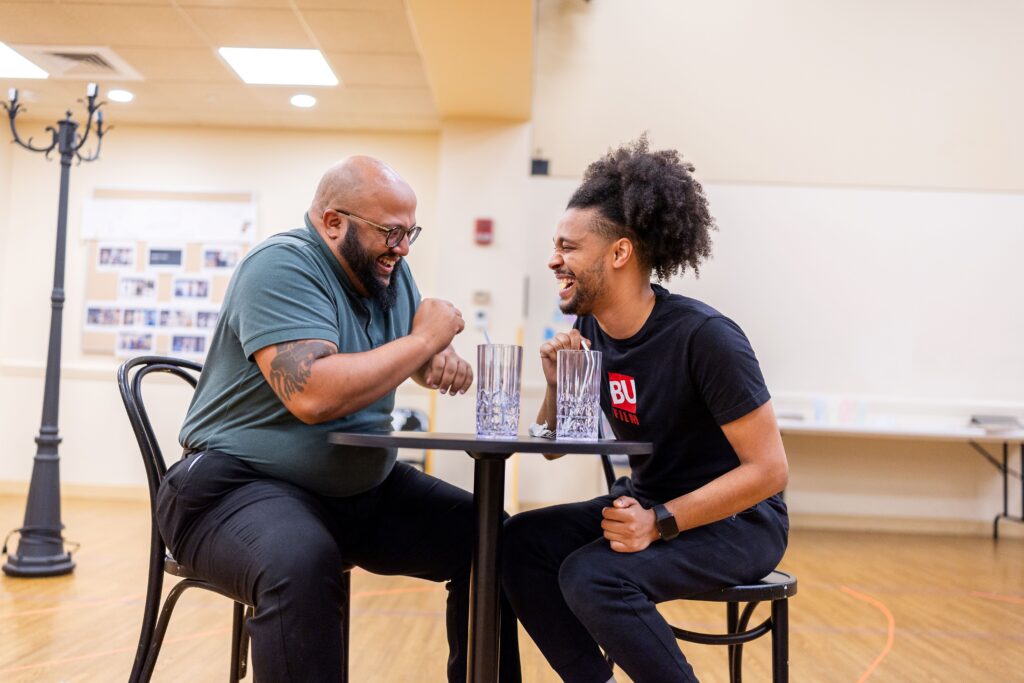
I’m lucky to have had many casts that have fallen in love with each other. This one is no different; they just vibe. They speak well to each other. We are, like, polite, respectful, excited. We disagree. Well, we agree with such exuberance. A lot of people will tell you directing is 90% casting, and I’ve been really, really lucky.

The SpeakEasy Stage Company production of Primary Trust runs Sept. 12 – Oct. 11 at the Stanford Calderwood Pavilion at the Boston Center for the Arts. For tickets and more information, go to their website: https://speakeasystage.com/shows/2025/09/primary-trust/