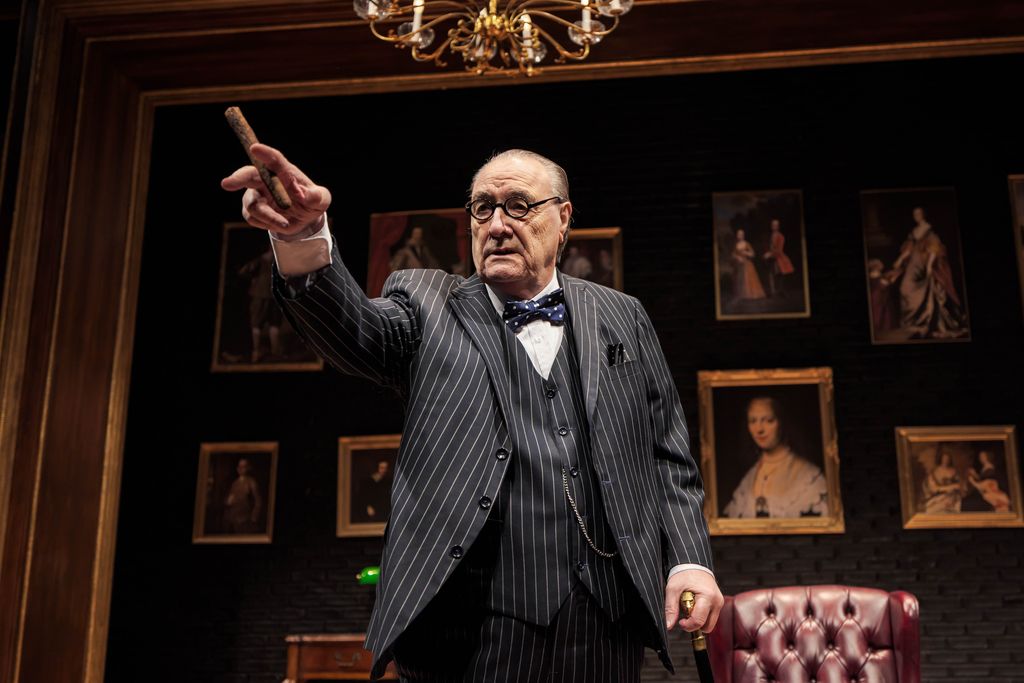
David Payne’s acting career began almost as a lark. An audition for a small part in a play led to his being cast in a much more major role. Later on, he wrote a play of his own — a solo show about the life of C.S. Lewis, the famously faithful author of the “Narnia” fantasy books. The success of that show almost sounds like a fantasy in itself: Payne has made a career of portraying Lewis for two decades.
But he also plays another significant historical figure: Namely, Winston Churchill, the stout, determined, and yet also flawed statesman who saw the danger presented by Adolf Hitler when other British politicians were apt to gloss over the dangers that Nazi Germany presented. He had a long military history, which included serving during the Boer War. He achieved fame as a war correspondent and author and received the Nobel Prize for his writings in 1953.
As a politician, Churchill famously switched parties, joining Labour in 1904 after having won office as a Conservative. (He later switched back again.) As First Lord of the Admiralty, Churchill had been notoriously tied to the catastrophic campaign at the Gallipoli Peninsula in Turkey, after a naval assault he championed in 1915 (during the First World War) led to ground fighting. A massive loss of life ensued, and the military objective was not achieved. Churchill subsequently stepped down from government and enlisted as a fighting man, seeing trench warfare on the Western Front of literary fame before returning to his political career two years later.
Decades after that, the black mark of Gallipoli did not, fortunately, prevent Churchill from taking Britain’s reins as the Nazis threatened all of Europe. Politics being the fickle thing it is, Churchill was voted out of office after the Allies won World War II, but he remained an influential figure. He became Britain’s Prime Minister once again in the early 1950s, only stepping down due to ill health in 1954. He continued as a Member of Parliament until 1964 and died in 1965 — but not before U.S. President John F. Kennedy saw to it that he was granted honorary American citizenship in 1963. (Churchill’s mother had been an American.)
It’s subsequent to Churchill’s awarding of American citizenship that Payne’s solo show is set. Not having been able to attend the ceremony at the White House, he travels to an engagement at a private club where, as keynote speaker, he recounts a lifetime of adventures, anecdotes, and one-liners.
David Payne will bring Churchill to Boston from October 7-12th at the Wimberly Theatre at the Calderwood Pavilion at the Boston Center for the Arts. Payne shared his own anecdotes and one-liners about the show’s creation and its reception.
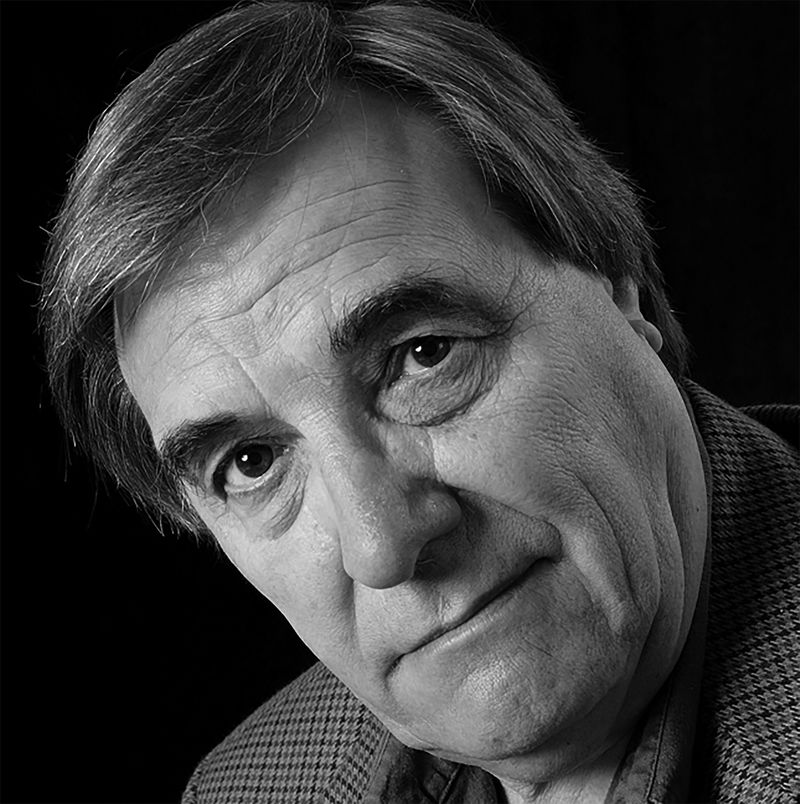
Kilian Melloy: We’ve seen a number of depictions of Winston Churchill, with everyone from Brian Cox to John Lithgow and Gary Oldman playing that part. Were there things in those interpretations you were inspired by, or that you wanted to stay away from?
David Payne: I like them, to be honest with you. I like Gary Oldman. I love the one in — I think it’s The Gathering Storm. [Editor’s note: Richard Burton played Churchill in the 1974 version of the film, which was based on Churchill’s writings and directed by Herbert Wise. Albert Finney portrayed Churchill in the 2002 version directed by Richard Loncraine.] But no, I just said, “Do your own thing.” I grew up with Churchill in the sense that he was very prevalent in my teens [and] in my early 20s, and I felt that Churchill was somebody I grew up with. So, I’m going to do what I want it to be. I listened to his speeches and things like that. I’d heard them many years ago.
Kilian Melloy: What was the harder part about writing this play, the research or capturing the voice you wanted to portray?
David Payne: The research is the hardest. I mean, trying to make sure it’s accurate to a point, accepting there must be some artistic license, otherwise nobody’s going to be interested in the play. So many people, when they think of Churchill, think of just the Second World War; they don’t think of anything leading up to that. Right from the word go, I said, “One thing I’m not going to do is concentrate on the Second World War.” It must be in the play, because it would be ridiculous if he didn’t refer to it, but the whole idea is to say, “Right, well, what shaped his life?” We know that at school, he wasn’t very good. He was the bottom of the class. You would never have thought he was going to be a wartime leader.
I decided I would try and be faithful to the man. [In the show,] when he gets captured and taken prisoner in the Boer War, and he [escapes and a reward is put out on him], he’s a bit disappointed about the amount they put on him for a capture. He thought he was worth more than that. That’s a true story. And the bravery, the trench warfare, is all true. This is where he found himself at peace, because he’d had this horrible experience of Gallipoli, and being in the trench warfare was almost a redemption for him.
It was just weaving my way through that and finding so many interesting things about him. I wanted to also reflect on the three women that most affected his life: His mother, although she was more of a distant influence; Queen Elizabeth; and his wife, Clemmy. He speaks very fondly of Clemmy, and he says, “There are people who try to indicate I might be a self-made man, which is absurd.” And then he pauses, and he says, “If anything, I’m a Clemmy-made man.” And, you know, there’s a sigh that goes through the audience — probably the ladies, but it’s just a visible sigh: “Ahhh!”
Kilian Melloy: You can have such a direct rapport with the audience with a solo show.
David Payne: A one-man show is definitely a two-way affair. It’s the actor on the stage, and there’s the audience that are facing you. It’s never a one-way affair. I kind of liken it to having a different dance partner every time.
Kilian Melloy: A solo show has only a few options for how it’s presented. In this case, it’s a speech Churchill gives. Why did you go this particular route?
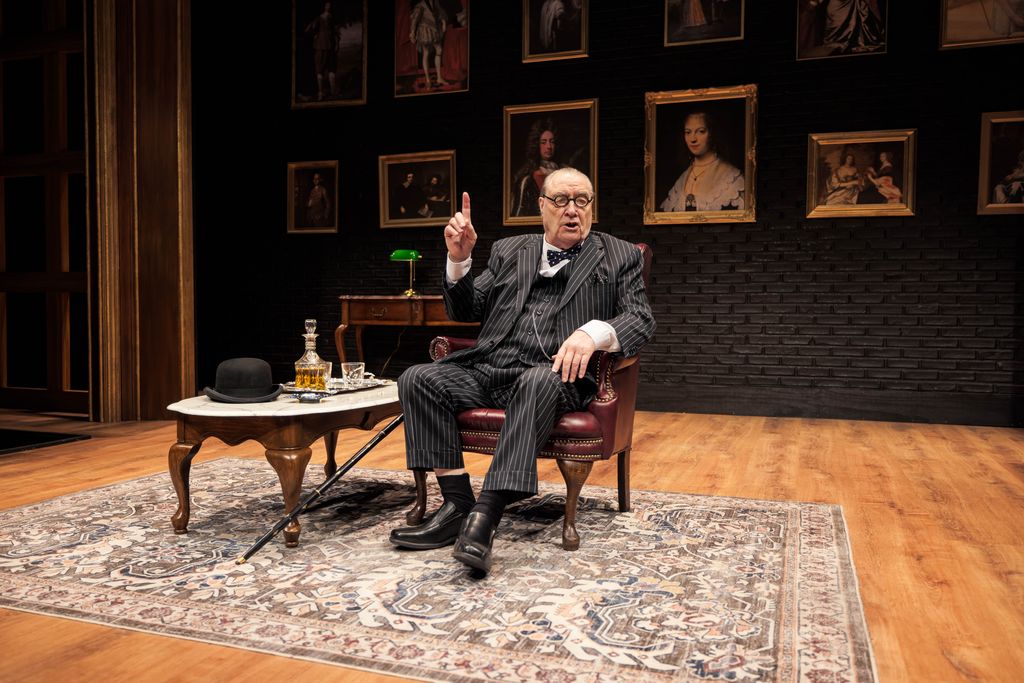
David Payne: Firstly, it was based around the fact that he got American citizenship, and that was the setting for the play, which is why he talks to an American audience at a celebration dinner, because just two months earlier, he became a U.S. citizen thanks to John F Kennedy. And it was to let him talk about his school days, let him talk about the Boer War. Churchill had a lot of humor, so if you did a show about Churchill and there was no humor in it, it wouldn’t be Churchill. And his humor was very cutting at times, and I think deliberately so. I don’t put it in the play, but one of my favorite quotes is when he’s on the loo doing what he needs to do, and somebody comes in and tells him there’s a politician who wants to see him, and Churchill replies, “Well, tell him I can only deal with one shit at a time.”
[Laughter]
Kilian Melloy: There are many very funny one-liners in the play. How many of those were actual quotes?
David Payne: Probably half of them. I tried to stay within what I thought were the Churchill bounds. I was doing two shows in Cleveland. It was a 500-seat theater, and both shows sold out. After the first act of the afternoon show, the stage manager comes up to me and says, “A lady wants to see you after the show.” Well, I don’t really get that regularly. And I said, “Oh? Does she say why?” He said, “Yes, because she worked for Churchill.” I said, “You do know Churchill died many years ago.” “Oh, no,” he said, “I should have said she used to be a housekeeper for Churchill in the last few years of his life. She worked for him for six years, and she was in charge of the staff in two of his homes in London.” She was 89 years old, sharp as a tack, and she came in after the first performance, and they brought her up to the stage. She was very old, sort of frail, and I thought, “This is going to be interesting. If she is who she says she is, what is she going to say?” — because I’m portraying a man she knew very well. And when I went up to her, she didn’t say a word. She just threw her arms around me and cried. That’s all I needed.
We had an interview with her afterwards, which my wife recorded on the iPhone. This is what she said: “After 20 minutes, I thought I was with Churchill.” And then she said, “What I loved about it is you got the voice right. You got the tone right. You got the pauses right.” In the show, he talks about Roosevelt bursting into his room when he’s naked, and she says, “Oh, I saw him naked all the time. He was always walking around the house naked.”
[Laughter]
Kilian Melloy: The show feels like it applies to the times.
David Payne: It was written about three years ago. I think we tested it out in Florida, and we sold out six shows. Can you believe? I mean, it wasn’t a big theater, it was only 250 seats, but we sold them all out, which is unbelievable.
Kilian Melloy: How did you come to write Churchill?
David Payne: I have an agent, and he was looking at doing a one-man play with an American as Churchill. He sent me a clip and said, “You’re an Englishman, maybe you can tell me whether we should do it. We’re thinking of putting him on the road.” Well, when I saw the photograph, I thought, “Well, he looks great, so all he’s got to do is to get it right when he opens his mouth.” But the problem was, he didn’t. I wrote back to my agent and said, “Well, it’s just not for me.” And then he wrote back and said, “Well, would you write it?”
Kilian Melloy: Did you find that the response around other places in the U.S. to be as positive as it was in Florida?
David Payne: It was mostly universal. We did a 10-week run in Phoenix, Arizona, in February of this year, and they sold 90% of the tickets.Churchill, for some reason, has a very high profile in America. I got an invitation to go to a special Churchill do in Palm Beach, Florida, in a very exclusive club. The club was near to Mar-A-Lago, but more exclusive than Trump’s place. The lady decided that she was a Churchill fan, and she decided that she should celebrate his 147th birthday, so I went there. I think they had Churchill’s grandson there as the main speaker. There must have been 200 people there, and they had the tables laid out there, cigars and chocolate, and all of Churchill’s favorite food. It must have cost over $100,000. They flew me over to do a 15-minute cameo performance, and I thought, “147th birthday? Are you kidding me?”
There’s a Churchill society in Nashville, Tennessee. They asked me last year to come and do a full performance for his 150th birthday. It wasn’t quite so fancy. In America, they consider him a man for their time. Every show, somebody would come out and say, “What would Churchill say about today?” Every show: “How do you think he would react today to what’s going on?” I think there are those who say, “Oh, we wish we had a Churchill in government now.”
Kilian Melloy: Would Churchill be a successful statesman today?
David Payne: I don’t know.Churchill was a man for our time, for sure. His career was checkered; he changed parties, so he would have been seen as somebody who would go where he thought there was more success. Gallipoli, of course, was a disaster, so much so that Clemmy actually said that after Gallipoli, he was so grief-stricken that she thought he would die. But I think it was all those things that made him the war leader he was. Now, he didn’t say this, I say it: He says [in the play], “When I think of my Gallipoli experience and my trench warfare experience, I think they did much to prepare me for my leadership of our country during the Second World War.” I think that’s true. It was the disaster of Gallipoli and being in the front-line trenches in France that I think prepared him [for leadership in World War II].
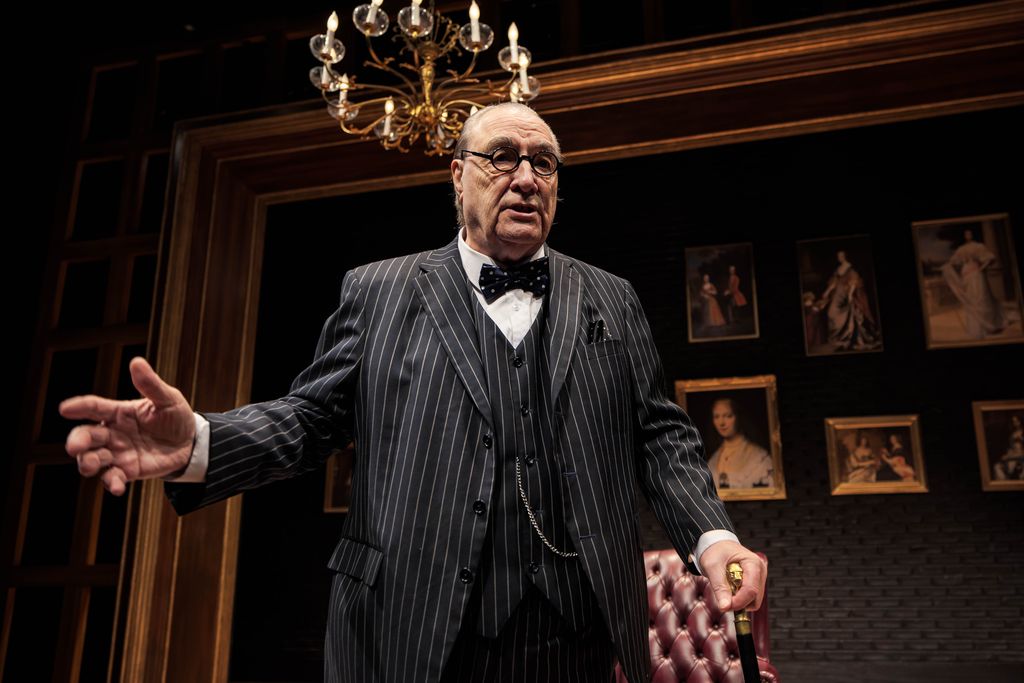
Kilian Melloy: What else might you be working on or planning now?
David Payne: We’re premiering a new play in Richmond, Virginia, in November this year, and it’s called Churchill and Roosevelt and the Christmas that Saved the World. Japan attacked Pearl Harbor on December 7, 1941. Germany declared war on America the very next day. Churchill decided that he needed to meet with Roosevelt because America was now in the war. Actually, Roosevelt was of the opinion that perhaps they should leave it ’til after Christmas, because it’s very near Christmas. Churchill was adamant. He said, “We need to talk now.” So, he went to America. He arrived there the day before Christmas Eve, and he was there for three weeks. He and Roosevelt met with their teams to plan a strategy for the pursuit of what was now a World War. It’s looking at that and seeing these two leaders trying to gauge their relationship. It’s watching these two leaders deal with what is now a world war, and I’m trying to also bring up some details that people don’t know about the war. It’ll be interesting, because it’s a premiere. We’ll find out whether the audience likes it.
Kilian Melloy: Will you carry on as Churchill there, or will you want to try your hand at Roosevelt?
David Payne: No, we’ve got a Roosevelt. I’ve got a very good Roosevelt. We did the reading, and I would say [the script] was just over half-finished. I go through a number of drafts before I get to the final one. I think you could say this was draft number seven, and our current draft is the 39th, which is close to what we will do. But we got a standing ovation — a standing ovation for a reading! I think it partly was because they were also reflecting how much they’d enjoyed the Churchill show, so I put it half down to Churchill.
Churchill comes to the Wimberly Theatre at the Calderwood Pavilion at the Boston Center for the Arts from October 7-12. For more information and tickets, go to: https://www.bostontheatrescene.com/shows-and-events/churchill/#performance-picker