By Michele Markarian
Eleanor by Mark St. Germain; directed by Bryn Boice; dramaturgy by Julie-Anne Whitney; scenic and projection design by Justin LaHue; lighting design by Karen Perlow; costume design by Rachel Padula-Shufelt; sound design by Mackenzie Adamick; stage managed by Charles Waite Clay. Presented by Central Square Theater in Cambridge, through October 11, 2026.
Eleanor Roosevelt has always been a somewhat imperceptible figure, other than as an admirable public servant, at least to me. Various biographies I’ve read about her husband, Franklin, gave plenty of space to Missy LeHand, his long-time personal assistant, and Lucy Mercer, with whom he had an affair, but offered little insight into his wife’s feelings. Thanks to Central Square Theater’s production of Eleanor, a riveting one-woman show starring Paula Plum, Eleanor Roosevelt comes to life as a fully-fledged, accomplished woman with an inner life to match her outer one.
The play begins with a very clever conceit: Eleanor appears, decades after her death, in Rock Creek Cemetery in Washington, D.C. “My body lies next to Franklin [in Hyde Park, NY] but not my spirit,” she tells us, before bringing us back in time as she narrates her life and tries to make sense of some of her decisions.
Until the age of ten, when she is orphaned, Eleanor grows up in a mostly loveless home. Her mother dies when Eleanor is just eight-years-old, after instilling in her the belief that she is ugly and giving her daughter the nickname “Granny,” due to her serious nature. Eleanor’s father, an alcoholic and serious philanderer, dies when she is ten. Daddy is “the one true love” of Eleanor’s life, something she readily admits, despite the fact that the circumstances of his death are shrouded in lies. It’s no wonder she ends up married to Franklin, whose own mother, Sara, dominates his life and the lives of his family.
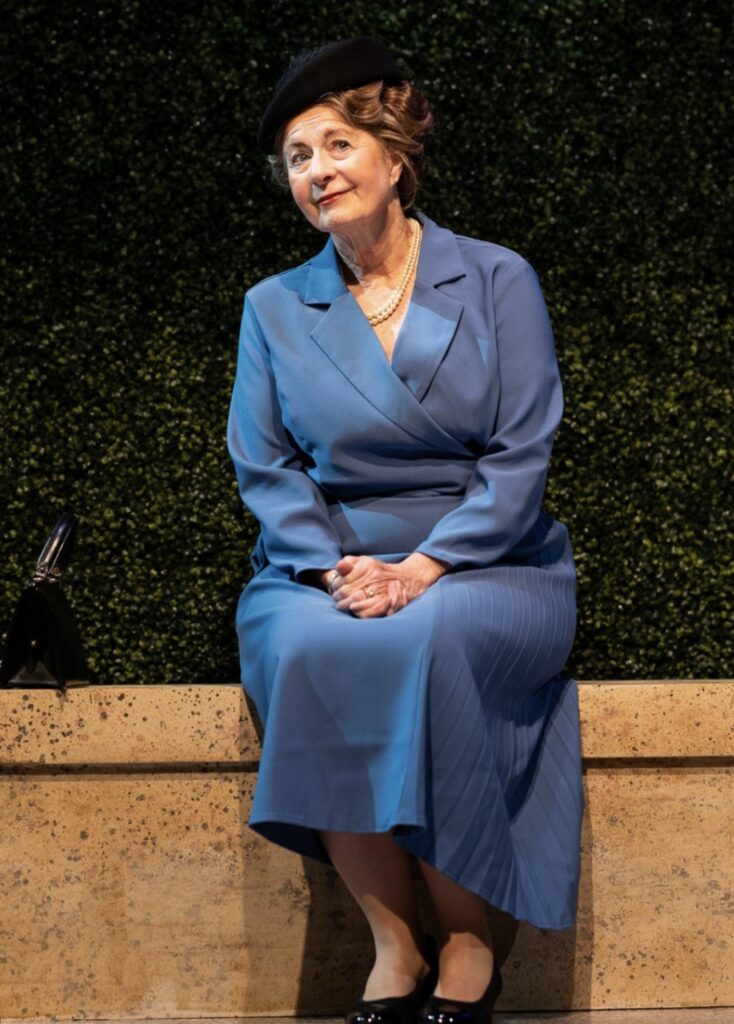
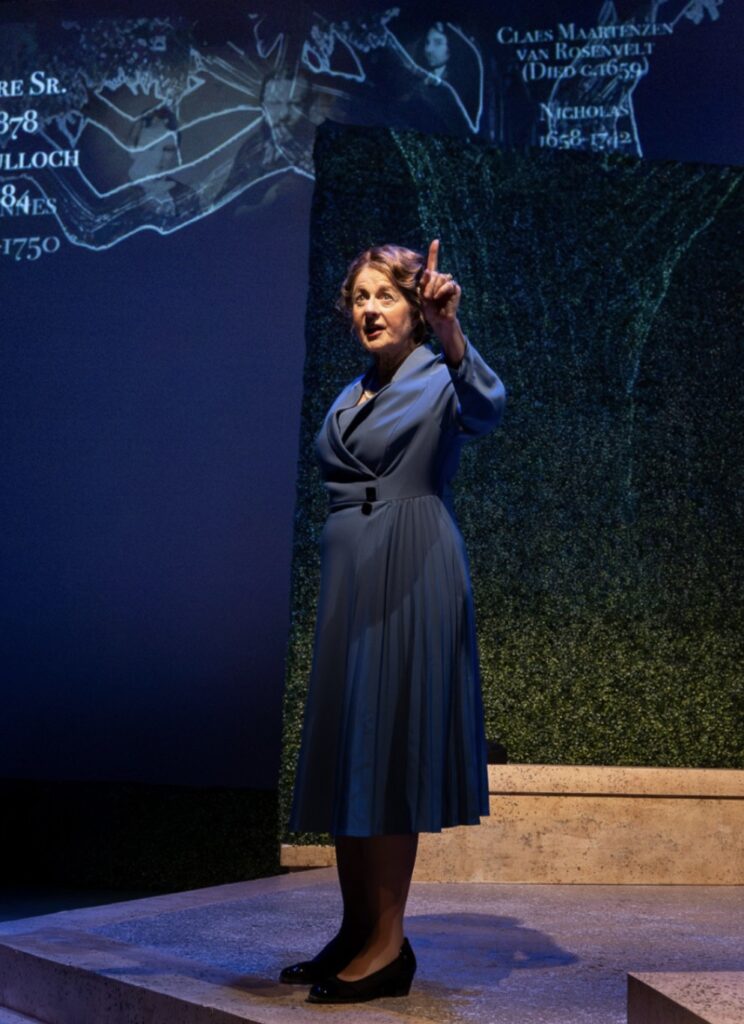
The orphaned Eleanor is sent to boarding school in England, where she becomes a favorite of the headmistress, Madame Souvestre. Her time at boarding school comes to an unfortunate end when she is forced to come home to be presented to society. She does not enjoy the debutante ball – she has been away in Europe too long to cultivate any friendships in New York. Shortly afterwards Eleanor becomes acquainted with her fifth cousin, Franklin Delano Roosevelt, who surprises her with his pursuit. When she asks him why he wants her, when he could have so many beautiful women, his response is “I could see from the start there was something of substance in you.” She is smitten, and they marry on St. Patrick’s Day, 1905, much to the distress of Franklin’s mother, who is opposed to the match.
Five children later into what was otherwise a satisfying marriage, Eleanor discovers a packet of love letters from Lucy Mercer, her private secretary, while unpacking an ailing Franklin’s suitcase. This shakes her to the core, even after Franklin promises never to see Lucy again -a promise he breaks with the help of their daughter, Anna – and to give Eleanor a wide berth within the marriage. This is easy for Eleanor to do, as there are a number of causes she cares to support, including desegregation and anti-lynching legislation, ending child labor, and fighting for women’s rights. Her own children came second, as she admits, “I kept waiting for the mothering instinct to kick in, but it never did.” One could hardly blame her, given the lack of maternal care in her own life. She even manages to have a few alleged affairs, one with bodyguard Earl Miller, another with journalist Lorena Hickok. When Franklin requests that she be his wife again, and not just in name, she doesn’t answer him. She is later dismayed to learn that Lucy Mercer was by FDR’s side when he died.
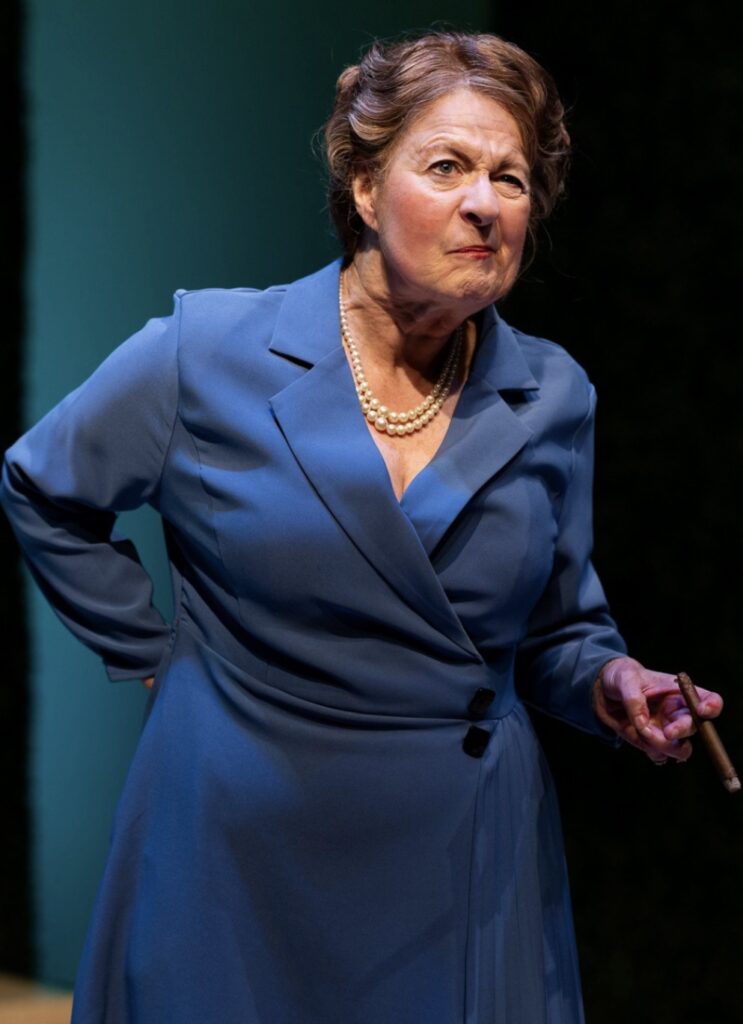
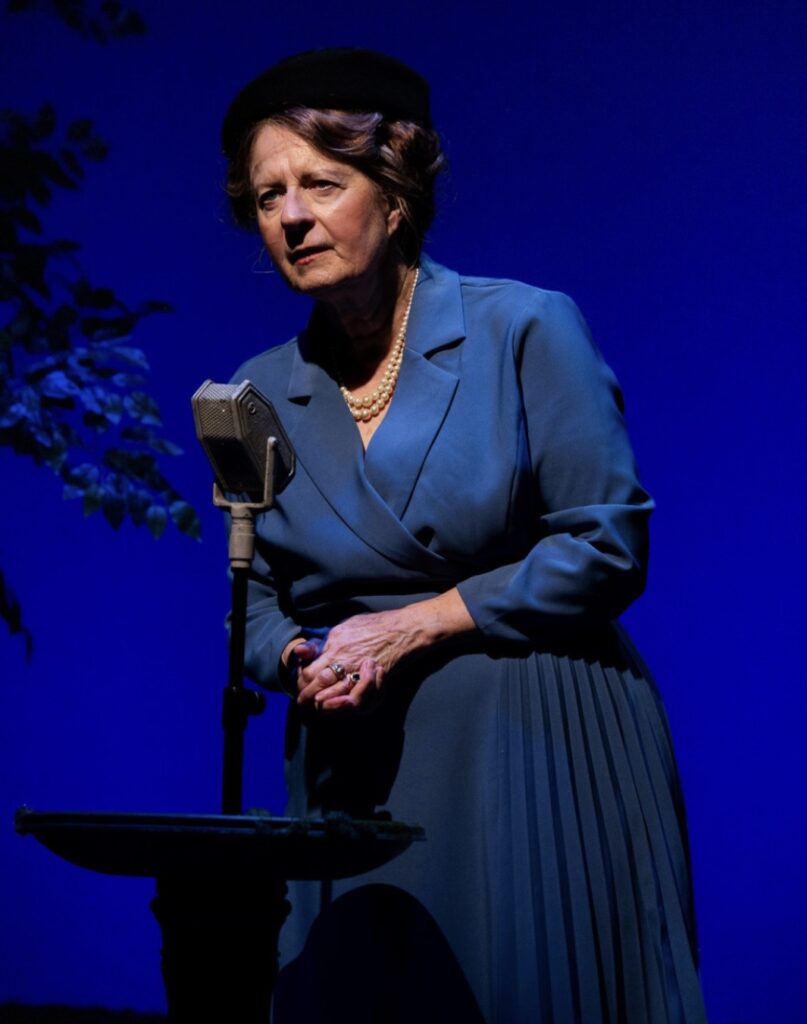
After Franklin’s death, Eleanor continues life as a public servant. President Harry S. Truman appointed her the first woman delegate to the UN General Assembly, where she helped to draft the Universal Declaration of Human Rights, and President John F. Kennedy appointed her chair of the President’s Commission on the Status of Women. In spite of her activism, she struggles to understand why she is able to forgive her father but not her husband. For most of the play she grapples with her marriage but somehow arrives at the conclusion that “…two people do great things together that they could never do alone.”
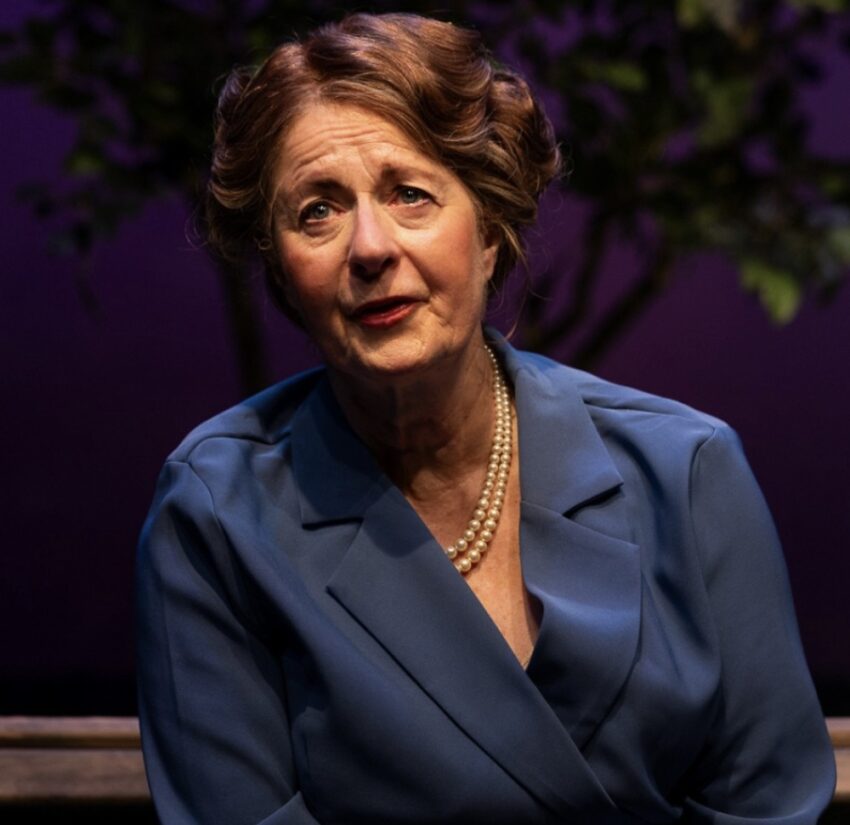
Paula Plum, under Bryn Boice’s thoughtful direction, gives a heartfelt, intelligent portrayal of Eleanor. Such is the depth and sensitivity of her performance that it feels as though the real Eleanor Roosevelt is standing before us. She has meaty material to work with – St. Germain’s script goes beneath the surface of the facts and into the psychology of the character, which Plum depicts convincingly.
The day we saw it was also the day of Cambridge’s Carnival International which had a loud, interminable thumping that permeated the theater walls throughout the performance. “Don’t you just love a good beat?” Plum ad-libbed in character, before continuing. Even the thumping couldn’t drown out the spell of a story well-acted and well told. Spend some time with Eleanor before it’s too late – you won’t regret it.