Reviewed by By Michele Markarian
The Getaway Driver, by Deborah Salem Smith and Charlie Thurston. Directed by Curt Columbus; lighting design by Christina Watanabe; scenic and costume design by An-Lin Dauber. Presented by Central Square Theater in Cambridge, MA through November 22, 2026.
I remember when Katherine Power turned herself in as a fugitive during the early 90s. Photos of her in the newspaper showed a very benign-looking, earth motherly woman– hardly the type to indulge in radical behavior. The Getaway Driver picks up her thread at this moment in history, and then turns back in time to address, but not necessarily answer, the following questions: At what point does one stop sitting back and start taking action against injustice? What are the consequences of that injustice? What is the price to those who participate and those who are protecting the peace? The unanswerable is what makes The Getaway Driver such an interesting piece of theater.
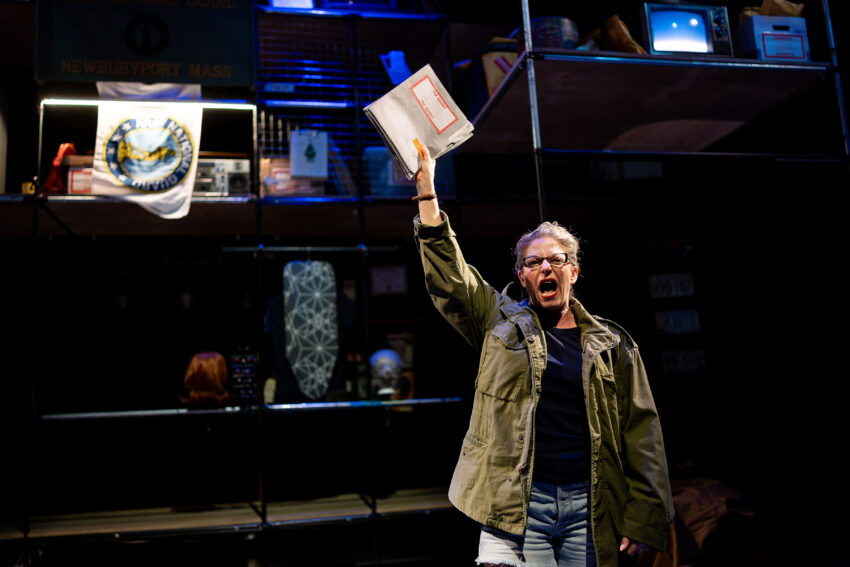
Katherine Power (Rebecca Gibel) is a good Catholic girl, valedictorian of her class and winner of the Betty Crocker Cooking Award. She comes East in 1967 after winning a full scholarship to Brandeis University, where she falls under the spell of a handsome ex-convict named Stanley Bond. Incensed by the US Government’s involvement in the Vietnam War, Katherine, her roommate Susan Saxe, Bond, Robert Valeri, and William “Lefty” Gilday raid and set fire to a National Guard Armory in protest. Their next venture is to rob a bank and give the money to the Black Panthers. Katherine’s role is to wait in the getaway car until the heist is complete, then drive the others to safety. What Katherine doesn’t know is that Lefty Gilday has a gun and during the robbery shoots policeman Walter Schroeder in the back. Schroeder dies from his wounds, leaving behind his widow and nine children. The oldest, Clare (Rachael Warren) takes up the thread of her family’s story and the aftermath of losing their father. Clare is also a good Catholic girl, but bitter and unforgiving towards her father’s killer at large, who has managed to escape, unnoticed, into Oregon where she takes on the name Alice Metzinger (after a baby who died the very year Katherine was born). Despite a full life in Oregon – she owns a restaurant, has a son and a man she’s madly in love with – Katherine decides to turn herself in.
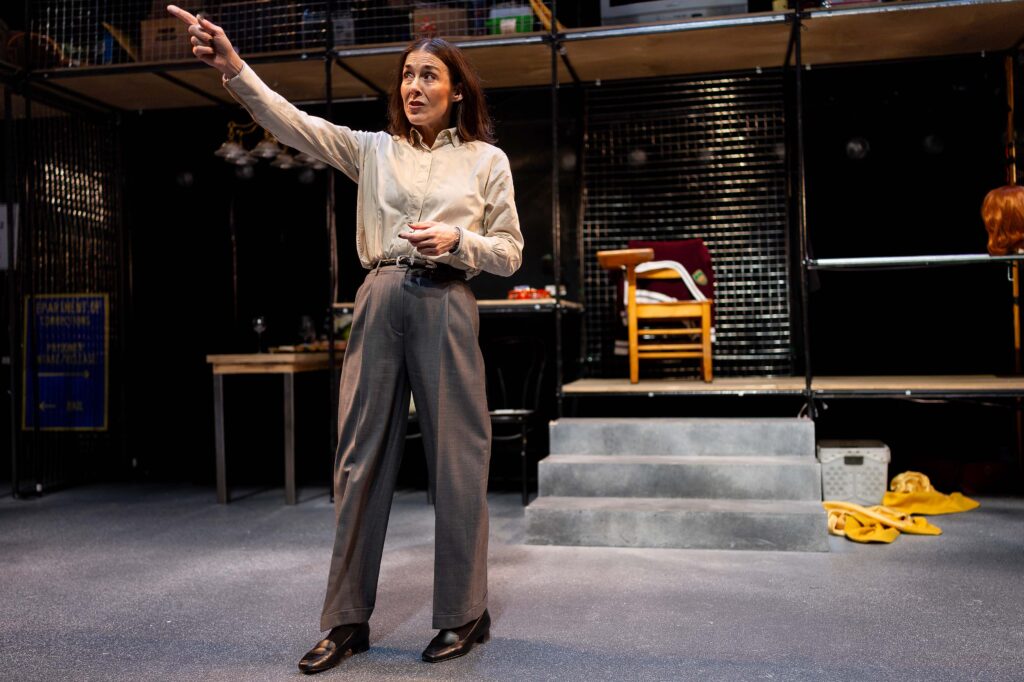
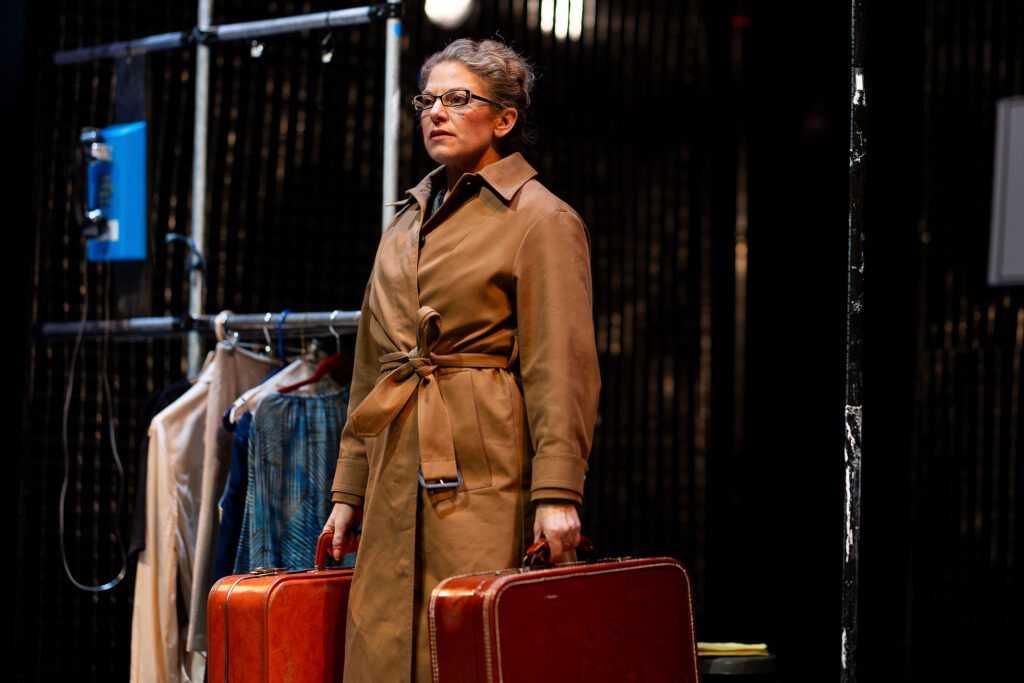
It’s easy to draw parallels between what was happening in the world then and what is happening now. When Martin Luther King is shot, a devastated Katherine is told by a fellow student, “King is a Communist. What did you expect?” The violence being committed by the government allows Katherine and her cohorts free reign to commit similar violence, although during her trial, Katherine can’t see why she should be held to a moral standard when the government isn’t. “Why am I being held accountable when the people in power are not?” she asks the court, after being put before them to defend her request for parole. Clare is not moved – “This is not a woman seeking penance for the death of my father,” she says stonily.
Gibel is excellent as a very grounded Katherine, playing her at various ages adroitly. Even as she is dismayed by Lefty’s use of a gun, she never wavers from her moral stance that doing nothing is complicit. Warren provides good balance as Clare, who is harder, more closed off than Gibel’s Katherine, although I found her attempt at a Boston accent distracting (admittedly, it’s one of the hardest accents to approximate). Under Curt Columbus’ direction, there is never any lag time; the show flows easily from one era to the next. An-Lin Dauber’s multi-layered set and clever costumes are flawless.
My friend and I had a lot to talk about after the curtain came down. How involved should one be when confronted with a corrupt government administration? How much should one pay for a crime committed unknowingly? Does anger become its own prison? Can forgiveness free someone? I could go on and on, but go see for yourself and make sure you have someone to mull it over with afterwards.
