Reviewed by Julie-Anne Whitney, Editor
Ten Thousand Hours performed by members of Gravity and Other Myths; directed by Lachlan Binns; set and lighting design by Chris Petredis; original compositions by Nick Martyn and Shenzo Gregorio; costume design by Olivia Zanchetta. Presented by Vivo Performing Arts at Boston Arts Academy October 23-24, 2026.
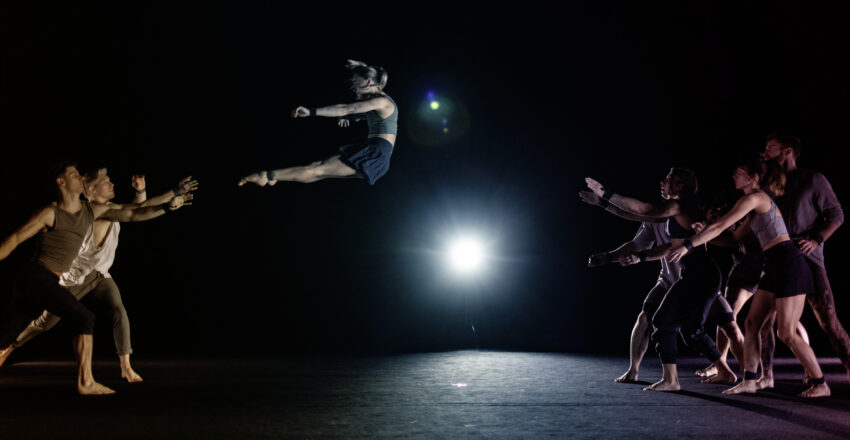
Australian circus company, Gravity and Other Myths, has been touring the world– and just made their Boston debut– with their new show, Ten Thousand Hours* which explores the idea of how years of intentional, dedicated practice eventually leads to advanced mastery.
Throughout the hour-long performance, eight tremendously talented acrobats take us through their journey from novices to experts, giving a behind-the-scenes glimpse into the work it takes to hone and refine the skills required to conquer an extremely challenging artform. There is no story here, per se. No metaphors to unscramble, no stylistic expressions to untangle. The story is the performers themselves; of the experience, persistence, and time it takes to become a world-class acrobat.
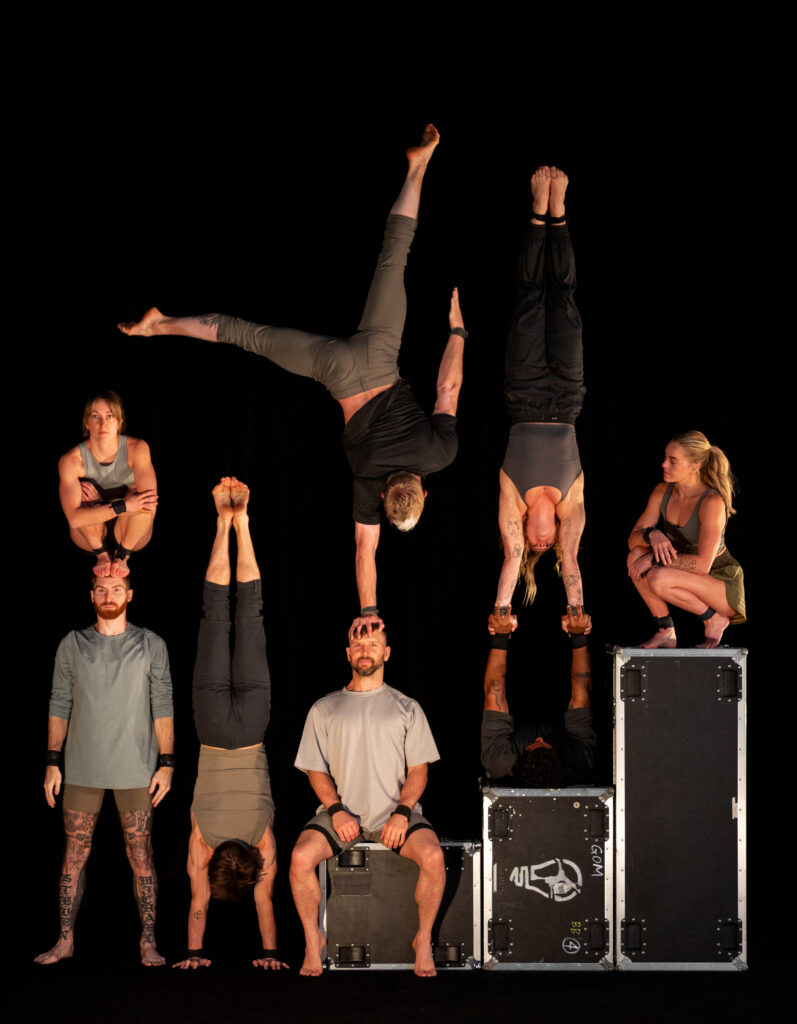
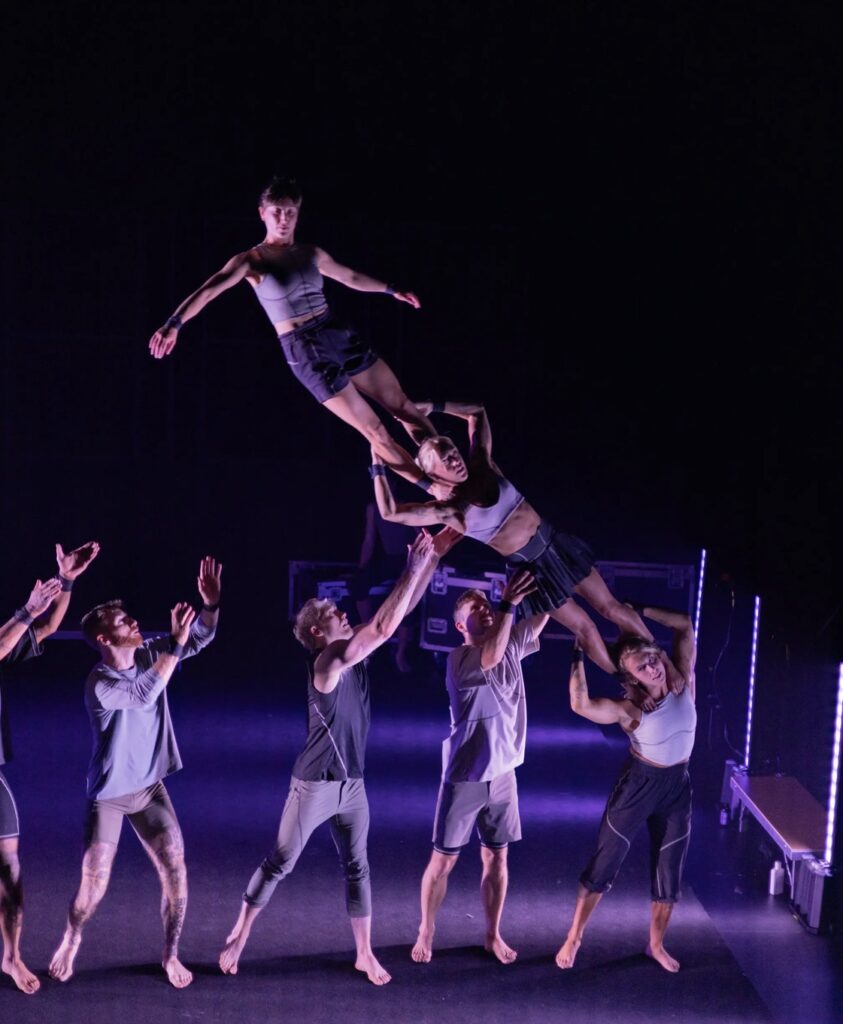
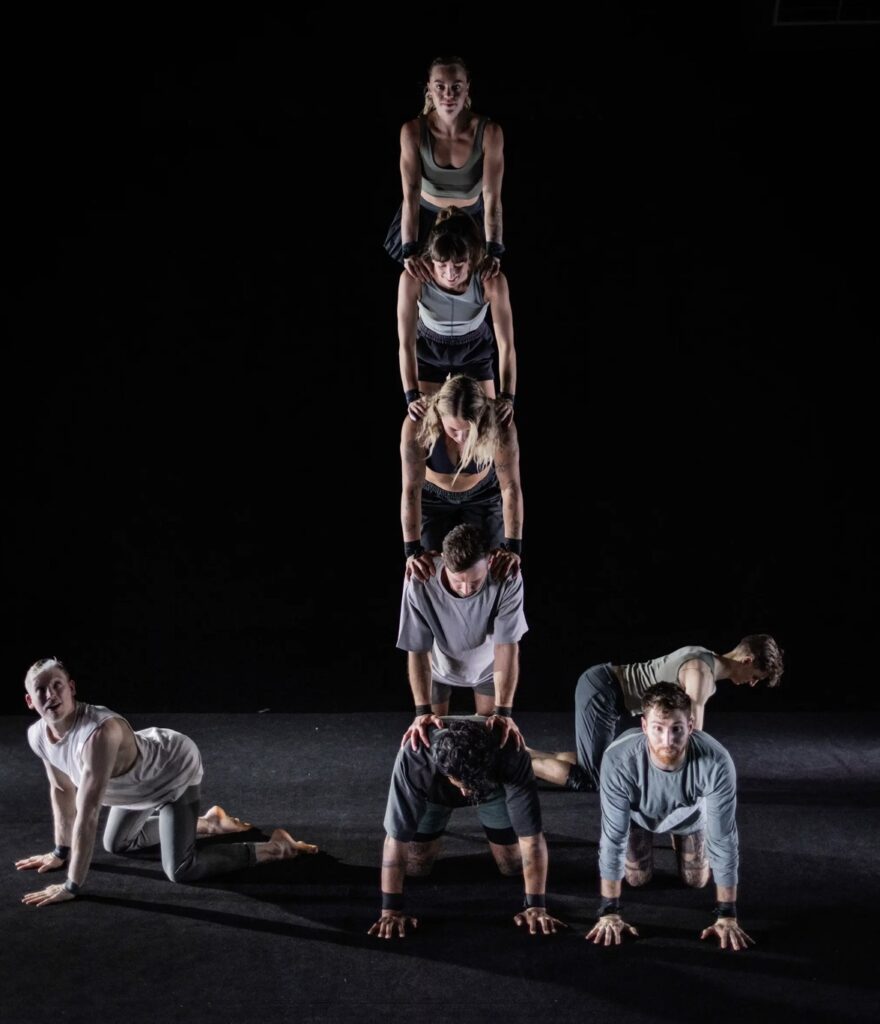
A live percussionist (the terrific Angus McKean) accompanies the performers as they demonstrate increasingly more complex and dangerous skills from simple lifts to synchronized back flips and full body tosses to five-person human towers and one-armed handstands on someone else’s head. The work is intended to astonish. The strength and stamina of the performers will amaze you. The trust they have in each other will move you. This work will make you gasp. It will impress and astound you.
While the work of Gravity and Other Myths is incredibly precise, it is also wonderfully imaginative. There is humor and playfulness in this work. You will see the performers smiling and encouraging each other. You can tell that they love what they do. These artists have created a vast, complex physical language that only they understand, and it was a privilege and a joy to witness. It isn’t often that we have the chance to experience awe, but Ten Thousand Hours will most certainly leave you in awe of what the human body can do.
*Inspired by Swedish psychologist Anders Ericsson’s 1993 research paper about how talent is not derived from innate abilities but from “many hours of deliberate practice over a period of 10 years or more,” which averages about 10,000 hours. Ericsson would go on to state that 10,000 hours doesn’t necessarily make someone a master and that the number of hours required to achieve expertise varies depending on the field. The concept that it takes “10,000 hours to make you an expert” was popularized by Malcolm Gladwell with his book Outliers which explores the various factors that make people highly successful and what it is that sets high achievers apart from others.
