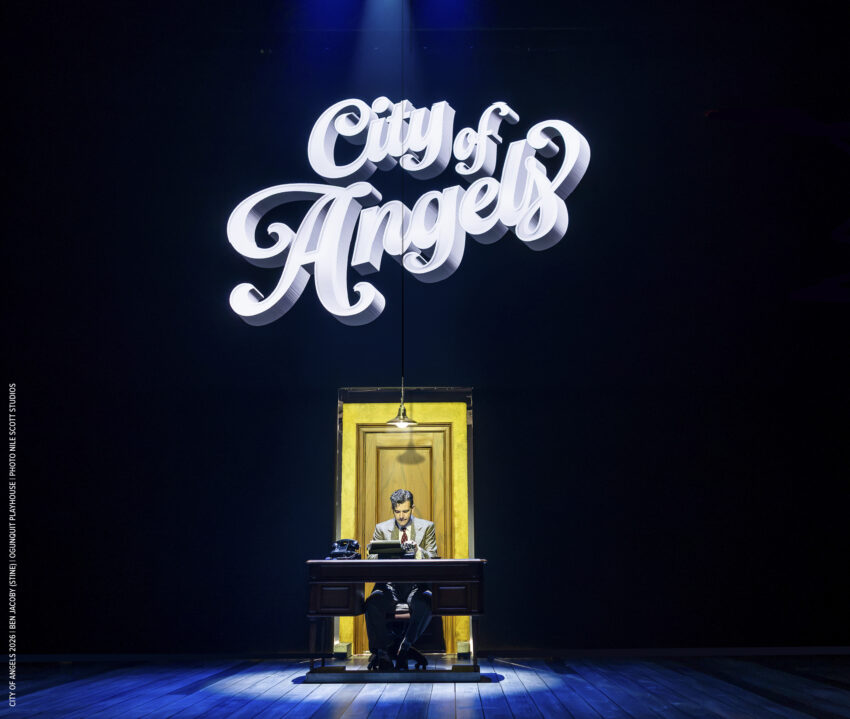
Photos by Nile Scott Studios
‘City of Angels’ – Music by Cy Coleman; Lyrics by David Zippel; Book by Larry Gelbart. Directed by Hunter Foster; Choreography by Jennifer Rias; Music Direction by Jeffrey Campos; Scenic Design by Nate Bertone; Costume Design by Jennifer Caprio; Lighting Design by José Santiago; Sound Design by Kevin Heard; and Wig/Hair & Make-Up Design by Roxanne De Luna. Presented by Ogunquit Playhouse at 10 Main St., Ogunquit, Maine through August 22
By Mike Hoban
It’s not often that the book and lyrics for a musical match or exceed the score, but with Ogunquit’s ode to film noir, City of Angels, audiences get a witty, complex story with a killer jazz score delivered by a first-rate cast. The book covers all the bases for fans of the noir genre: a down-on-his-luck private eye, his faithful Girl Friday who secretly yearns for him, a crooked cop (Omar Lopez-Cepero) who’s got it in for the hero, and lots of dames who make unwise (or cash-driven) choices in men. And as if the pulp-fiction detective story wasn’t enough on its own, the musical runs a parallel story, with the actors in the gumshoe tale doubling as real-life people trying to turn the novel into a movie.
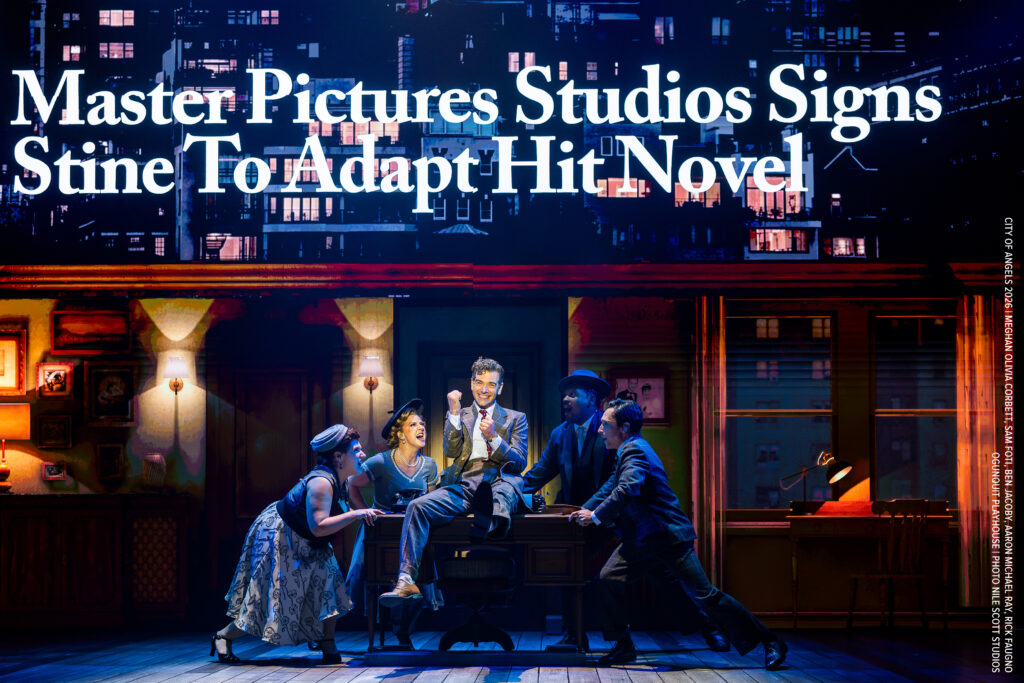
The book explores an age-old question for artists: how do you make a living while still maintaining a shred of artistic integrity? Stine (Ben Jacoby) is a rising detective novelist who has just been signed to a three-picture deal by Buddy Fidler (Stephen DeRosa) ─ played in the movie version by the hilariously named Irwin S. Irving (also Stephen DeRosa) of Master Studios, who loves Stine’s work as long as he can twist it into a product that makes him money and allows him to sleep with its starlets. Stine’s protagonist is Stone (Tony Yazbeck), a former cop turned private eye who’s good at his job but terrible at managing his affairs ─ with money and women.
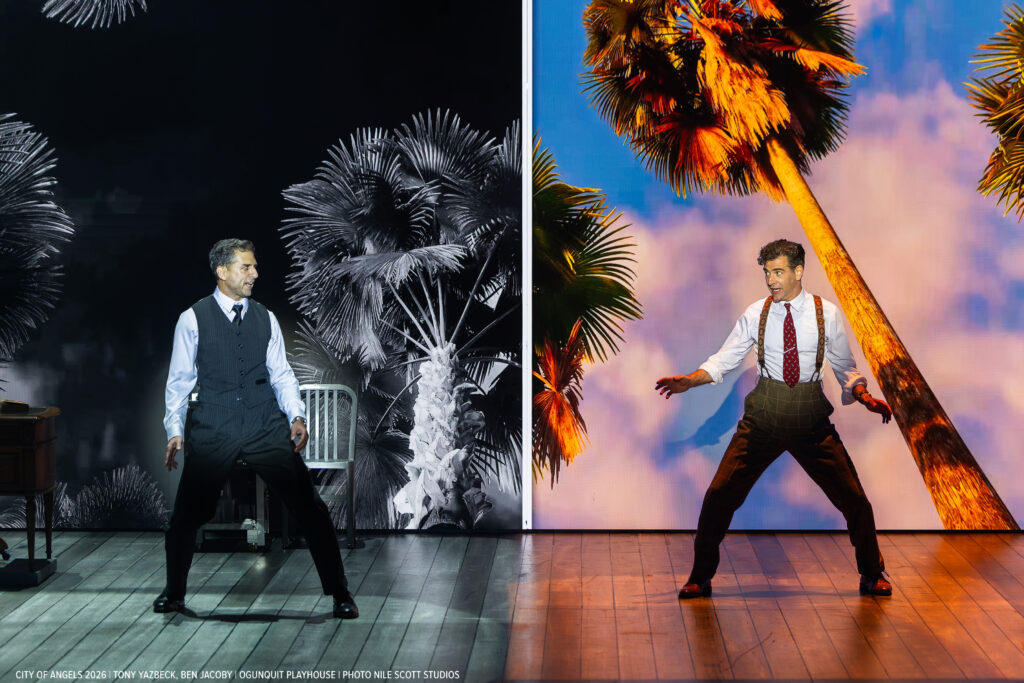
Following an opening number by the musical’s Manhattan Transfer-esque quartet (the ‘Angel City 4’) set against the backdrop of a movie title screen, the screenplay opens the way the genre typically does: with a femme fatale in trouble. In this case, it’s Alaura Kingsley (Lili Thomas), a rich, beautiful dame who needs the help of our hard-boiled private dick, Stone. Anyone familiar with Dashiell Hammett or Raymond Chandler knows what happens next: red herrings abound, Stone gets roughed up a few times, and he has some sort of romance going with every female character in the story. The plot for the movie within the show may be no Maltese Falcon or The Big Sleep, but it works as well as any knockoff Hollywood churned out during the era.
Meanwhile, the real-life story pits Stine against Fidler as the author fights for the integrity of his work while wooing his lovely assistant Donna (a terrific Danielle Wade who doubles as his Girl Friday Oolie). Stine ─ a serial liar and cheater ─ is also trying to repair his relationship with his wife, Gabby (Alysha Umphress, who also plays Stone’s ex-fiancée, Bobbi), who is tiring of his philandering. While the studio plot isn’t quite as compelling as the detective story itself, it still delivers plenty of funny moments fueled by DeRosa’s conscienceless studio executive, alongside strong scene work between Stine, his wife, and Donna.
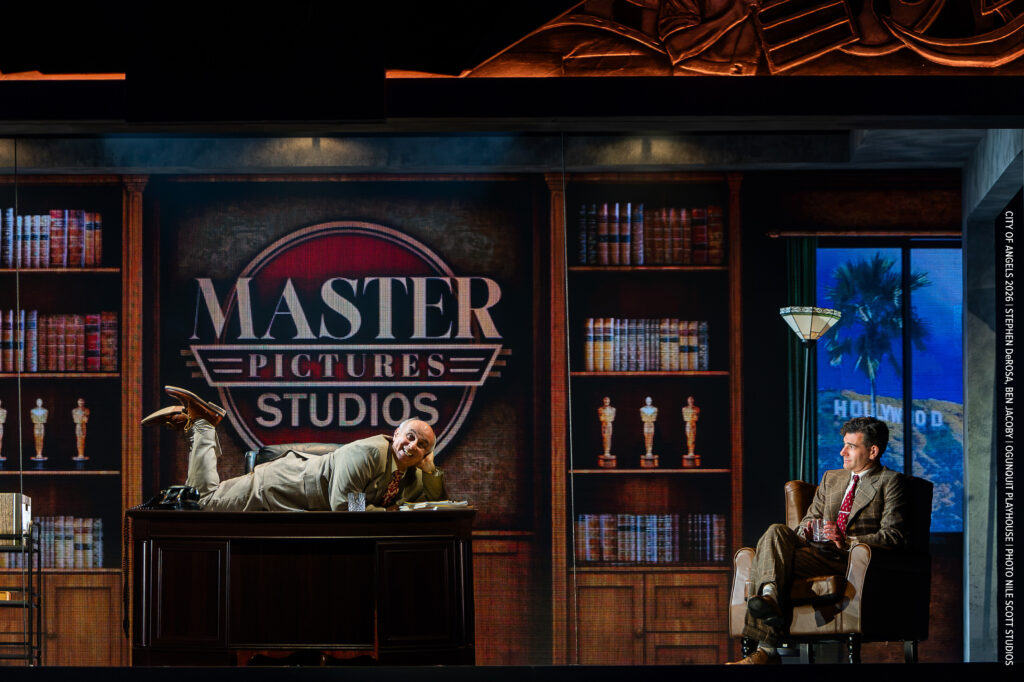
The dialogue is spot-on for the genre ─ not surprising since the book was written by Larry Gelbart (co-writer of A Funny Thing Happened on the Way to the Forum and mastermind behind TV’s M*A*S*H). From classically misogynistic lines like, “L.A., truth to tell, is not much different than a pretty girl with the clap,” in Stine’s opening voiceover, the script delivers plenty of laugh-out-loud one-liners that perfectly mimic the noir stylebook. Equally clever are the song lyrics by David Zippel (who also penned lyrics for Disney’s Mulan), especially in the poignant and funny “What You Don’t Know About Women,” sung by Oolie (Wade) and Stine’s wife Gabby (Umphress).
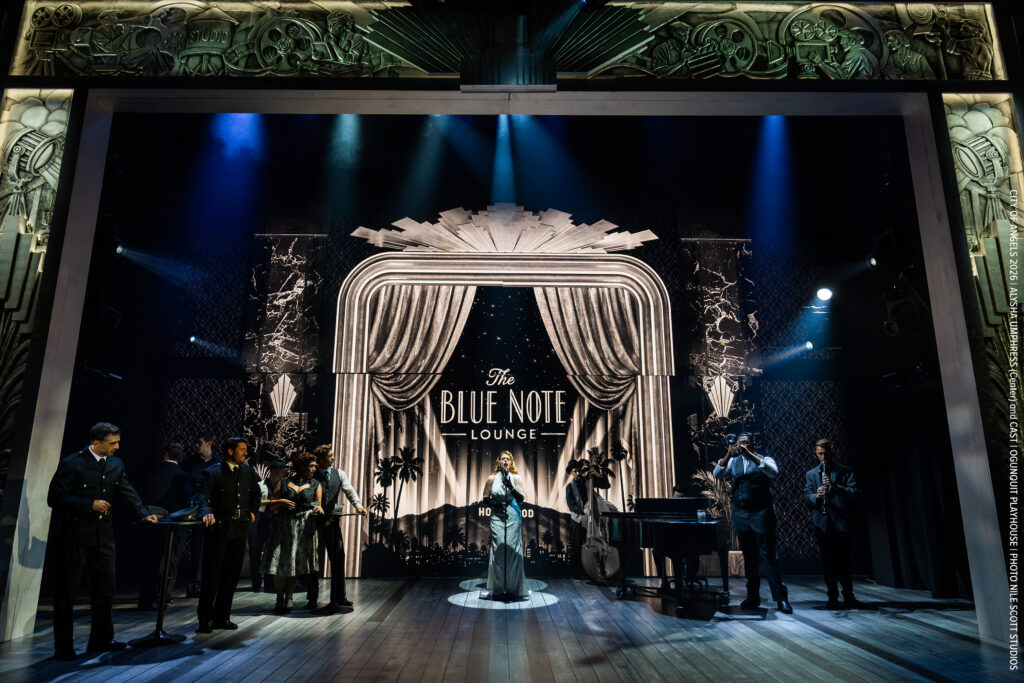
The musical numbers are not especially noteworthy, save for the spectacular Act I closing duet between Stine and Stone, “You’re Nothing Without Me,” and Umphress’ spellbinding rendition of “With Every Breath I Take” as Bobbi, who owns Stone’s heart. Wade’s touching number, “You Can Always Count on Me,” is also a standout. This is not to say Cy Coleman’s (Sweet Charity, Barnum) score lacks in any way; the songs are consistently strong but not particularly hummable or memorable, though lovers of ‘30s-style Big Band music (like me) will appreciate the efforts of music director Jeffrey Campos and the array of vocal talent in the cast.
The set design by Nate Bertone is nothing short of genius. Presented with the challenge of not only rapid scene changes, but also switching from real-world color to black-and-white film, he artfully melds his set pieces with projections to create the appropriate backdrop for each scene, aided and abetted by lighting designer José Santiago and sound designer Kevin Heard. Kudos also to costume designer Jennifer Caprio, who captures the ‘30s style with verve.
City of Angels is a rarely produced show due to its complex plot (although not as difficult to follow as most of Netflix’s Harlan Coben series) and challenging musical arrangements, but director Hunter Foster and the production team pull it off with aplomb. This is a show that’s well worth the drive for Boston theatergoers.
For tickets and more information, go to: ogunquitplayhouse.org/show/city-of-angels/