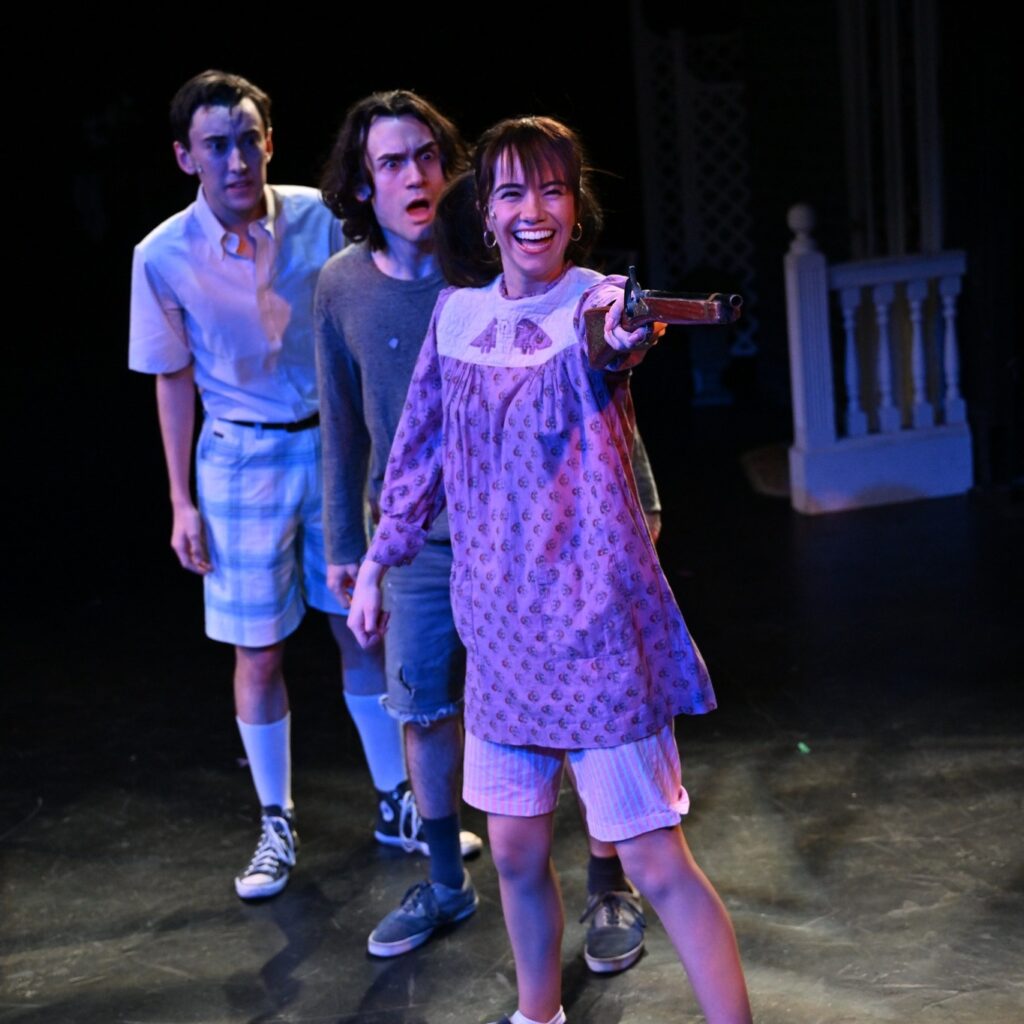
‘Blood Brothers’ − Book, Lyrics, and Music by Willy Russell. Directed by Audrey Seraphin; Music Direction by Gina Naggar; Set Design by Leonard Chasse; Sound Design by Tim Rose; Lighting Design by Erik Fox and Amber Kovacs; Costume Design by Richard Itczak; Presented by Theatre Uncorked at the BCA Plaza Theatre, 539 Tremont St, Boston, through November 23rd.
By Mike Hoban
At a time when the gap between the haves and have-nots is again approaching levels not seen since the Gilded Age, Theatre Uncorked’s powerful production of Blood Brothers could not be more well-timed. The stark difference between those who are “comfortable” and those who will struggle daily to meet their basic needs was driven home during the recent governmental shutdown. Food banks were overwhelmed, and the harsh reality of a paycheck-to-paycheck existence exposed the class divide in the world’s wealthiest nation. Blood Brothers may be set in 1960s and 1970s Liverpool, England, but it could easily be any city in post-industrial Western civilization.
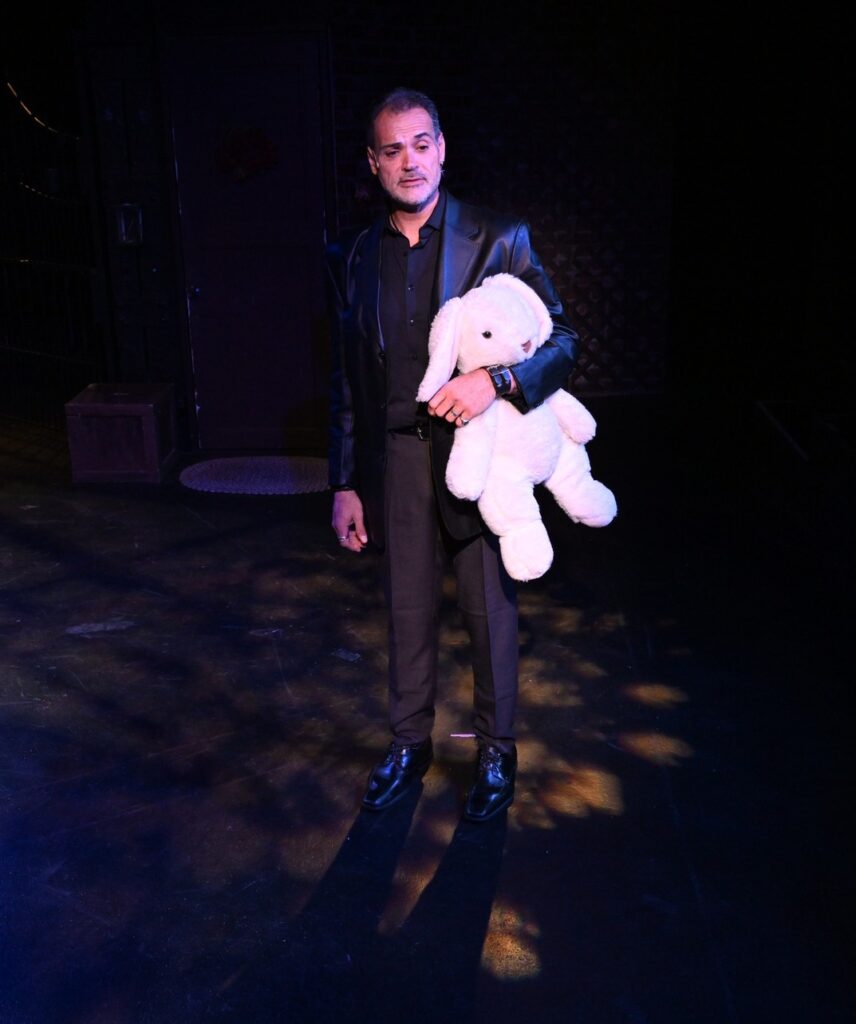
Once dubbed a “Liverpudlian folk opera”, Blood Brothers is, much like last spring’s A Man of No Importance, more of a play with music than a traditional musical. With the assistance of a Narrator (Chris Edwards) − a one-man Greek chorus who speaks in rhyming couplets (“So, did y’ hear the story of the Johnstone twins?/As like each other as two new pins”), Blood Brothers tells the painful story of a mother with a gaggle of kids living in poverty after her husband abandons her for a younger version of her “Marilyn Monroe”-esque self. Desperate to support her family, she takes a job as a housekeeper in an upper-middle-class household with a childless couple, the Lyons’. Shortly after taking the job, the housekeeper, Mrs. Johnstone (Sehnaz Dirik), learns she is pregnant with twins − a parting gift from her philandering husband.
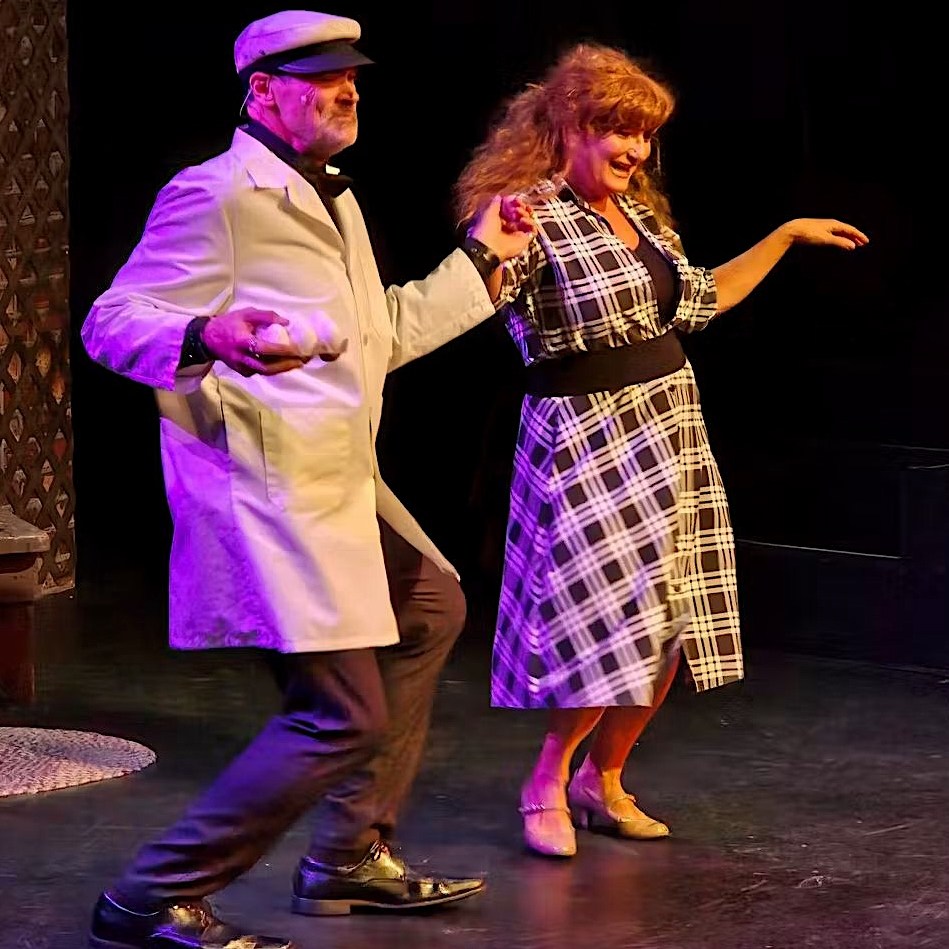
When she breaks down and tells her employer, Mrs. Lyons (Janet Pohli), “With one more baby, we could have managed. But not with two!”, a plot is hatched. Mrs. Lyons, unable to conceive her own child, would pretend to be pregnant, and Mrs. Johnstone would surreptitiously deliver one of the twins to her after they were born. Initially, the plan works, and as the housekeeper, she gets to see her son daily. But as with all Devil’s bargains, the plan soon goes awry. Jealous of the bond between mother and child, Mrs. Lyons fires her, telling her she can never see her son again. Playing on Mrs. Johnstone’s superstitious nature, she tells her, “They say that if either twin learns that he was once a pair, that they shall both immediately die!” and a heartbroken Mrs. Johnson grudgingly accepts her fate.
Life has other plans, however, and the boys meet by happenstance while playing. Upon learning that they share a birthday, the eight-year-old boys, Mickey (Michael Mazzone), the poor child, and Edward (Zach Fuller), the privileged one, become “blood brothers”. Edward is quickly exposed to and delighted by the low-level criminal mischief of the lower classes, taught by Mickey and his best friend Linda (Lauren Casey). Mrs. Lyons learns of the friendship, and the family hastily moves away to the other side of town. The boys (and Linda) are reunited later in their teens. Still, the joys of a blissful childhood give way to the sobering realities of adulthood, where class differences send them on wildly divergent paths, and eventually, to their tragic end.
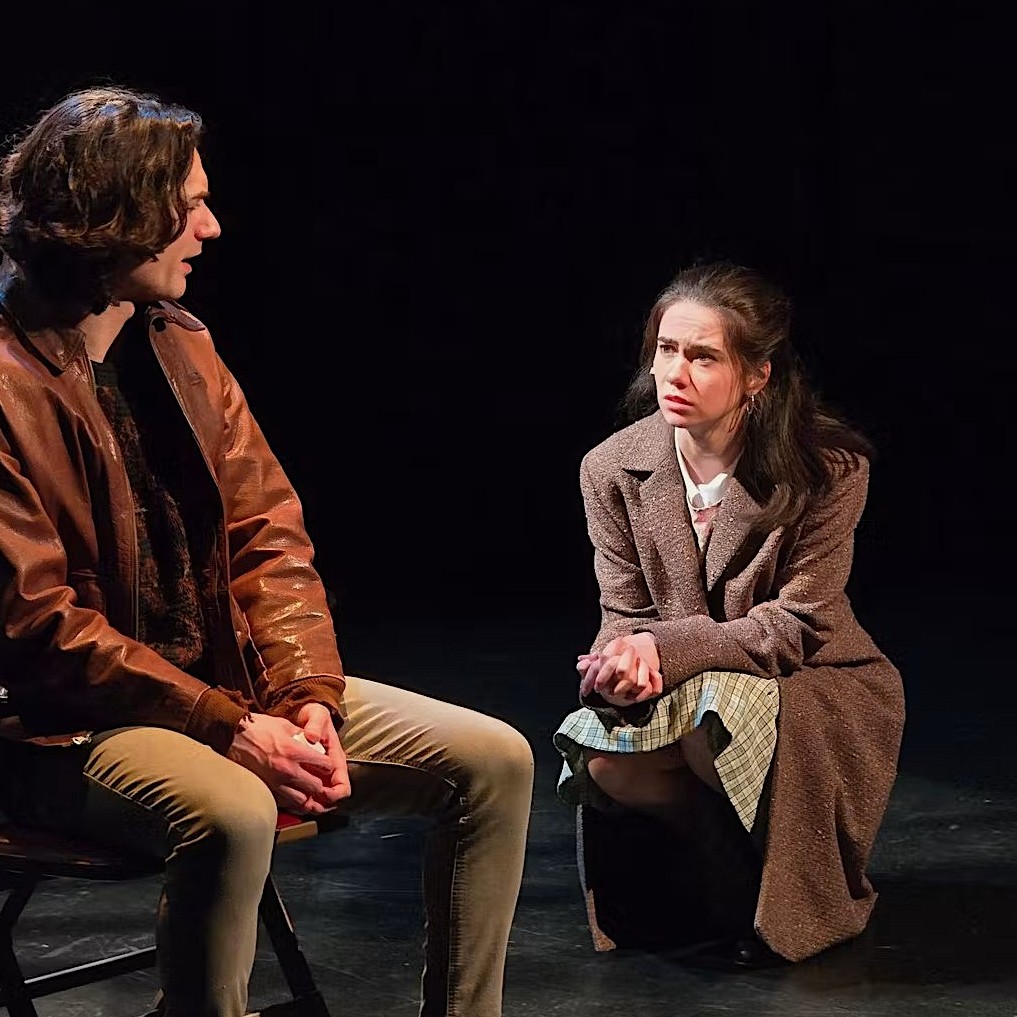
What sets Blood Brothers apart from most musicals (beyond its structure) is its matter-of-fact representation of the lower economic class. Like West Side Story, it’s got a truly authentic feel for its working-class characters, neither condemning nor patronizing them; instead, it presents them as flawed but real (though the upper-class Lyons don’t fare as well). And, considering it’s a tragic tale, there are a surprising number of light-hearted moments in the show, usually involving the children and young teens. Blood Brothers also has its share of non-gratuitous violence, and the shattering, tragic final scene will send a jolt through your senses.
The production is not without its flaws, particularly the group musical dance numbers, which sometimes give the show a community theater feel (although considering that they mostly involve actors playing children, the lack of precision may have been the intent). The score is not especially memorable on a musical level (you won’t be humming any of the tunes as you leave the theater), but the songs are impactful and drive the narrative well.
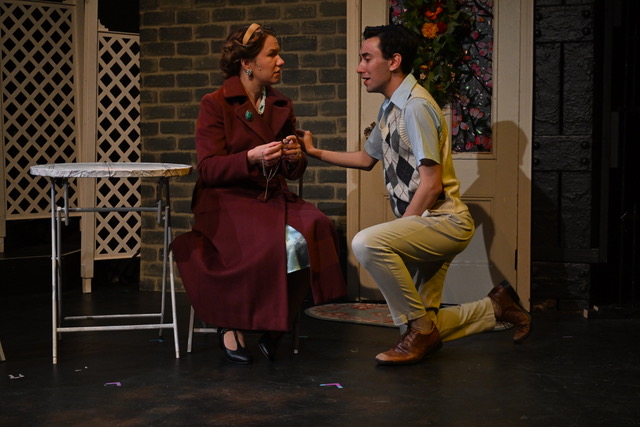
The show’s strength (other than the powerful script) lies in its talented lead performers, particularly Dirik and the kids playing Mickey, Edward, and Linda. Dirik, a frequent nominee and winner of IRNE, Eliot Norton, and DASH awards, elevates every scene she’s in and shines on the tunes “Marilyn Monroe” and the devastating “Tell Me It’s Not True,” and pairs nicely with Pohli’s lovely soprano in “My Child”. As the Narrator, Edwards brings a chilling persona to the role (reminiscent of Saturday Night Live’s Bill Hader playing the Devil) and ably serves in a variety of ensemble roles.
One of Theatre Uncorked’s unique strengths has been introducing fresh talent to Boston stages, whether through community theater or college theater programs, and Blood Brothers is no exception. In their dual roles, Mazzone, Fuller, and Casey deliver on the high energy of the children and the more demanding roles as young adults. Mazzone is terrific as the outwardly brazen but inwardly frightened Mickey; Fuller nails the naivete of young Edward and the privileged cluelessness of his older self; and Casey sparkles in every scene she’s in.
Blood Brothers is a wildly popular musical in the UK, running for over 10,000 performances in London’s West End, but it is less well-known in the U.S., which is inexplicable. This isn’t a perfect production, but it represents the best of fringe theater and is well worth seeing. For information and tickets, go to: https://www.theateruncorked.com/