Photos by Benjamin Rose Photography.
‘Macbeth’ — Written by William Shakespeare. Directed by Christopher V. Edwards. Presented by Actors’ Shakespeare Project at Mosesian Center for the Arts, Watertown through October 26.
By Shelley A. Sackett
Ten minutes into ASP’s production of Macbeth, my friend leaned over and whispered, “I thought we were seeing Macbeth.”
He wasn’t being a smart aleck; he was astutely stating the obvious. While it seems au courant (at least in Boston) to catapult timeless Shakespeare into other eras with disco, hip hop, and gratuitous references to current headlines, Actors Shakespeare Project, under the direction of Christopher V. Edwards, proves definitively that it is possible to overreach and completely miss your mark.
One of the Bard’s most quoted and beloved plays (“Fair is foul, and foul is fair,” “Is this a dagger which I see before me?” and “Double, double toil and trouble,” for example), it speaks for itself, elegantly and eloquently. Yet, for some baffling reason, Edwards thinks that contemporary audiences are unable to fully “get” the timelessness of the Elizabethan masterpiece without referencing the Epstein files, ICE, MAGA, the war in Gaza, and AI. Couple that misstep with creative but distracting staging, and you get the fuller picture.
To his credit, Edwards doesn’t hide the ball about his intent, which he spells out in the program’s Director’s Notes.
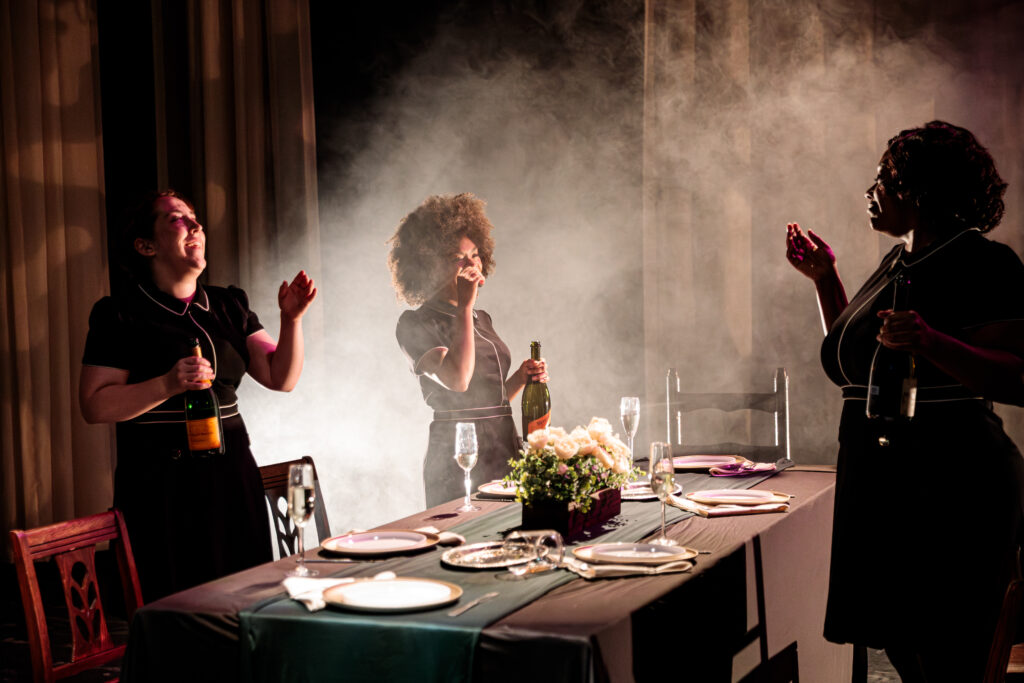
His version of Macbeth (which he nicknamed MK-Beth) reimagines the three witches as architects of state-sponsored psychological manipulation. He sets his version in the thick of a covert 1960s Cold War where Lady Macbeth and her husband are as much test subjects for mind control as they are murderous, power-obsessed co-conspirators.
The central issue, Edwards feels, is “reconsidering ambition, conspiracy and complicity in an era where truth itself could be weaponized.” I don’t know about other audience members, but I was looking forward to a version that was a little more faithful to the original rather than a spin on the contemporary front page political headlines, which take all my psychic energy to avoid.
On its own, Macbeth really does address the issue that Edwards wishes to magnify (the dangers of a budding dictator’s unquenchable thirst for power). Would that he had trusted the audience to “get” that on their own.
Disagreement with his spin aside, its execution has way more misses than hits. On the positive side, imagining Lady Macbeth as a grieving mother who undergoes electro-convulsive therapy at the hands of the three doctors/witches to cure her depression is an interesting conceit, although a baffling way to open the action. We are supposed to have picked up how devoted (and normal) the Macbeths were from family home videos that include the deceased child projected on stage before the play, but that point is a little too subtle to grasp without context.
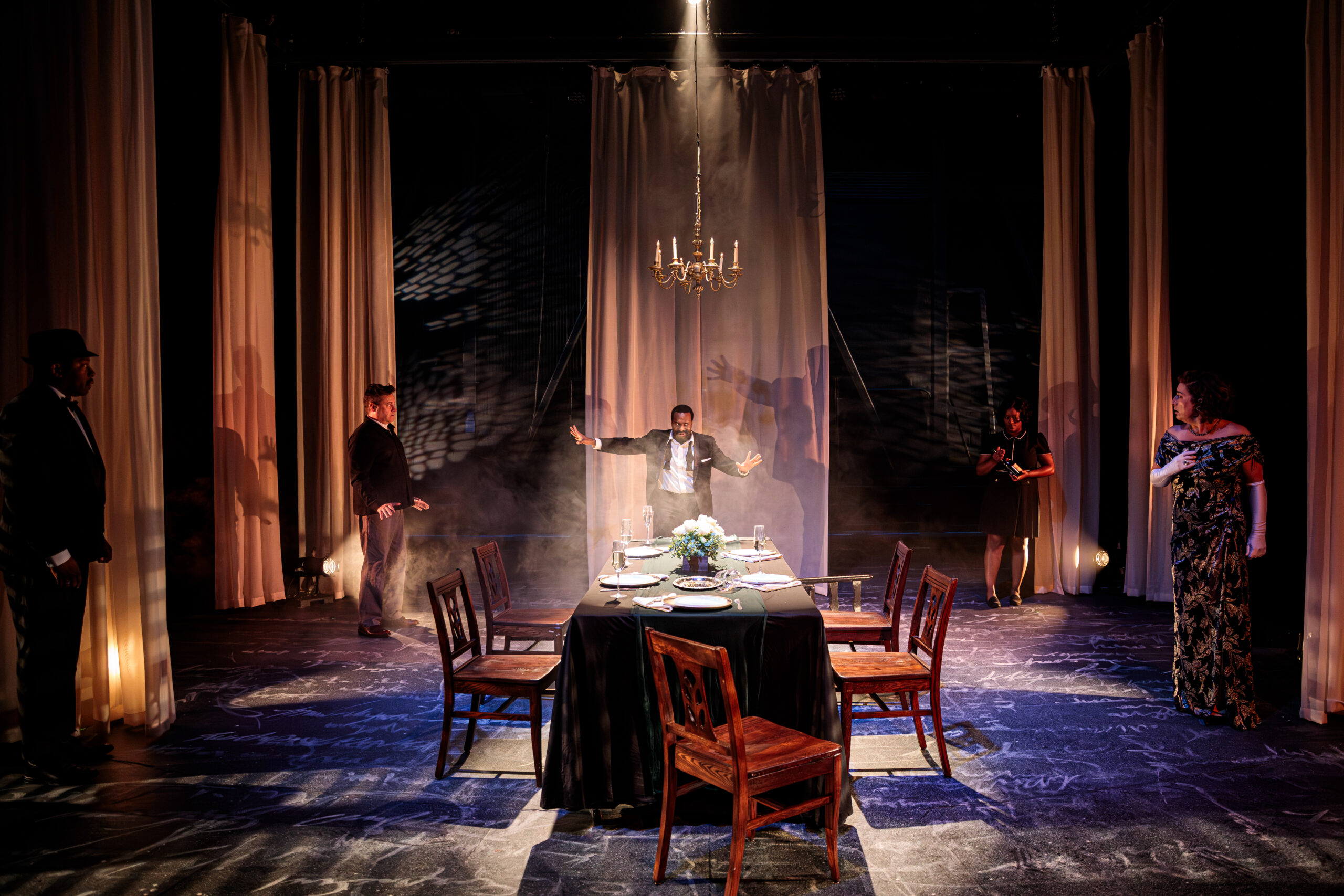
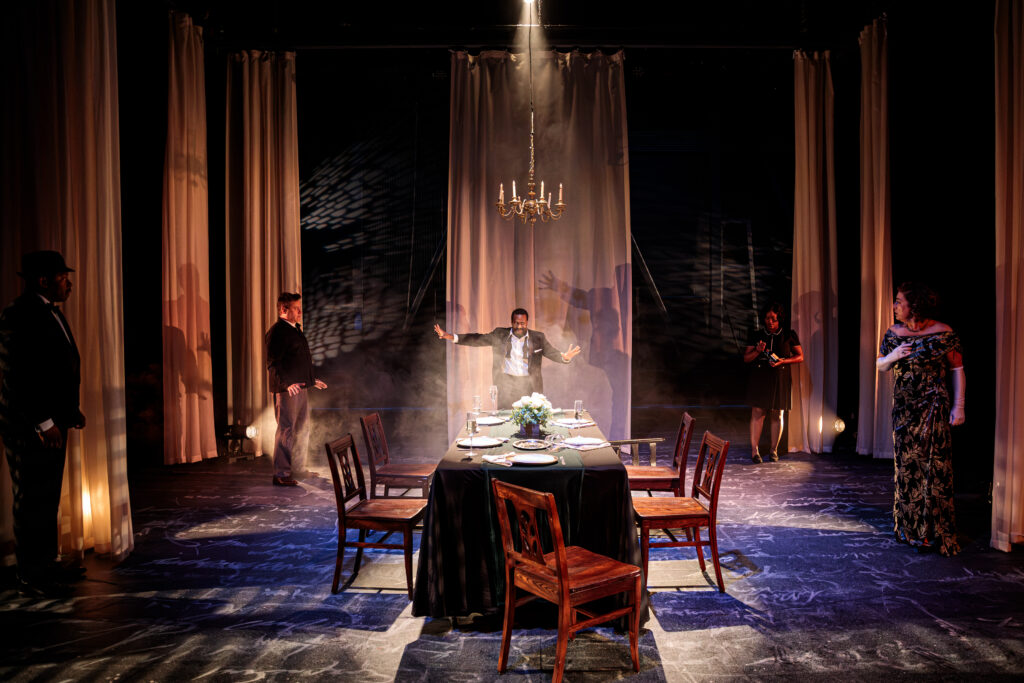
Danielle Ibrahim’s set, however, is marvelous, a gossamer set of white curtains that encircle the stage area and work well with the varying ambiance of the play.
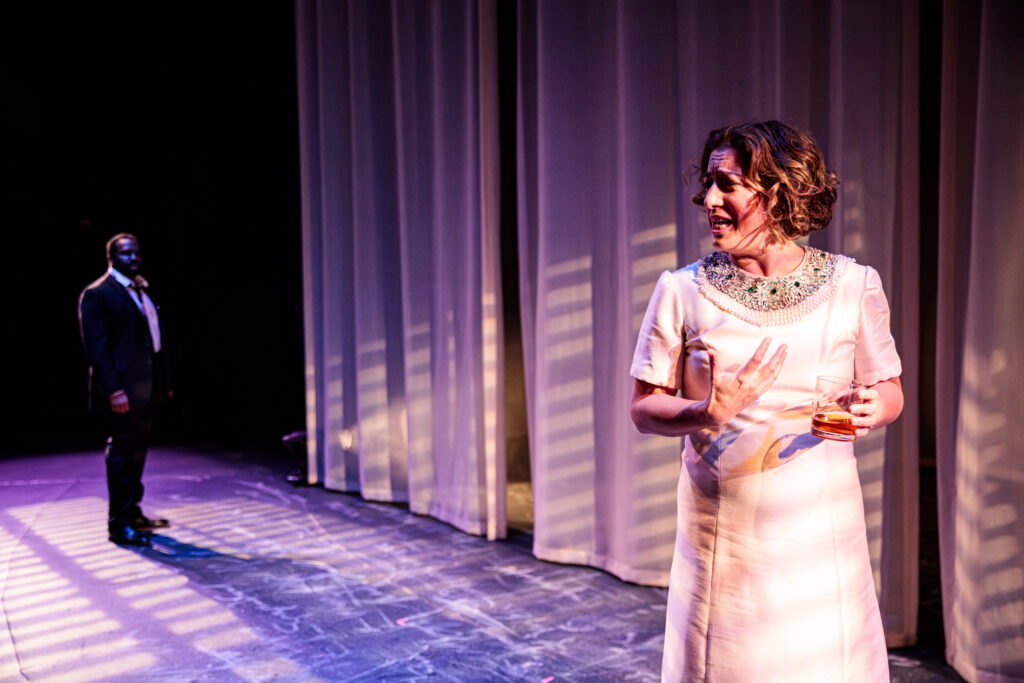
While some of the lesser characters seem to be reciting their lines in a classroom more than delivering them before an audience, there are some noteworthy performances, particularly by Brooke Harman as Lady Macbeth, Dennis Trainor, Jr. as Duncan/Porter, and Chingwe Padraig Sullivan as Malcom.
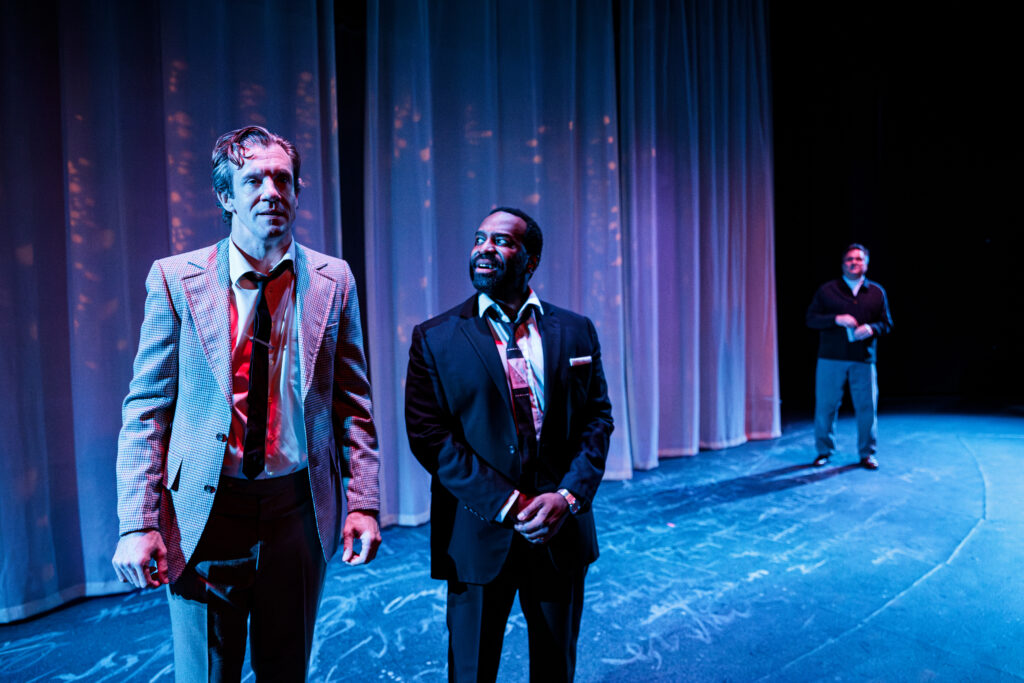
Omar Robinson (who collected the 2025 Norton award for outstanding lead performance in The Piano Lesson) breaks out of his singularly militant monomaniacal version of Macbeth to court nuance and pathos, particularly in the famous “Out, out, brief candle! Life’s but a walking shadow, a poor player that struts and frets his hour upon the stage and then is heard no more” speech upon learning of Lady Macbeth’s death.
Perhaps ASP’s parting gift to its audience is a back-handed reminder that Shakespeare can bridge eras, standing on its original two feet. I, for one, took that as an invitation to revisit the Bard’s version and went home, dusted off my college Pelican Text, and had a jolly good read.
For more information, visit https://www.actorsshakespeareproject.org/