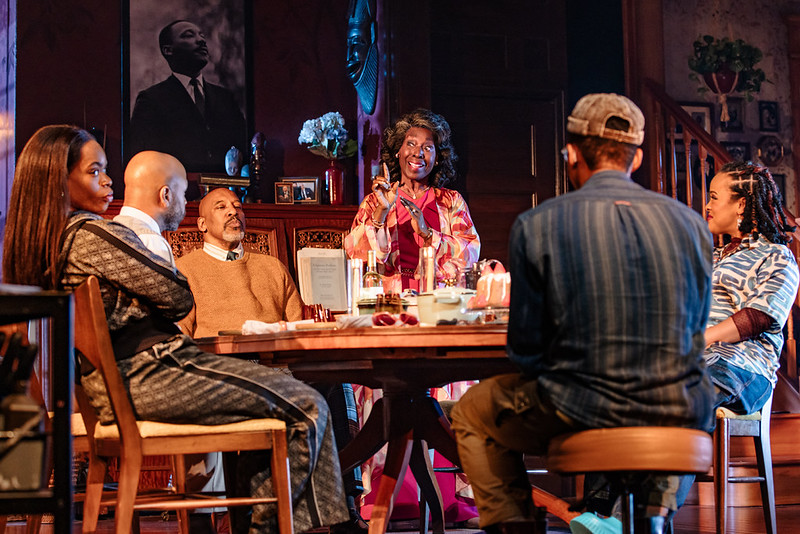
‘Purpose’ – Written by Branden Jacobs-Jenkins; Directed by Josiah Davis; Scenic Design by Se Hyun Oh; Costume Design by Celeste Jennings; Lighting Design by Marika Kent; and Sound Design and original music by Kathy Ruvuna. Presented by The Huntington Theatre Company at the Calderwood Pavilion at 527 Tremont St, Boston, through October 11, 2026
By Mike Hoban
There’s a lot going on in Branden Jacobs-Jenkins’ explosive family drama Purpose, now being presented by The Huntington Theatre at the Calderwood Pavilion in the South End, but therein lies the rub. The Tony and Pulitzer Prize-winning play tackles so many themes and generates so many plot threads that the production never satisfactorily delivers on most of them. While there are brilliant stretches in this three-plus-hour work, the sum of the parts never quite equals the whole.
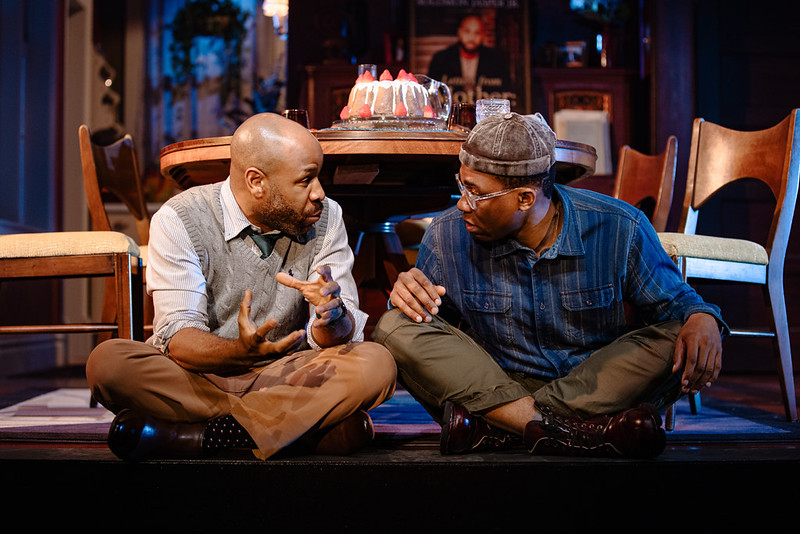
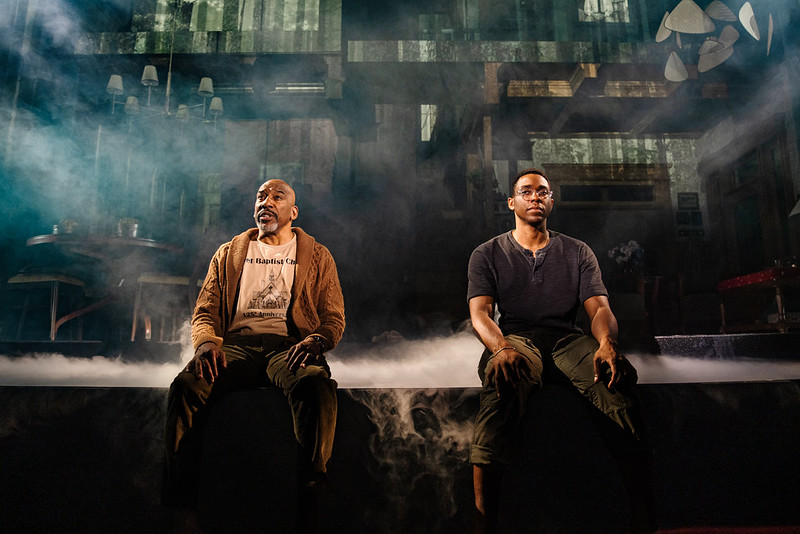
Nazareth “Naz” Jasper (Omari K. Chancellor), the play’s central character and sometime narrator, is a nature photographer returning to his family home in Chicago following a shoot in the Canadian wilderness. He arrives courtesy of his platonic friend Aziza (Kalyne Ashley Coleman), who drove him to Chicago after he missed his flight from Niagara Falls after Naz served as her sperm donor. Naz is making a rare visit to celebrate both his mother’s belated birthday and the release of his politician brother, Junior (Ugo Chukwu), from prison, where he served a short stint after being convicted of defrauding his political donors. His wife, Morgan (MarHadoo Effeh), who also made the trip from D.C., will now have to enter prison to serve her own sentence for tax fraud connected to her husband’s chicanery. Naz’s father is the revered Reverend Solomon Jasper, a celebrity civil rights leader and pastor who helped spearhead the movement with luminaries like Martin Luther King, Rosa Parks and John Lewis, along with his lawyer-turned-activist wife, Claudine. To all appearances, they are the quintessential Obama-esque power couple, the pinnacle of Black excellence ─ at least from the outside. And that’s just the setup.
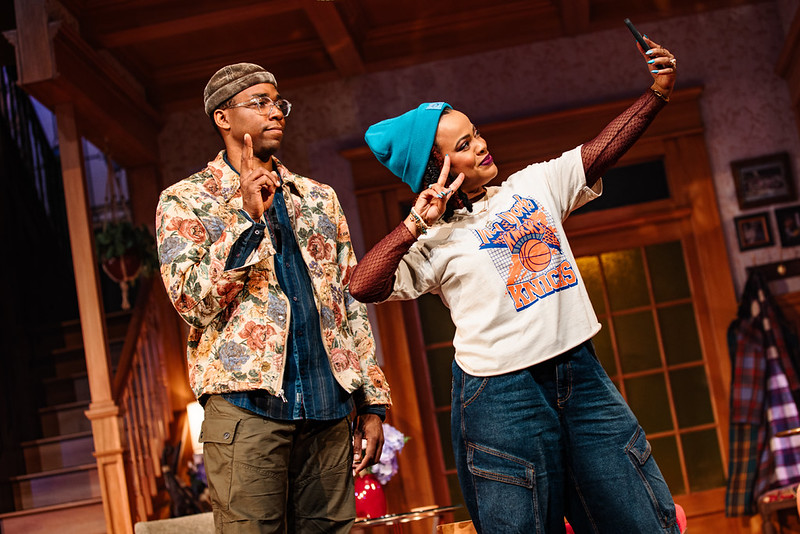
The problem with Purpose is that it doesn’t know whether it wants to be a sitcom or a serious drama. It’s not like comedy and serious drama can’t co-exist in the same play; Jacobs-Jenkins is adept at melding the two, as anyone who saw his Boston productions of Appropriate or Octaroon a decade ago can attest. It’s just that in this case, the comedy as played by the cast feels much too broad. Early on in the play, when Naz’s friend Aziza comes back to the house to return the phone charger that he left in the car, Claudine immediately assumes that his relationship-averse son has finally met a girl. Claudine pulls out all the cartoonish stops to get her to stay ─ and it feels like a plot device ripped from a 70s sitcom script. Which isn’t to say that the play isn’t funny. Act I is loaded with lines that draw howls from the enthusiastic audience and lower our defenses against the emotional time bombs that will go off during the tumultuous dinner scene that closes the act.
Act II is far more melodramatic, taking on the issues of religious hypocrisy, mental illness, society’s lack of understanding of the full spectrum of sexuality, parental expectations of children, infidelity, and a handful of other complex topics that don’t quite come together within the framework of the play. Jacobs-Jenkins also allows each character to deliver a monologue (or two). While they’re well-written and generally delivered with commitment and heart, all too often an issue is served up with the promise of being an important plot point, then left to wither away.
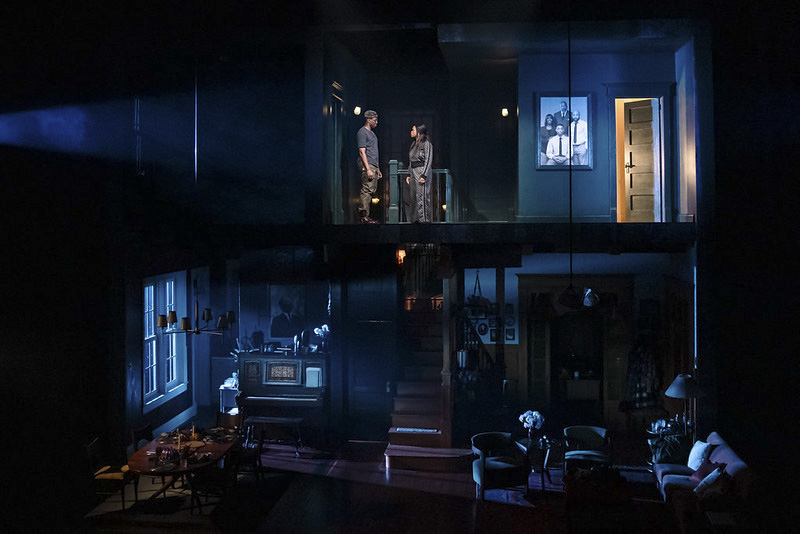
One of the brightest lights in this production is MarHadoo Effeh as Morgan Jasper. First for her subtle glee as the family turmoil reaches a boiling point at the family dinner table, and later as she unleashes a scathing takedown of her emotionally crippled husband for disregarding her and her children after destroying their lives with his crimes. Another standout is Kalyne Ashley Coleman, who transforms from a wide-eyed fangirl when she first discovers she’s in the presence of civil rights royalty to the only adult in the room when the flood of family dysfunction hits the fan. As Naz, Chancellor delicately walks the line between confusion and conviction in his belief system, and Chukwu effectively conveys the toll that failing to meet parental expectations takes on one’s psyche.
There’s a lot to like about this play, but in the end it’s exhausting, and the ending featuring Naz and his father feels false. There’s no question that Jacobs-Jenkins is one of the most compelling playwrights of the last few decades, but one is left wondering what the purpose of Purpose was.
For tickets and information, go to: https://www.huntingtontheatre.org/whats-on/purpose/