Reviewed y Camille Cuzzupoli
A View From the Bridge by Arthur Miller; directed by Rachel Walshe; set design by Jessica Hill Kidd; lighting design by James Horban; sound design by Gabriel Luxton; costume design by Mikayla Reid; fight direction by Norm Beauregard; stage managed by James Kane. Presented by The Gamm Theatre in Warwick, RI through November 29, 2026.
It’s embarrassing to admit how unfamiliar I am with Arthur Miller. I somehow made it through a theatre degree, and 20+ years of working in theater, without ever seeing Death of a Salesman, and only saw The Crucible for the first time in 2023. A View from the Bridge is the second step in making up for lost time. While I have still not seen Death of a Salesman, my current consensus is that Arthur Miller is quintessentially American in a way few other playwrights can boast– American in a way that renders him timeless.
The Crucible, in particular, is a play so good that it has spawned a subgenre of revisionist plays—one of which, John Proctor Is the Villain, is among the great plays of the 2020s. A View from the Bridge is not quite Crucible-tier, but very much deserving of the reappraisal treatment. It is a solid piece, but Eddie Carbone is a deeply unpleasant protagonist who is almost impossible to sympathize with. Arthur Miller is clearly not attempting to write a “good guy,” but he is attempting to write a character who we can feel bad for. It’s hard to feel bad for a man with pedophilic/incestuous feelings, who assaults multiple people, and calls ICE on his own family members. Director Rachel Walshe astutely observes, “Miller is not in the business of writing melodramas with a tidy bifurcated moral universe with ‘goodies’ and ‘baddies.’ He is in the business of animating honorable men committing dishonorable acts who break themselves against the unforgiving wheel of society.” A View from the Bridge succeeds at the “unforgiving wheel” part, but not so much the “honorable man” part.
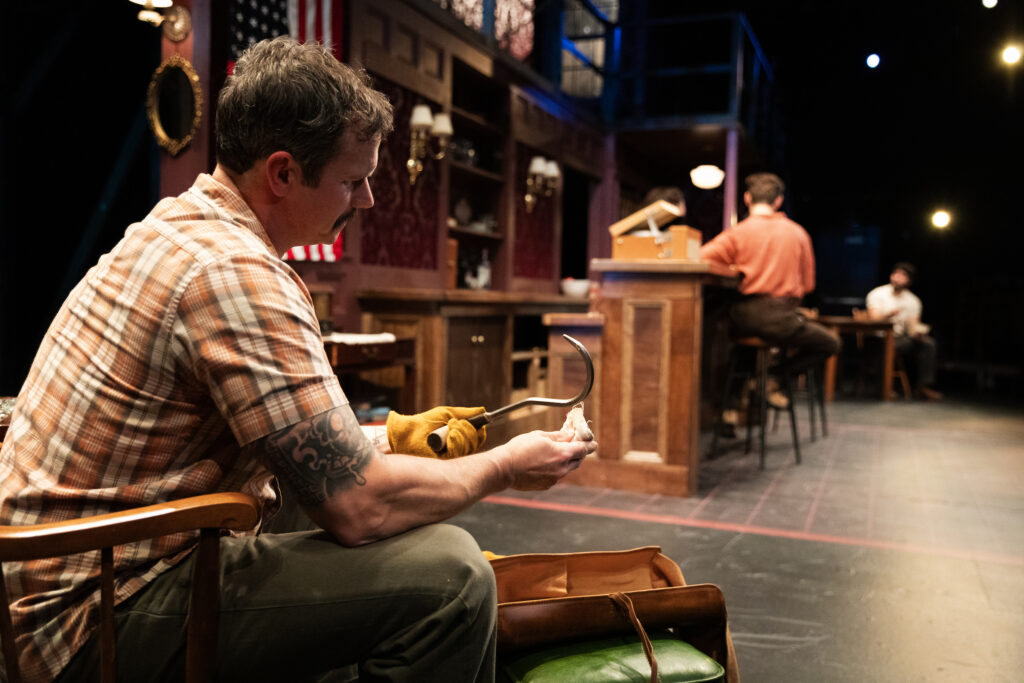
On impulse, one may assert that A View from the Bridge is about immigration. The Carbone family welcomes two Sicilian cousins into their home after they immigrate to Brooklyn for work. Their presence unravels the order set down by patriarch Eddie who, with their disruptive arrival, is forced to confront the truth of his own morals and desires. Immigration is a focal point of the play, but I found A View from the Bridge to be, primarily, about toxic masculinity. Eddie Carbone’s struggle is about manhood vs. personhood; doing right by the people he claims to love or continuing to impose his ways against their consent. Actor Anthony Goes does a remarkable job bringing Eddie to life. His brashness is frightening, his tenderness is beguiling, and the dichotomy between the two is his greatest weapon.
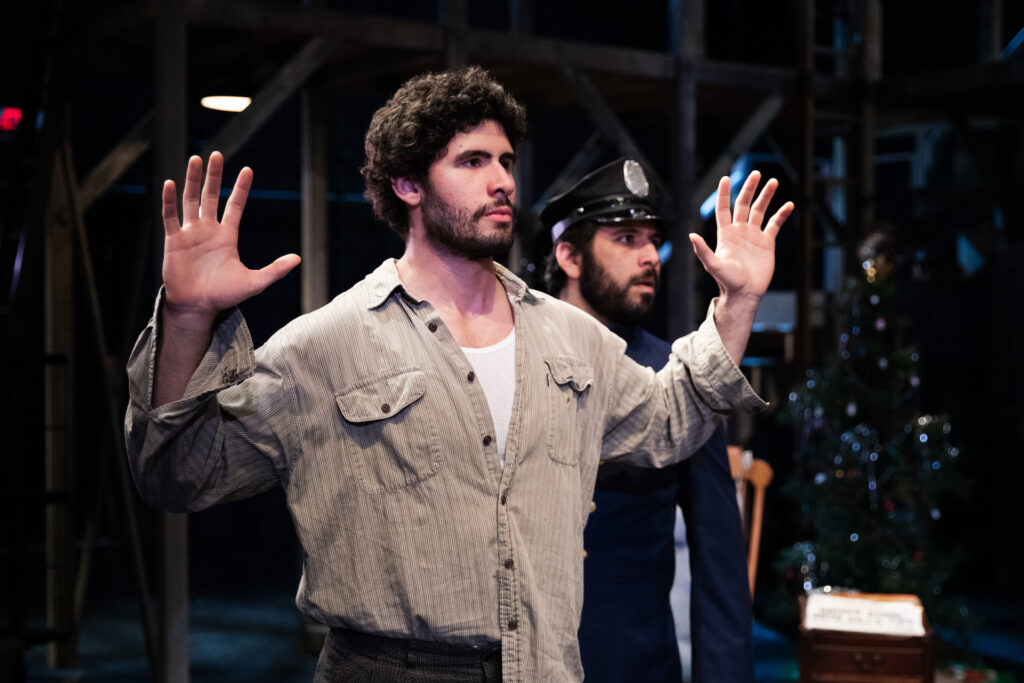
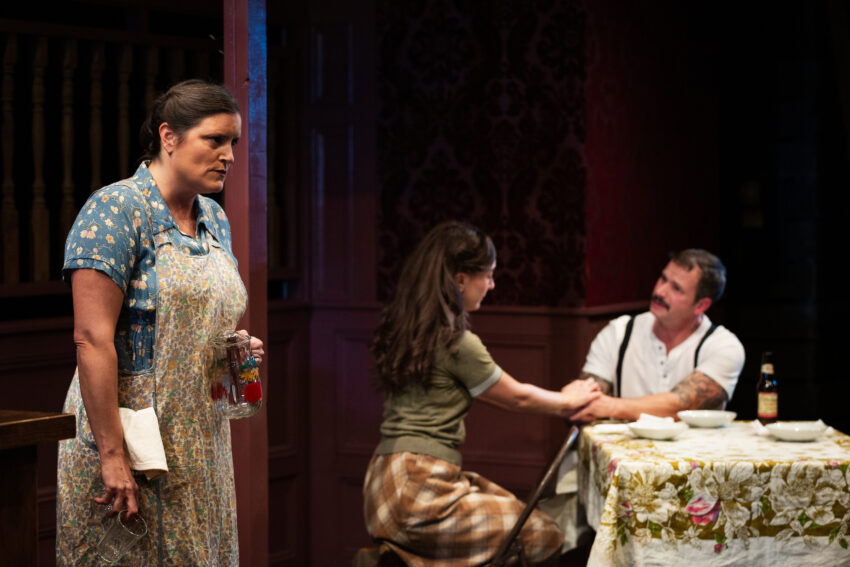
The actors’ Italian accents are only vaguely gesturing at European, but the New York accents are quite good—distinctive without being hammy. Distinguishing fault between the dialect coach or the actors is always difficult, and because both parties demonstrate good work here, we can make like narrator Alfieri and “settle for half.” I may also be a bit overqualified in this regard, considering my family is Calabrian—a direct neighbor of Sicily with an overlapping dialect—and I know firsthand that’s not what it sounds like when Southern Italians speak English. Michael Serratore (Alfieri) succeeds as an anchor in his few moments onstage. Rachel Dulude’s Beatrice at first felt one-note, but comes alive in a major way as the play progresses. Ethan Clarke (Rodolpho) is the weakest link when it comes to accents, but he’s forgiven by being so damn charming. His debut performance with the Gamm is spritely and sincere, such that we can’t help falling in love with him just as Katherine (Gabrielle McCauley) does.
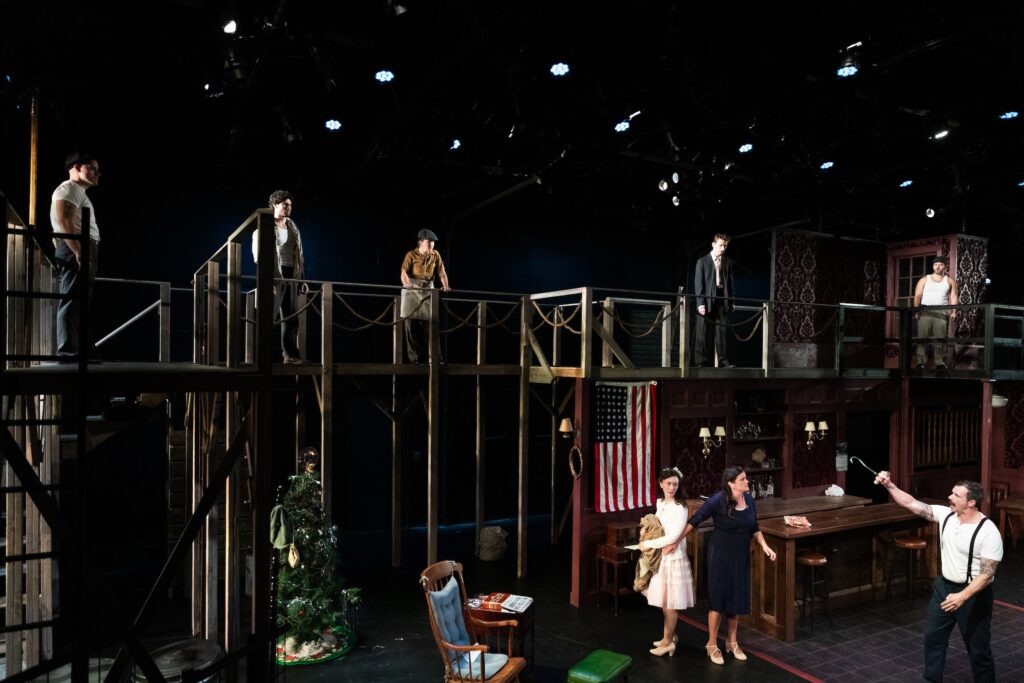
The costumes by Mikayla Reid are period-consistent, though a bit of weathering would have been welcome. The set by Jessica Hill Kidd is excellent; a warm, lived-in bar with longshore docks perched atop. It establishes multiple locations while being a cohesive single unit, and introduces levels that animate Rachel Walshe’s direction. This set is also the perfect home for Normand Beauregard’s terrific fight choreography. Physical altercations have a dynamic, almost beautiful movement to them that define the most arresting moments in the play.
There is one presence—or lack thereof—whose absence is felt, and that is the current state of immigration in the United States. The shadow of ICE looms large over A View from the Bridge, and it is not acknowledged by the Gamm. True, they have still produced an engaging, efficient piece of theatre, but it could have gone the extra mile with some dramaturgical concentration on this theme. A timeline of immigration proceedings in the playbill, a lobby display featuring stories of immigrant friends and family, even a single mention of the LUCE hotline would have done wonders. In future endeavors, I encourage the Gamm to incorporate dramaturgy into their production materials.
The Gamm Theatre has a great educational experience waiting for anyone looking to learn the building blocks of Arthur Miller. While I patiently await Eddie Carbone Is the Villain, I am content to report that A View from the Bridge warrants engagement in its original form, and the Gamm does a very competent job at producing it.