By Kilian Melloy
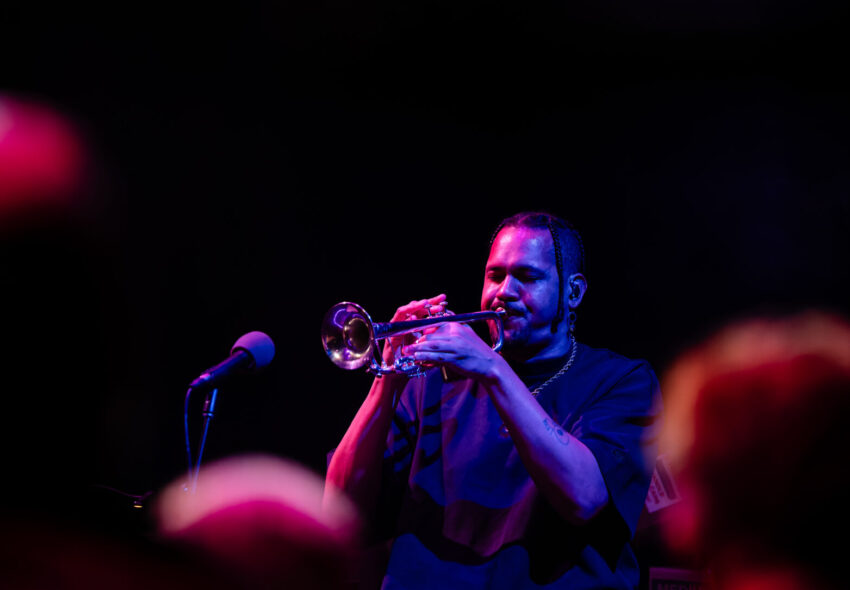
Jazz musician, stand-up comic, playwright, screenwriter… Ahamefule J. Oluo is all of that and more. The author of two previous shows blending storytelling and music drawn from their own life and those of their parents, 2014’s Now I’m Fine, and 2019’s Susan, Oluo brings their latest, a solo show titled The Things Around Us, to The Emerson Paramount Center’s Robert J. Orchard Stage from February 20 – 22. The Things Around Us constitutes the third part of what’s become a trilogy, but, unlike the previous two shows, it’s a solo piece: Oluo will create the show’s music using loops rather than an orchestra. With a stand-up’s instincts for engaging with the room and a musician’s ear for the language of sound, the artist will present audiences with a unique experience that he tells us is hard to describe — but not to understand, not once you’ve had it.
Oluo took some time to chat with Theater Mirror about the show, how it grew out of past projects, and the loneliness of being backstage with no one but themself.
Kilian Melloy: You’re a musician, stand-up comic, and playwright. What goes into blending all those things for a show like The Things Around Us?
Ahamefule J. Oluo: Music was my first love, and it was the first thing I did professionally. I’ve been performing since I was around 16 or 17. When I was in my early twenties, my lifelong love of stand-up comedy finally pushed through the surface. I’ve been doing stand-up for about 20 years, and for about the first six or so years, I did not intermingle the music and the stand-up at all. I was working as a trumpet player, arranger, and composer, and then I was running from there and going to the comedy club and doing stand-up. I never really had any vision of combining them until I had some large events happen in my life that shifted what I was writing about, and also shifted the direction of my music. I realized that it shifted them both in the same direction, and they became part of the same thing. So, in 2014, I premiered my first stage show that combined my more narrative elements and musical elements. That was called Now I’m Fine, and that launched my career into this kind of new form of performance. The main difference between this and my previous two stage shows is that where those shows involved large groups of musicians, I’m the only musician on stage for this show.
Kilian Melloy: Is it lonely up on stage without your 17-piece orchestra?
Ahamefule J. Oluo: I would say it’s not lonely on stage. I have hundreds of people there with me when I’m on stage. I feel like a part of me connects to every single member of the audience when I’m there. It’s definitely lonelier backstage; it has been very bizarre. The show has a big emotional ending, and everything’s really heightened, and then it ends, and I go backstage, and I’m just by myself. That’s a big departure. In my first show, I’d go backstage, and there were 21 other people there to celebrate with.
Kilian Melloy: As a stand-up comic, you have to read the room, maybe even more than when you’re playing with the jazz quartet. In that sense, does it feel like there’s a stand-up element to the show? Or does it feel more musical?
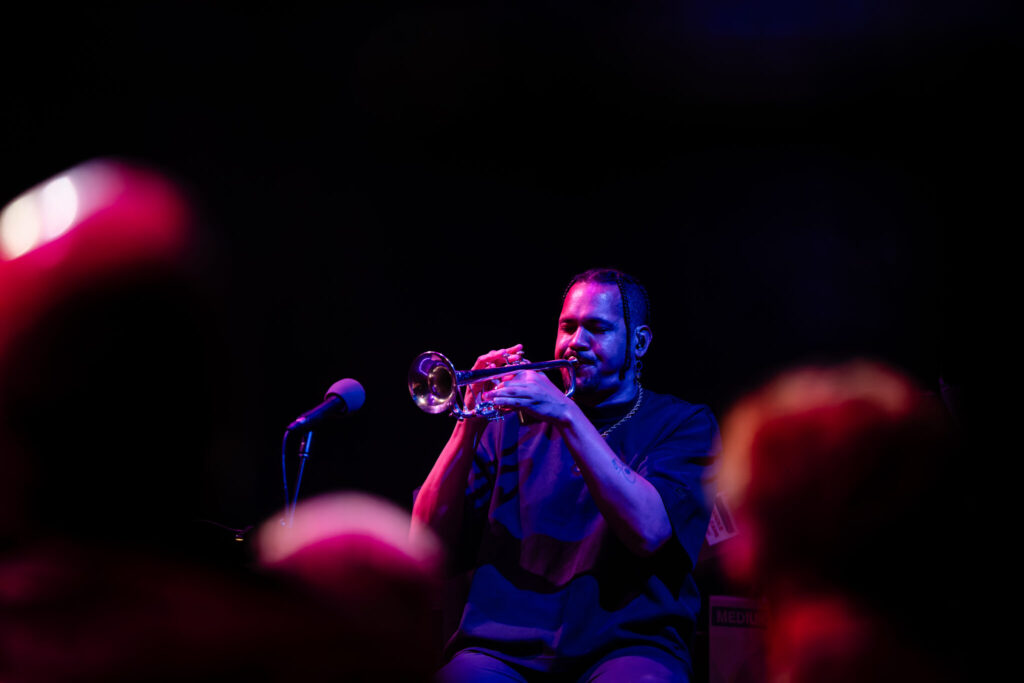
Ahamefule J. Oluo: The main thing that kept me from combining my disciplines at the beginning was that I never wanted to do something where one art form felt dependent on the other, where music felt dependent on stand-up, or stand-up felt dependent on music. I don’t want to pull either one of those back to serve the other form. So, I’ve always had this internal policy that when I make these shows, I would be fully confident going on stage and doing it as a stand-up/storytelling show, and I would feel equally confident going on stage and performing just the music, and feel like I was giving a full show either way. But [those elements] are meant to go together, and they are meant to be more than the sum of their parts. I’m always trying to keep them equally balanced in emotional feel. It has ended up this way, not even really through effort, that the amount of time I’m talking and the amount of time to spend on music is almost 50/50 on every show.
Kilian Melloy: The previous two shows dealt with some fairly heavy stuff — the death of your father, your mother’s life story. Are these shows funny as well as dramatic?
Ahamefule J. Oluo: They’re funny, and they’re dramatic. Comedy is my go-to defense mechanism in life, so it’s really hard for me to keep it out; even when I write more dramatic things, I can’t help but veer towards comedy. There’s a way, when I was doing my first two shows, that I found that people were really connecting with my story, which is great, if that’s what you want, but they’re connecting to my story as a person. I think there’s something different about connecting to your story as a person and connecting to the work that you’re presenting and connecting to the thing that you’re actually bringing forth to people. And I think that there’s a way in which very personal things can elicit both empathy and sympathy, and that sympathy can cloud things a little bit in terms of the artistic unity of what’s going on. So, there was an effort when I was making this show that none of these stories are about traumatic events in my life, none of these stories want you to feel sorry for me in any way. I mean, there are weird, strange, unfortunate things that happen, but they’re all things where I walk away fine at the end of the day, and other people’s lives are dramatically changed. The reason for doing that, for one, it points to the isolation that you sometimes feel. Also, I wanted to tell these stories that have very specific messages in them. I didn’t want that message clouded by any personal sympathy. I wanted the storytelling and the content and the message that I’m putting forth to be unfiltered by anything. The show’s not about wanting the audience to think any one thing or another about me,
Kilian Melloy: My understanding of The Things Around Us is that you’re drawing from all kinds of everyday life experiences. What is the log line for the show, your general description?
Ahamefule J. Oluo: If I were to sum up what the show is about, it’s kind of this long way of saying that every human being is a complicated, nuanced person with depth and feelings and things that go well beyond the surface. That’s a message that, if we understand that about every other person, can lead us more towards a common understanding. It’s not trying to push that message; it’s just trying to outline the ways in which everyone’s life is unpredictable and fragile and beautiful and sad, and it does it through strange turns and true stories, but it is all stories about other people — like, the core of the story is about someone else, a friend, an acquaintance.
Kilian Melloy: Would you say that putting these stories together is a matter of witnessing unusually eventful lives, or is it more about finding the extraordinary in the everyday? Or are both of those things involved?
Ahamefule J. Oluo: It’s closer to finding the extraordinary in every day, but it also is about [how] life isn’t just a narrative that you can put down on paper. Life is any story that we tell about our lives. It’s a story that we constructed. Any story that we tell about someone else is a story that we’ve constructed, and we can construct that story in many ways and still be honest. We have a tendency to view ourselves as individuals and the rest of the world as a monolith, and it’s really just trying to center the idea that every single person is a worthy individual.
Kilian Melloy: Some art forms invite improv, like jazz, other times, especially certain stage plays, there’s just no room for improvisation. So where does this work fall? Are you finding you’re reinventing it in some way, night after night?
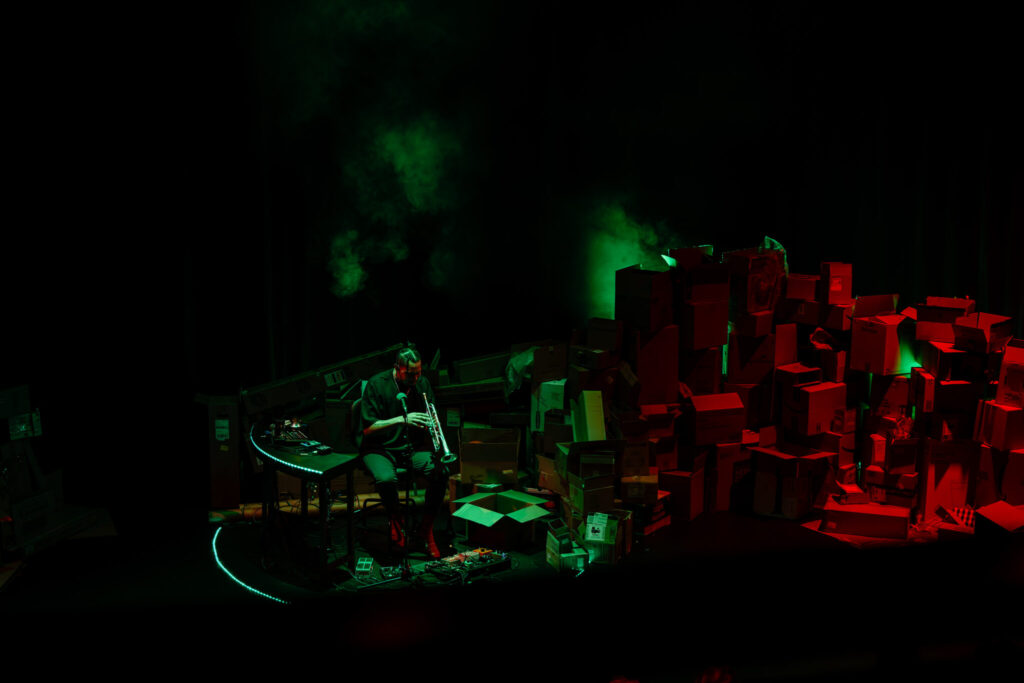
Ahamefule J. Oluo: It’s complicated. One of the biggest dangers with looping music is that it can grow stagnant if it’s not constantly moving somewhere. In order to make a compelling show over 90 minutes, you have to have tightly-choreographed movements and well-conceived structures so that you can move in a way that’s engaging for the audience. That doesn’t necessarily lend itself towards variation. There is a certain amount of natural variation in the show because I don’t use any click tracks. I’m not really referencing anything except for myself, because all I’m using for time is my own intuition.
It’s taken me a while to find ways to build in more flexibility, because it was very rigid to start with. Now it’s become looser and looser. When I’m telling stories and I’m scoring myself under the stories, engaging with the audience, adjusting gain levels with my right hand, moving things on a pedal with my left hand while not leaving eye contact with the crowd, that has developed from doing the show over and over again every day for two years in my studio, which I literally did. That also doesn’t lend itself to being loose and improvising with the crowd, because it’s really hard to keep all of those parts of your brain fully engaged. But now I have these areas in the show where I can be a little bit more free with my language, where I know that sometimes I get different reactions from the audience. It allows me to go back into that stand-up mode and be really engaged and interact with what’s happening, versus what can happen sometimes when you do comedic storytelling, which is that I know the audience is going to react this way, so that I have this reaction to that reaction built in.
Kilian Melloy: This show plus the two previous shows are characterized as a trilogy. Would you want to expand that and make a tetralogy out of it?
Ahamefule J. Oluo: No, no, I really feel like there’s something about the ending of the show that really sums it up for me, and it sums up the first two shows as well.
I didn’t necessarily intend on making a trilogy, and I didn’t necessarily intend on making this show when my second show was derailed by COVID. It was a very difficult thing; basically, that was the show that I built off of the success of my first show. All of the grants that I got went towards the second show. Whatever I built really went into that, and I spent around five or six years developing that show, really put everything into it, and then it just got taken away by COVID. By the time the world came back, and I could have put that show back together, so many things about the show, the people involved in the show, where I was in life, were different to the point where I really couldn’t go backwards.
I was in a really dark place about it when the idea for this show popped into my head. I was in New York seeing shows that I loved, and then I saw these shows that I didn’t love, and it made me think about ‘where am I’, and what do I make in the context of what’s of this landscape that I’m seeing? I had this thought of, “If I were to make another show, what would it be?” The second I had that thought, I started writing notes. By the time I left New York a few days later, I had pages and pages and pages of notes on my phone. If I pull that up and look through those notes, the entire show is in there. This show closes this loop.
Kilian Melloy: I noticed that you’ve got they/them or he/him as your pronouns.
Ahamefule J. Oluo: Yeah.
Kilian Melloy: When you hear the smears and politicization that happens around pronouns, does that make you want to write something more political at some point, or do you just want to stick with more personal stuff? Or are they the same?
Ahamefule J. Oluo: To me they’re the same. My sister was a number-one best-selling author who wrote the book So You Want to Talk About Race, a very direct, informative text that helped people understand many issues about how we engage. That’s the way that she contributes, and it’s amazing and beautiful, and that’s one way of doing it.
I don’t necessarily hide the bigger message in my own work, but I always want whatever message I’m putting forward to be evident in the story that I’m telling, versus something that I’m trying to say directly. I like to come at things in a slightly more indirect route, because I think that it’s a different way that people can absorb ideas. I think in bigger, more general ideas about the way that people treat each other, and the ways in which we all have to live together on this planet. There are so many ways to improve the world — by direct action, and also talking about the ways in which we take our pain out on other people. Racism is not something that people are born with. It comes from other things. It comes from insecurities. It comes from all these other emotional things, and I really like to look at the emotional things behind that. That’s what I work towards in my work. So, the political aspect doesn’t really come to the forefront, but I always want to make work that makes people feel, and the thing that I want them to feel is maybe not a specific thing, but it is something that’s collective in the room, something that they take with them when they leave, even if they can’t specifically describe it, and something that maybe the next day affects the way that they treat the other people in their life.
This interview has been edited for length, flow, and clarity. “The Things Around Us” plays at The Emerson Paramount Center’s Robert J. Orchard Stage from February 20 – 22. Tickets may be purchased 24/7 at ArtsEmerson.org, or by calling 617-824-8400 (Tue-Sat from 12:00PM ET – 6:00PM ET). The Paramount Center Box Office (559 Washington Street, Boston) is open for walk-up service Thu-Sat from Noon – 6:00 PM ET. Tickets start at $27.50. Groups of 10+ attending a performance save up to 30%.