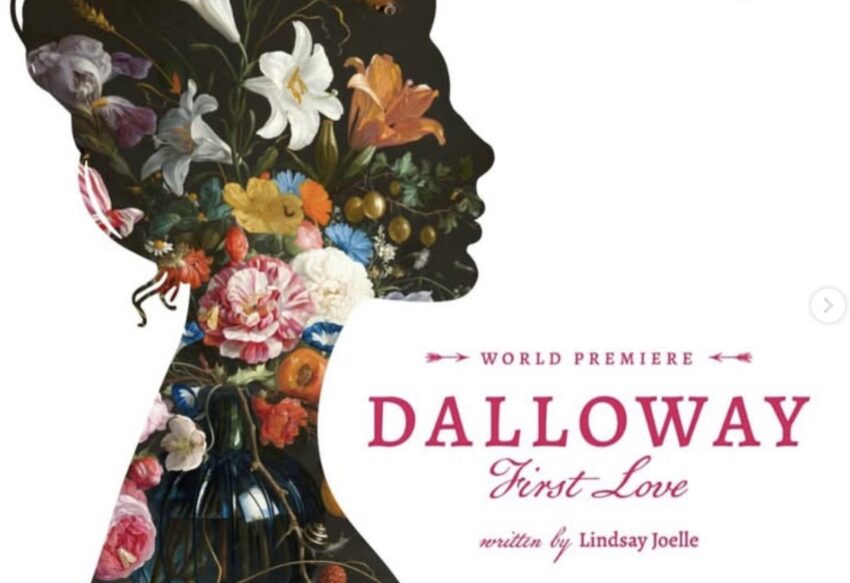
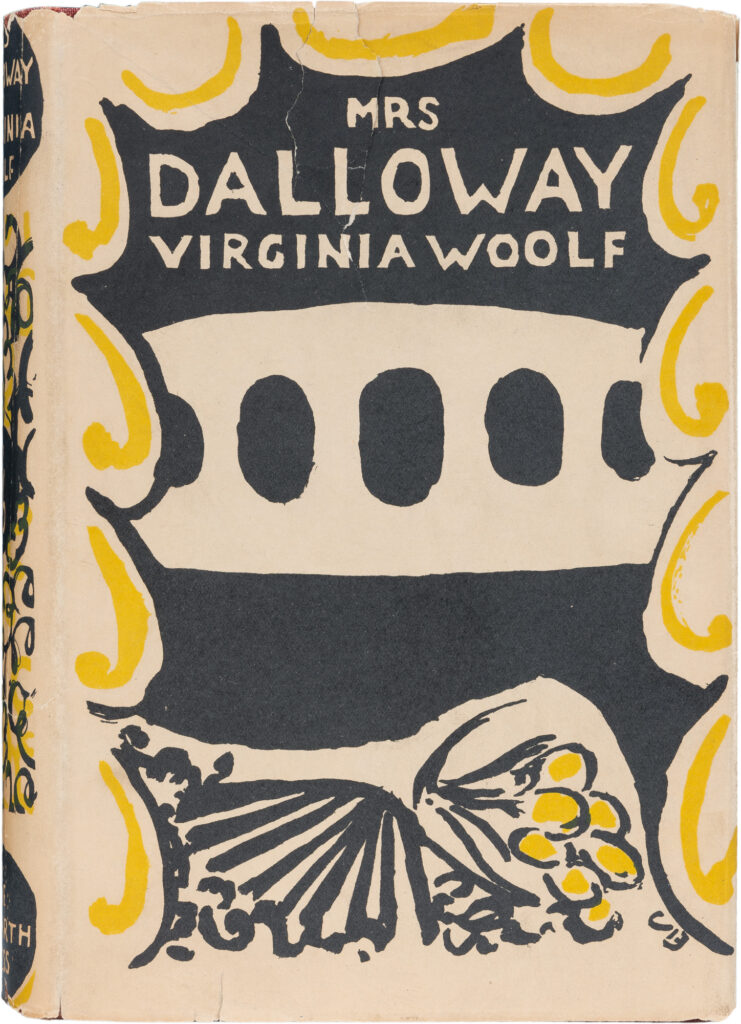
Virginia Woolf’s Mrs. Dalloway was published in 1925. The story chronicles a single day in the life of Clarissa Dalloway, a wealthy socialite who is preparing for a party she will host that evening. As she goes about her errands, she is reminded of her youth and the young suitors that courted her, including her friend, Sally, with whom she once shared a single kiss. The novel travels backwards and forwards in time, going in and out of the minds of Clarissa and other characters, focusing on their interior lives. Mrs. Dalloway is one of Woolf’s best known and most loved works. It has been adapted into three films (Mrs. Dalloway, The Hours, and an upcoming film called Clarissa), a novel, an opera, and several plays, including Lindsay Joelle’s latest work, Dalloway: First Love.
Theater Mirror Editor (and lifelong Virginia Woolf fan), Julie-Anne Whitney, sat down with playwright Lindsay Joelle and director Rebecca Bradshaw to learn about the new play, Dalloway: First Love and the upcoming world premiere production that opens at Gloucester Stage on August 15:
When did you first encounter VW’s Mrs. Dalloway? What was your first impression of the story and has your opinion of the book changed with time?
Lindsay Joelle (LJ): The first time I read it was in high school AP English. I immediately loved it and declared it was my favorite book– you know the way you declare things when you’re 17. It was my first Virginia Woolf, and I was really captivated by the lyricism of the language and the imagery; just how rich, immersive, detailed and sweeping it is. There’s so much to that book; it’s so dense and has so many layers. Now that I’m older and have revisited the book several times, I know that back then I wasn’t picking up on all the historical content…and what it means to be middle-aged and view your changing femininity in society. Because I was 17, I zeroed in on Clarissa’s memory of when she was 18 and the first kiss she ever had with Sally Seton in the garden and that was fascinating to me…or the time when her closest friend, Peter, proposed to her and she turns him down and he leaves for India for the next 30 years. All of that was incredibly juicy and I just wanted more of that as a young person. Those were the moments that stuck with me…And then when I revisited it three or four years ago when it joined the public domain, those were the moments that I pulled out of the book– those moments of memory. I used those memories as mile-markers and imagined what actually happened the summer of [Clarissa’s] 18th year at her family house in the country…It was interesting to be in conversation with my 17-year-old self, just like writing this play I felt like I was in conversation with Virginia Woolf across time.
Rebecca, you directed Lindsay’s play The Garbologists last season and are directing Dalloway: First Love right now. What is it that attracts you to her work?
Rebecca Bradshaw (RB): I really connected with Lindsay’s dialogue. It’s quippy and full of wit. She can make you laugh one moment and then slide in a moment of truth that sinks you into the emotional core of a character. Her language is really playful – an actor can come in with one idea and then I offer “what if he’s lying with that line?” and it can still work just with another edge. Sometimes, as a director, I have to mine for the levity or depth in a writer’s work – but Lindsay gives you both, effortlessly.
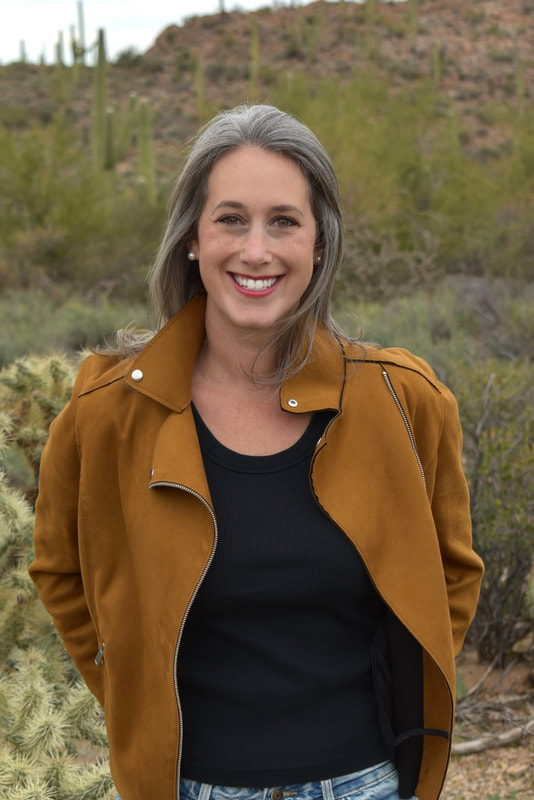
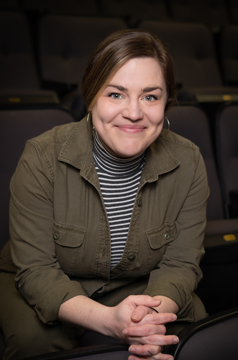
Dalloway: First Love is a world premiere. What are the challenges and joys of directing new work as opposed to established works?
RB: I’m usually turning to the designers or actors to help me figure out tricky moments or share ideas, but now I have the original source. When working with playwrights that have passed or are unreachable, all I have is research – interviews, seeing patterns in their other works, reading the tea leaves behind the writer’s personal life – but with a new play like this, I can turn to Lindsay and simply ask – what do you think this character wants right now? Or how did you envision this moment? When working on a new play, I feel it’s the director’s job to make something on paper into a three-dimensional multi-layered collaboration…The only challenge I see with new plays is that they aren’t necessarily stress tested. We haven’t seen them fully realized in front of an audience. Although extremely thrilling, there is a point in rehearsal where I make sure we get plenty of runs in so no one can walk away with, “well, it’s a new play…”. My goal is for people to walk away feeling they have seen a complete, dynamic product that could have had a thousand productions already performed.
The play is described as a prequel to Mrs. Dalloway, taking place in Clarissa’s teenage years. I’m intrigued by this idea that we may get a glimpse of “what might have been” for Clarissa. Lindsay, what inspired you to choose this vantage point for the story?
LJ: Those were the moments that really intrigued me as a young person– those moments from her youth. Also, the modernist structure of the novel doesn’t really work for the stage. I needed something a little more linear so we could trace the stakes and the wants and needs of the characters. Going back and forth through time seemed like it wouldn’t be as successful on the stage.
Was it freeing, then, to know that you weren’t actually adapting the novel?
LJ: It’s always nice to not start with a blank page. It was helpful to be collaborating with a work that already existed. Sometimes it felt like curation rather than [creation]…It was the easiest birth I’ve ever had for one of my plays. The idea arrived pretty whole. I just heard the characters– they just arrived. And that’s probably because Virginia Woolf has fleshed out such visceral characters that it was easy to imagine them young. I didn’t feel beholden [to the novel] but I felt inspired.
The characters were ready for you and you were ready for them.
LJ: I don’t pat myself on the back, though. It wasn’t my idea– I just dramaturged it well. But I think if Virginia Woolf saw this play she’d be like, “heck yeah!” It’s a slight modernization on the beliefs and theories that she stood up for: feminism and queerness, agency and finding your voice.
You’ve mentioned the much-loved scene between the protagonist, Clarissa, and her friend Sally in which they share a kiss in a garden. Will we get to see this scene in the play?
LJ: Oh yeah.
Oh good. I can’t wait.
LJ: That scene is everything. That’s the conflict; she has to interview this slew of suitors and choose a husband for his money to save her family’s estate. But then Sally arrives and she falls in love with Sally. It’s about [her] awakening. It’s about her first love. But it’s 1890 in Victorian society, and she’s asking, “Is there a place for us? Is there a path forward for us, now or in the future?”
I know you’ve done a couple of readings of Dalloway: First Love and that the play originally had a different title. Has the play changed much since the first reading?
LJ: It was always called Dalloway, but I did have a different subtitle before (it was called Dalloway: Summer in Bourton). We were looking for a subtitle that would be evocative of summer and youth. [I didn’t want people] to expect the play to be dark and heavy. It’s hard to separate Virginia’s work from her depression and her suicide. And while the play touches on some very significant social issues like “passing” in our society, in terms of queerness and race…there’s also a lot of levity and romance in it. There’s a lot of banter; it’s light and frothy, and I wanted to express that in the title. This is not a heavy, depressing ride. It’s a very joyful ride about love.
How does it feel to finally get the play on its feet?
LJ: The play hasn’t had a lot of development yet. It has had two readings. This rehearsal process [at Gloucester Stage] is the first time I’ve been in a development experience with this play. I’ve learned things from the actors and gone home and generated new pages and then brought them in the next day. But there hasn’t been any huge re-writes, just tweaks.
Rebecca, as the director, what is your vision for this production? What do you see as the core of the story?
RB: 19-year-old Clarissa has just lost her older sister by falling from the tree in their backwoods…Clarissa finds herself returning to this place where she finds comfort in her sorrow, can curse the world that took her sister away, and a quiet place to fall in love… On the first day of rehearsal, I asked everyone to a share a moment where they connected with a tree and within that room, we heard stories of a brother breaking his arm falling from a treehouse, the smell of a tree blooming outside their childhood bedroom, a huge tree that gave someone stability when sitting at its trunk, as well as a colleague visiting a tree they had planted for a friend who had passed. On top of walking away with a new story about love, I, tenderly, hope audiences can be reminded of how and when they have been affected by the support of the natural world around them.
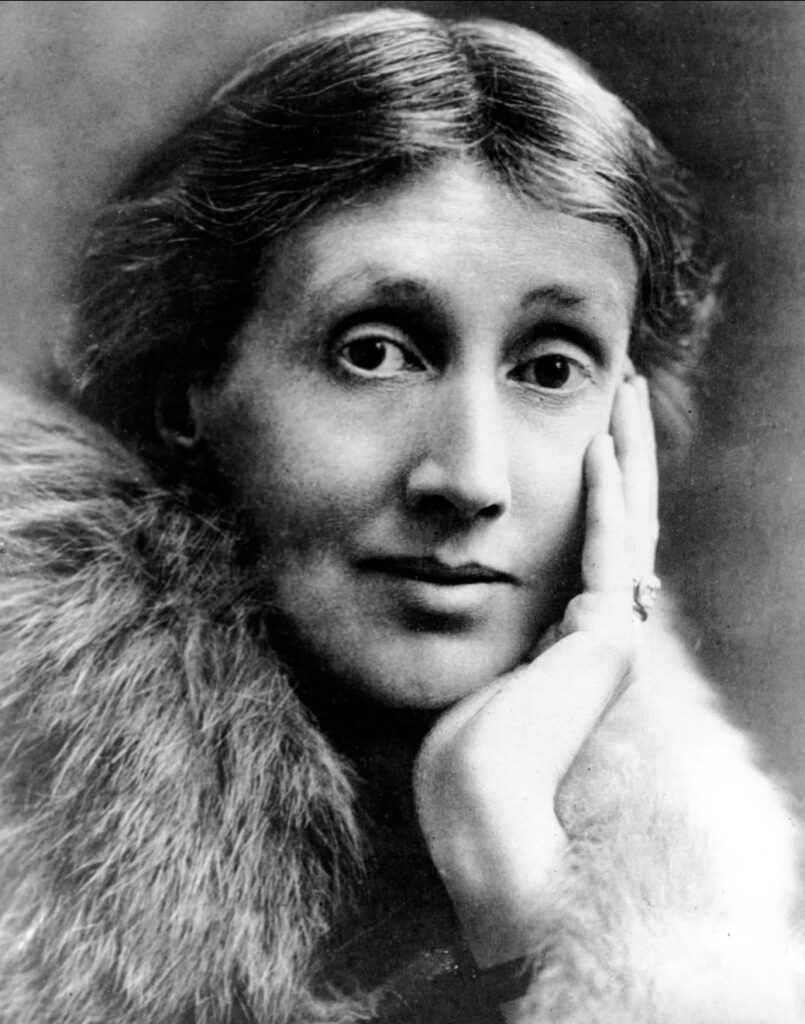
Virginia Woolf’s Mrs. Dalloway was written 101 years ago, in between the two World Wars. What do you think it is about this story that still resonates with people today- whether it be writers, artists, readers, or audiences?
RB: This play follows the coming-of-age moment in Clarissa Dalloway’s life…She’s being asked to save her family by marrying the best bachelor that can financially support the estate. Although these predicaments may not be a part of our modern day realities, we are asking young people to pick their careers, very early in life. At 16 or 17, most American teens are being asked to make a very expensive choice as to which college to choose that will dictate their path for the next 65+ years of their life. And if college is not an option, then the workplace. Also, this play being set in 1890 is at the start of the Industrial Revolution. The technology of the time is new and possibly exciting, but it is also moving too fast to regulate or create ways to protect workers and the environment. The London Smoke is thick in the air – a literal cloud of unknown harm created by the new industry itself. Now doesn’t that feel familiar?
LJ: Nothing about it is dated. Everything about it feels fresh. All the questions that Clarissa has, everything that she’s grappling with, the way she’s bouncing between present-moment observations and being pulled into the past by memory– Virginia Woolf really captured consciousness. We’re never fully mindful, we’re never fully present. We’re always haunted in some way by ghosts and memories– for better or for worse. And all of that, mixed with the beautiful language, it’s really a three-dimensional psychological study of a woman…Her work is timeless.
I appreciate you saying that Mrs. Dalloway is a three-dimensional story because it really is. So often the response to the novel is “it’s boring. Nothing really happens.” But it’s so rich, there’s so much there.
LJ: It is inaccessible in some ways if you’re not approaching it with patience and reading slowly enough to absorb it. If you’re reading for plot and you want a page-turner, this is not the book for you. You need to be ready to be unmoored. You’re not going to know what’s going on all the time, so you have to let the experience wash over you.
For those who may not know anything about Virginia Woolf or who might be intimidated by her work, what do you want people to know before they come to see this play?
RB: This adaptation is a standalone play. You do not need to know anything about Woolf or the original novel. If you do, there will be fun Easter eggs along the way, but if not – there is nothing you need to come prepared with. This is a play about young people finding themselves within a restrictive society…they struggle to stay true to themselves as best as they can when faced with a dominating upper straight white class society. Lindsay has also written it to feel very modern.
LJ: My hope is that for those people who are not familiar with Mrs. Dalloway, that they will see this play– which will be very accessible– and they’ll develop sentimental attachments to the characters and then they can bring that backstory into reading Mrs. Dalloway. I want the play to be a gateway experience. There’s no need to be familiar with Mrs. Dalloway in order to have a full and rich experience with the play.
What do you hope people will take away from this production?
LJ: I want people to leave feeling a little more romantic and a little more hopeful. I want audiences to leave a little more heart-open, with a little bit more space to understand that there are many forms of love that are all valid, legitimate, and important.
There’s room for everyone.
LJ: Or there should be.
Dalloway: First Love has its world premiere at Gloucester Stage this summer, running from August 13-29, 2026. Get tickets here.