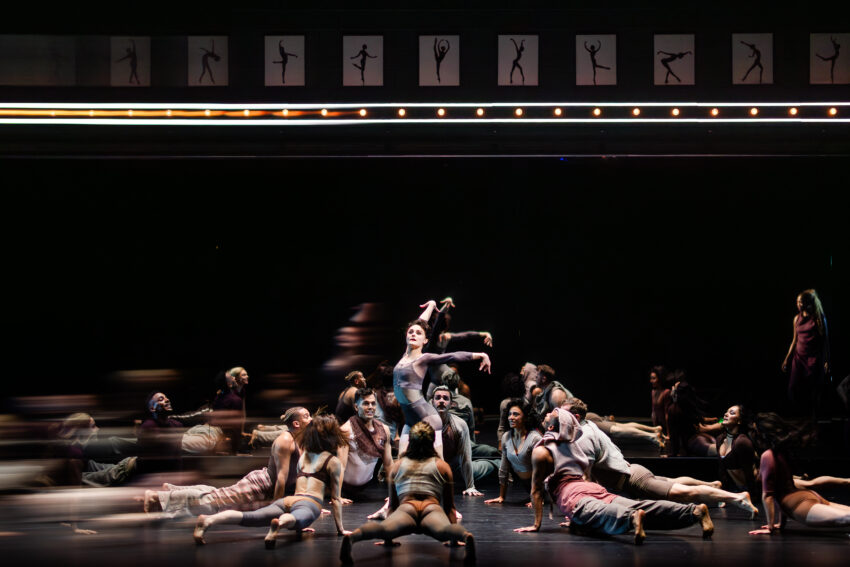
‘Black Swan’ — Book by Jen Silverman. Music, Lyrics, & Orchestration by Dave Malloy; Based on the Searchlight Pictures Film ‘Black Swan,’ Story by Andres Heinz. Directed and Choreographed by Sonya Tayeh. Music Direction and Supervision by Or Matia. Set by AMP featuring Marissa Todd; Costumes by Shiona Turini; Lighting by Isabella Byrd; Sound Design by Kai Harada. Presented by American Repertory Theater, 64 Brattle St., Cambridge, through July 12.
By Shelley A. Sackett
Black Swan is an extraordinary sensory extravaganza. Based on the 2010 Academy Award-nominated film, director Darren Aronofsky’s plunge into the psychological abyss of an obsessive quest for perfection and dissolution of self, A.R.T.’s world-premiere production of its musical version ratchets up the intensity and darkness to a degree that may be too uncomfortable for some to handle.
But for those who like their entertainment challenging, extreme, and tinged with touch of horror, Black Swan will leave you swooning in delight and awe.
Already extended through July 12 and Broadway bound, there is ample opportunity to see this spectacular musical/dance thriller, and see it you must.
The story doesn’t differ too much from Aronofsky’s film. Nina, a dedicated but sheltered ballerina, is cast in the dual lead role of the innocent White Swan and the sensual Black Swan in the classic ballet, Swan Lake.
The ballet is based on Russian and German folk tales, telling the story of Prince Siegfried, who falls in love with Princess Odette. An evil sorcerer turns Odette into a swan (the White Swan). The spell can only be broken by a vow of true love. The sorcerer tricks the prince into falling for his daughter, Odile (the Black Swan), instead, leading to a tragic, emotional climax that affects all.
The same ballerina traditionally plays both the innocent White Swan (Odette) and the seductive Black Swan (Odile).
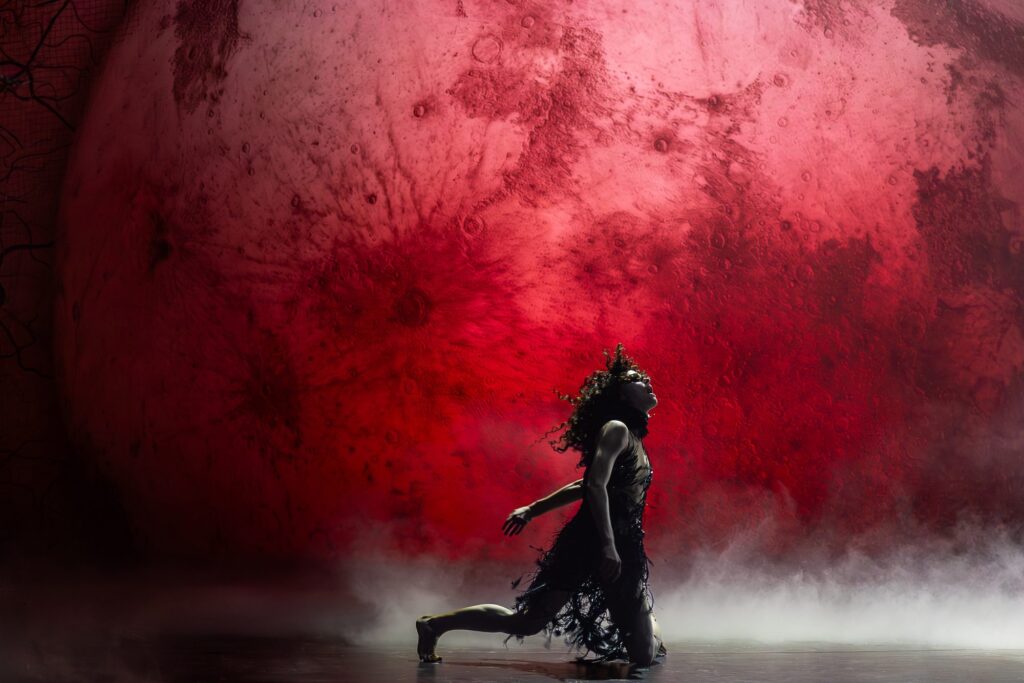
The A.R.T. version opens onto a black set, restrained and simple (AMP featuring Marissa Todd). Wisps of Tchaikovsky’s “Swan Lake” blend with the white smoke that hovers over the stage as Nina, a ballerina dressed as a white swan (the spectacularly talented Melanie Moore), floats across the floor. A Black Menace, dressed like a cross between Darth Vader and The Blackbird from “Five Nights at Freddy’s,” sneaks up on her. The music (by Tchaikovsky) builds as the two dance a pas de deux, soon joined by an ensemble that dazzles with their abilities to sing, act and dance. At the end of the scene, the set’s panels swivel, retreat and eventually close, like a black flower folding in on itself.
The audience at last Wednesday evening’s performance exploded into rapturous applause. This was already a night to remember.
Mirroring the film, Black Swan tells the story of Nina, a technically perfect ballerina, who is trying to break out of the corps and land the dual lead roles in “Swan Lake.” She already exerts immense pressure on herself. Adding to the turmoil are Barbara, an overbearing and resentful mom (played with great flair by understudy Mehry Eslamimia), Margaux LeRoy, a manipulative last-minute director whose career and reputation hinge on the success of her brash version of the classic ballet (the commanding mezzo-soprano Amber Iman), and competition from Lily (the fabulous Jada Simone Clark), a dancer whose dancing and lifestyles are as free and visceral as Nina’s are uptight and cerebral.
And then there’s the dethroned prima ballerina, Beth (an excellent Tory Trowbridge whose role deserves fleshing out), whose literal fall from her pedestal leads to a breakdown and hospitalization, foreshadowing a less-than-happy ending for poor Nina.
Even stainless steel pressure cookers can explode, violently erupting their hot contents when the pressure inside exceeds the cooker’s structural limits, usually because steam cannot escape. This buildup is almost always caused by blocked vents, overfilling the pot, faulty sealing components, or forcing the lid open prematurely.
It’s not hard to predict that Nina’s pot will be unable to withstand the forces swirling within and without. As she obsesses over preparing for and hanging onto her coveted role, her grip on reality loosens until she deconstructs, descending into a psychological no-one’s land of lost identity and self-destructive madness.
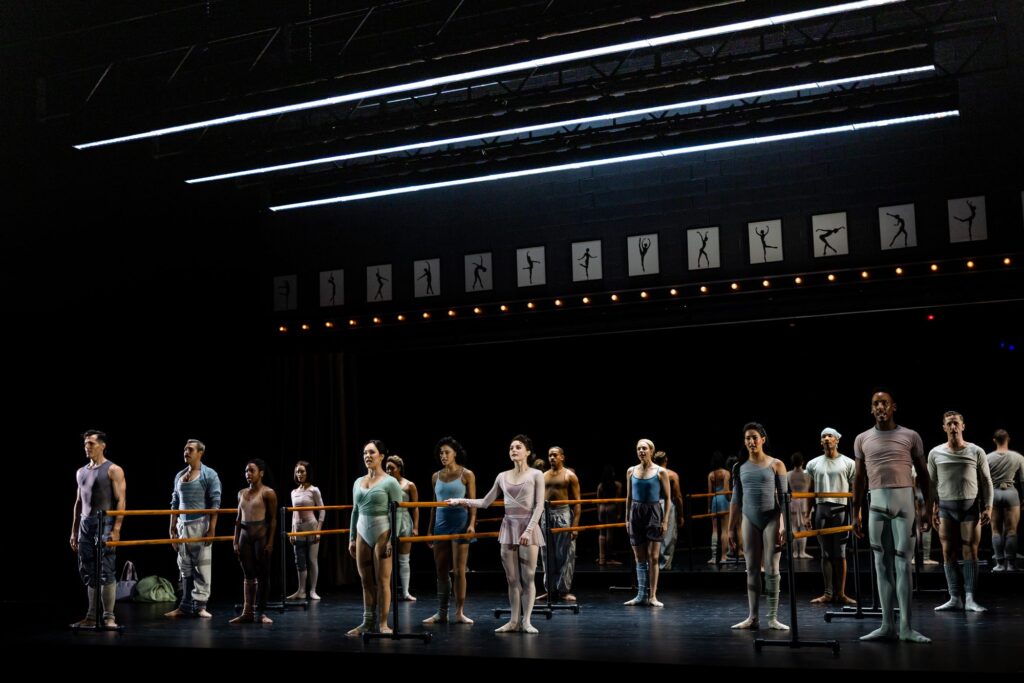
Along the way, this “show within a show” raises the barre on production value. When else has Boston offered a trifecta blockbuster evening of ballet, music and acting?
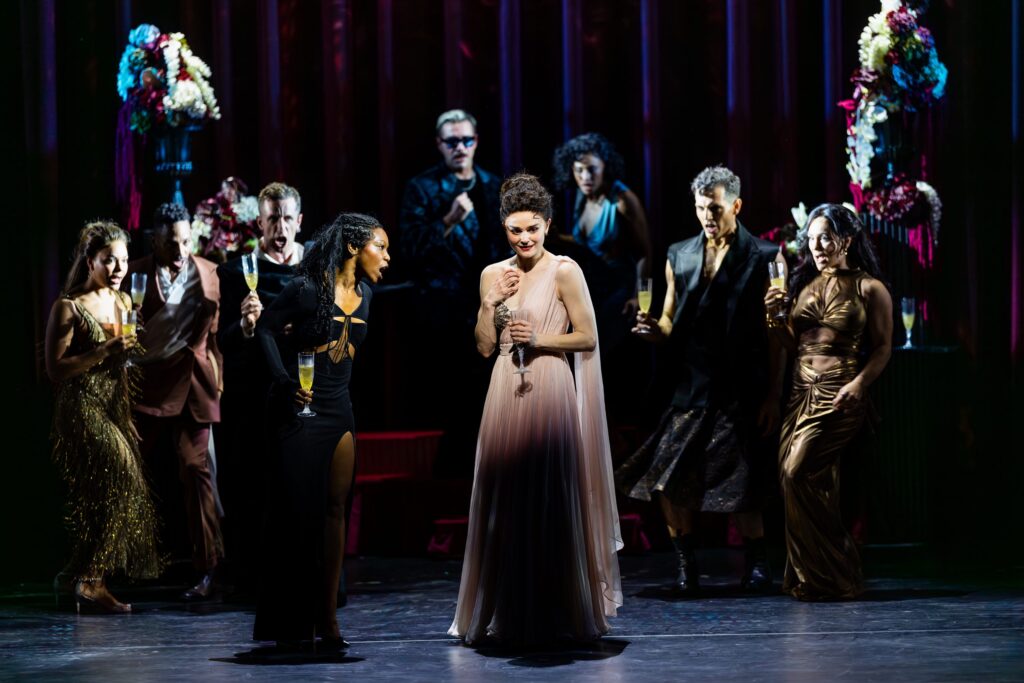
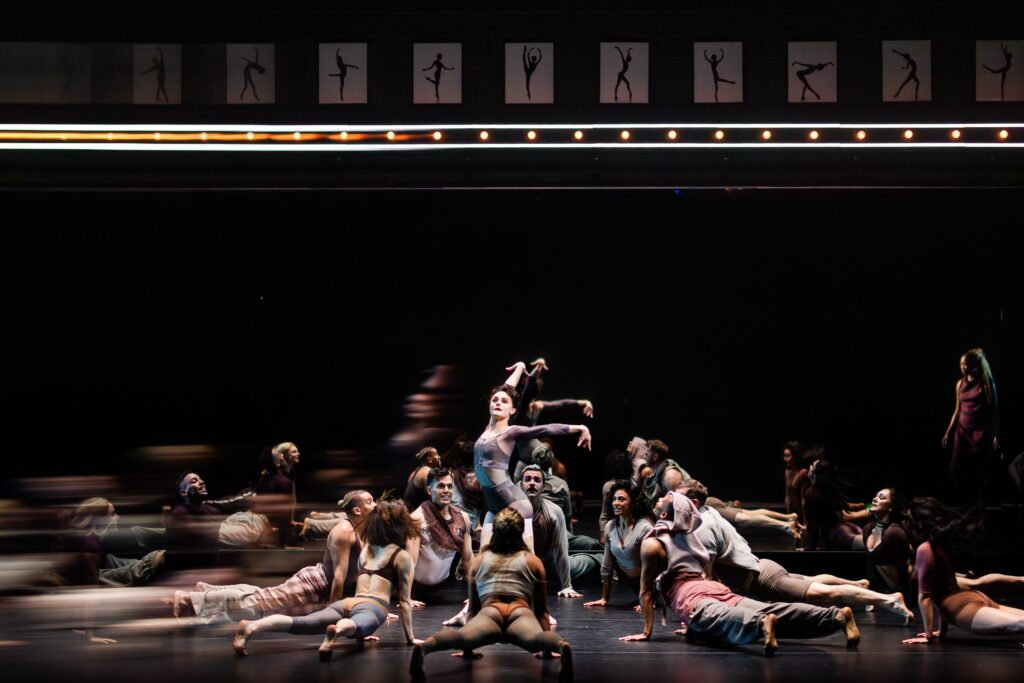
Tony Award-winner Sonya Tayeh’s choreography is inventive and stunning, melding traditional ballet with modern, spikey moves that speak volumes. Malloy’s orchestration and Matias’ music direction and supervision combine the classical elegance of the original score with thumping electronica that is both destabilizing and wildly energetic. And Tayeh’s direction maintains tension and, for the most part, keeps the narrative moving. Special effects (illusion designers Chris Fisher and Skylar Fox) are used sparingly and effectively, heightening the horror as Nina’s body transforms into the Black Swan. The dream sequence with Lily and Nina is a special highlight.
And then there is the multi-talented ensemble, a finely tuned group of individuals who soar through every dance number, beguiling the audience with muscle, grace, and skill. They also belt out the musical numbers, crooning harmonies and bringing humor and pep to the fund-raising gala. Those ensemble members with speaking parts do well, each managing to differentiate themselves, developing and maintaining an individual presence.
Although headlined as a musical, it is the choreography that drives the bus in Black Swan, awing the audience and holding the storyline together. The disco and drug/Nina-and-Lily-as-lovers scenes are particularly strong, laced with menace, shades of “The Rocky Horror Picture Show” and dance moves that bring Pilobolus to mind. They also mirror Nina’s deteriorating state and the negative influences those closest to her exert. “I’m dreaming,” a drugged Nina says helplessly to Lily as the two cavort beneath a full moon. “Oh no, my dear,” Lily replies. “You’re finally waking up.”
Black Swan tells a disturbing tale of the psychic toll of striving for perfection in often (too) graphic detail, but don’t be scared away from one of the most exciting, innovative and satisfying productions to hit the Boston scene in a long time. Melanie Moore’s Nina alone is worth the price of admission.
For more information, visit https://americanrepertorytheater.org/shows-events/black-swan/