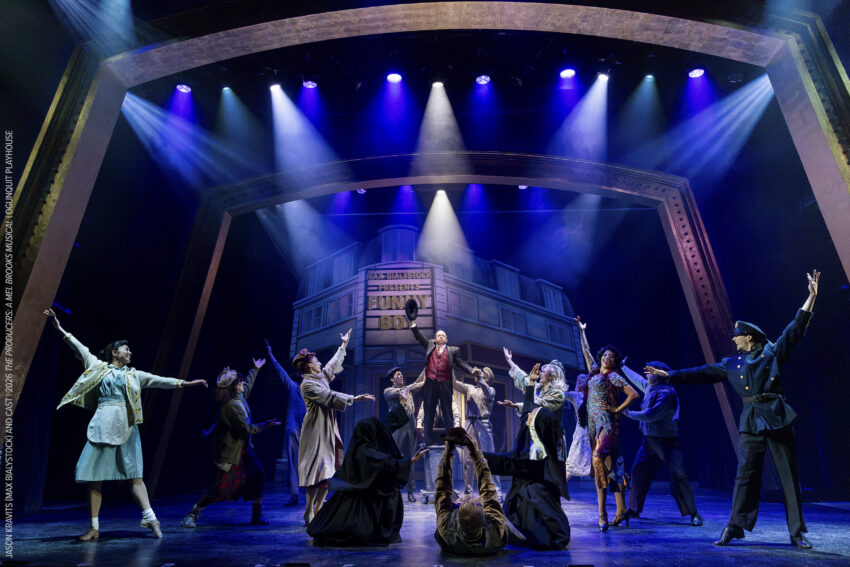
‘The Producers’ ─ Book by Mel Brooks and Thomas Meehan; Music and lyrics by Mel Brooks; Based on the film The Producers (1967); Original Direction and Choreography: Susan Stroman; Original Direction and Choreography recreation: James Gray; Music Supervisor: Jesse Kissel. Scenic Designer: Eric Luchen; Lighting Design: Richard Latta; Costume Design: William Ivey Long; Costume Coordinator: Jill E. Tarr; Sound Design: Kevin Heard; Wig/Hair & Make-up Design: Roxanne De Luna. Presented by the Ogunquit Playhouse, 10 Main St., Ogunquit, ME, through September 26
By Mike Hoban
I’ve often railed against the inherent laziness and craven cash-grab of turning classic movies into disappointing stage musicals, but Ogunquit Playhouse’s 25th anniversary production of The Producers is a magnificent exception. Based on Mel Brooks’ 1967 film of the same name, this marvelous reinvention unquestionably earns a spot on the short list of the funniest musicals ever made.
With good reason. Mel Brooks not only wrote the book with Thomas Meehan (who penned Annie and Hairspray), but also wrote the music and lyrics. He had originally approached Hello, Dolly! creator Jerry Herman for the score, but Herman convinced him to write it himself. Brooks was already a proven songwriter, having penned “Springtime for Hitler” for the original movie, along with comedy classics like “The Inquisition” for History of the World, Part I and “I’m Tired” for Blazing Saddles. And who better to collaborate on the book? Brooks is one of the great comic minds of our time, never afraid to push the boundaries of good taste. Unlike shows like Hairspray—which totally defanged John Waters’ cult classic—The Producers maintains its biting comic edges.
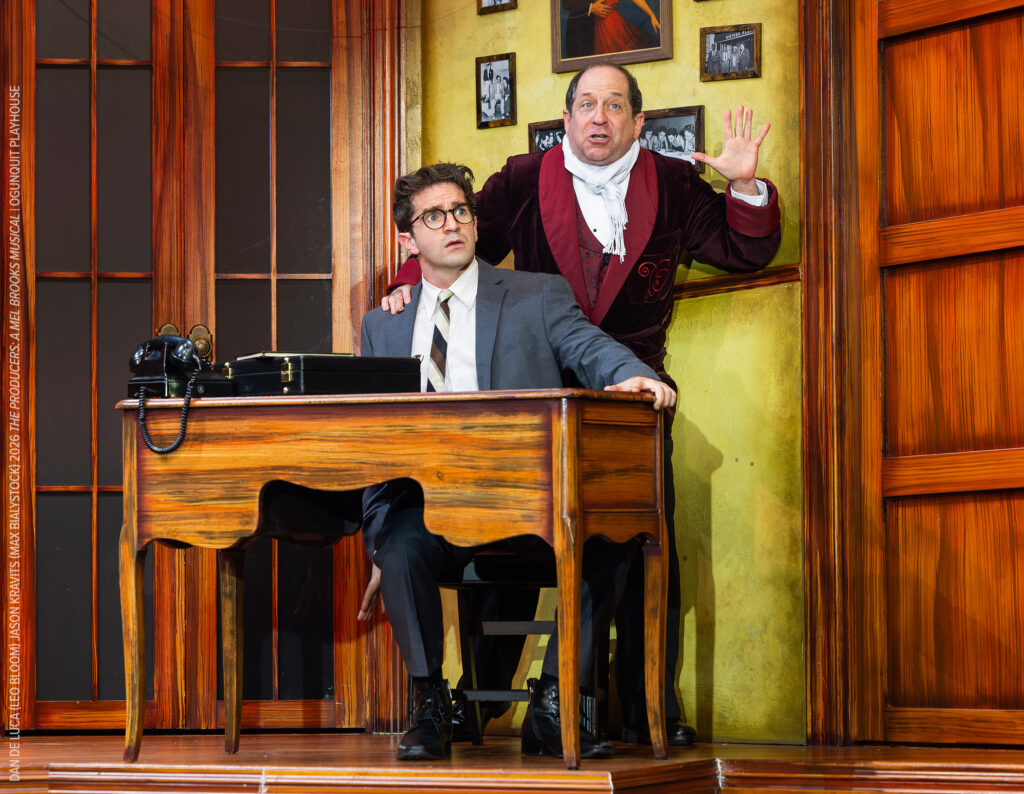
The story remains largely the same as the movie, with roles expanded, shifted, or eliminated to accommodate the transformation to the stage. Max Bialystock (Jason Kravits) is a Broadway producer who has fallen on hard times. Once the toast of the town, he’s now a washed-up creator of flops, as we learn in the hilarious number “King of Broadway” (in which the choreography pays clever homage to Fiddler on the Roof). On the heels of his latest disaster, Funny Boy: A Musical Version of Hamlet, Max is visited by Leo Bloom (Dan DeLuca), a clinically timid accountant who has come to audit his books. During the audit, Bloom discovers that if a show were to flop and close quickly, a producer could theoretically make a fortune—if he were willing to cook the books.
Max’s eyes light up at the prospect of making a huge score, and after some prodding, Leo signs on to the scheme. The new partners set out to find the worst play, director, and actors to ensure the show will bomb. They strike gold with Springtime for Hitler: A Gay Romp with Adolf and Eva at Berchtesgaden, a fawning tribute to Adolf Hitler written by Franz Liebkind (John Rapson), a deranged ex-Nazi who will also play Hitler in the show. Max and Leo then hire the cross-dressing director Roger DeBris (John Scherer), along with Ulla (Stephanie Gibson), a bombshell Swedish blonde with limited English who serves as their leading lady—and office receptionist. With all the wrong pieces in place, Max sets out to romance his stable of little old ladies to back his show, promising each 50% to 100% of the profits from a show that will close on opening night.
Or will it?
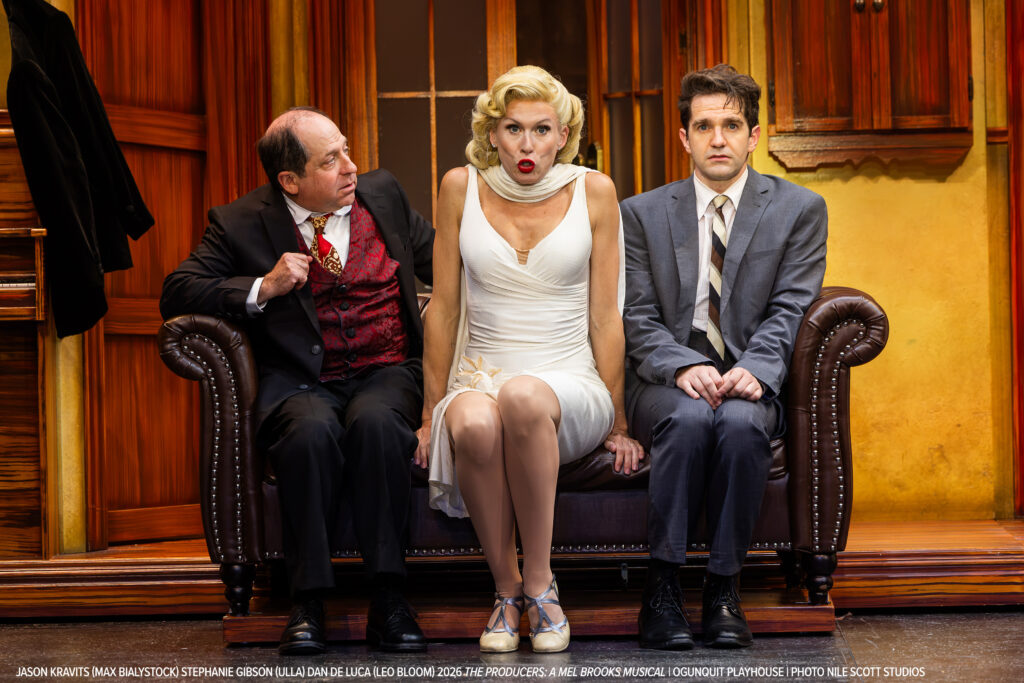
Director James Gray expertly delivers on the original Broadway staging and Susan Stroman’s inventive choreography (the incorporation of old ladies using their walkers to simulate a tap number is brilliant). Filling the shoes of the movie (Zero Mostel and Gene Wilder) and Broadway (Nathan Lane and Matthew Broderick) stars is no easy trick, but Kravits and DeLuca make the characters their own. Kravits exudes the appropriate levels of egomania and sliminess that Max’s character demands without going over the top, and DeLuca’s transformation from frightened nebbish to confident schemer as Leo is a joy to watch.
As Ulla, Stephanie Gibson oozes sex appeal and has a great set of lungs (pun intended), which she uses to great effect in the outstanding number “When You’ve Got It, Flaunt It,” and she brings down the house in the big finish. Rapson brings a maniacal glee to the role of Franz, particularly in the number “Der Guten Tag Hop-Clapp” that completes Max and Leo’s promised allegiance to the Third Reich to seal the deal for the rights to the play. But it’s John Scherer’s turn as Hitler when Franz is injured on opening night that steals the show. Incorporating improv and Brooks’ brilliant script, he scales the height of gay camp in his flaming interpretation of Hitler during the musical-within-the-musical of “Springtime for Hitler.” That segment of the play alone is worth the price of admission, as it sends up every overblown excess in a Ziegfeld-style Broadway show, from costumes to dance numbers. It’s an absolute scream.
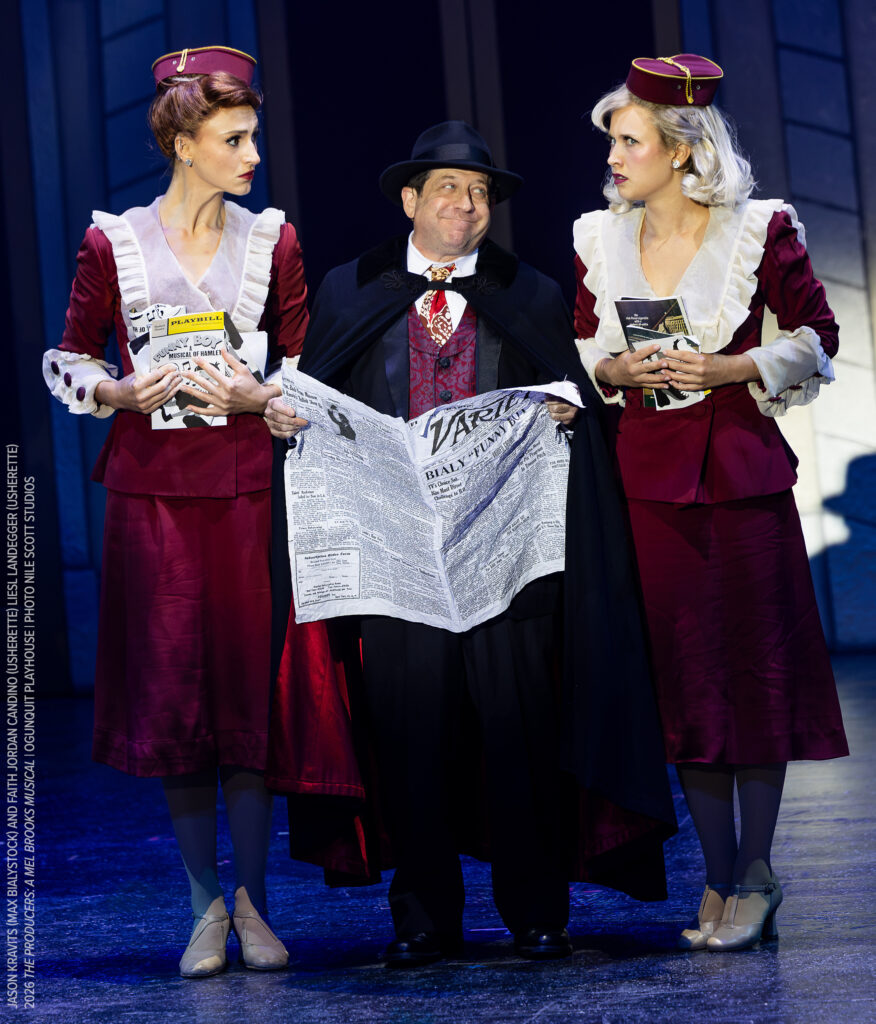
Kudos are also in order for costume designer William Ivey Long, whose insane designs for the showgirls in “Springtime” belong in the campy Hall of Fame. Kudos also to whoever adorned Franz’s pigeons with Nazi armbands in a brilliant stroke. The late Jerry Herman also deserves a pat on the back for encouraging Brooks to write his own music and lyrics. Not only are the songs hilarious, they hold their own against most Broadway shows, particularly “We Can Do It” and the outrageous and irreverent “Keep It Gay.”
Mel Brooks turned 100 in June, but his movie and theatrical genius will be with us for centuries. To see Brooks at the height of his creative powers, see Ogunquit’s production of The Producers. For tickets and information, go to: https://www.ogunquitplayhouse.org

Excellent staging and choreography. But at two hours and 45 minutes, the production was much too long; 30 minutes could easily have been cut. Brevity is the soul of comedy.
I think the ‘Betrayal’ number was really unnecessary, but a really solid show overall.