Reviewed by Julie-Anne Whitney
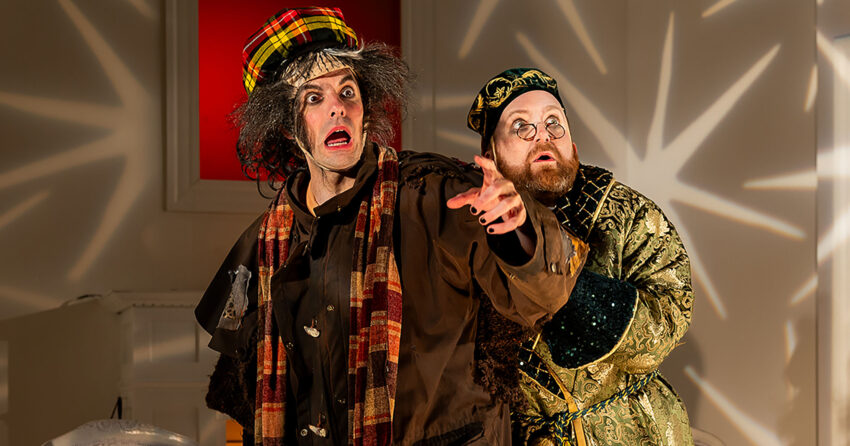
The Mystery of Irma Vep – A Penny Dreadful by Charles Ludlam; Directed by David R. Gammons, Dramaturgy by Texaco Texeira-Ramos, Scenic Design by David R. Gammons, Lighting Design by Jeff Adelberg, Costume Design by Seth Bodie, Sound Design & Original Compositions by Nate Tucker, Props Design by Lauren Corcuera, Stage Managed by Fanni Horváth; Produced by Central Square Theater in Cambridge, MA through June 21, 2026.
Charles Ludlam was an openly gay playwright, performer, director, and educator who worked in NYC from the late 60s through the early 80s. He wrote nearly 30 plays, the most famous of which is The Mystery of Irma Vep – A Penny Dreadful, a strange and hilarious Gothic romp that celebrates Ludlum’s love of theater, literature, history, film, and pop culture by using hundreds of artistic allusions throughout the script. Like Ludlum himself, it is a show that defies categorization as it subversively blends multiple performance styles (i.e. absurdism, camp, clowning, drag, farce, melodrama, parody, satire, slapstick, etc.), and doesn’t follow the conventional rules of theatrical storytelling.
The plot (if you can call it that), follows two servants, Jane and Nicodemus, and their masters, Lord Edgar and Lady Enid Hillcrest, who live in an English manor that is supposedly haunted by its former mistress, Lady Irma Vep. As the night goes on, you learn that the late Lady Irma and her son were killed by a werewolf. When Lady Enid is then bitten by a vampire, Lord Edgar desperately seeks help by…resurrecting the mummy of an Egyptian princess. This bizarre, rowdy cast of characters will take you on a whirlwind ride– one you may not fully understand but you certainly will not forget.
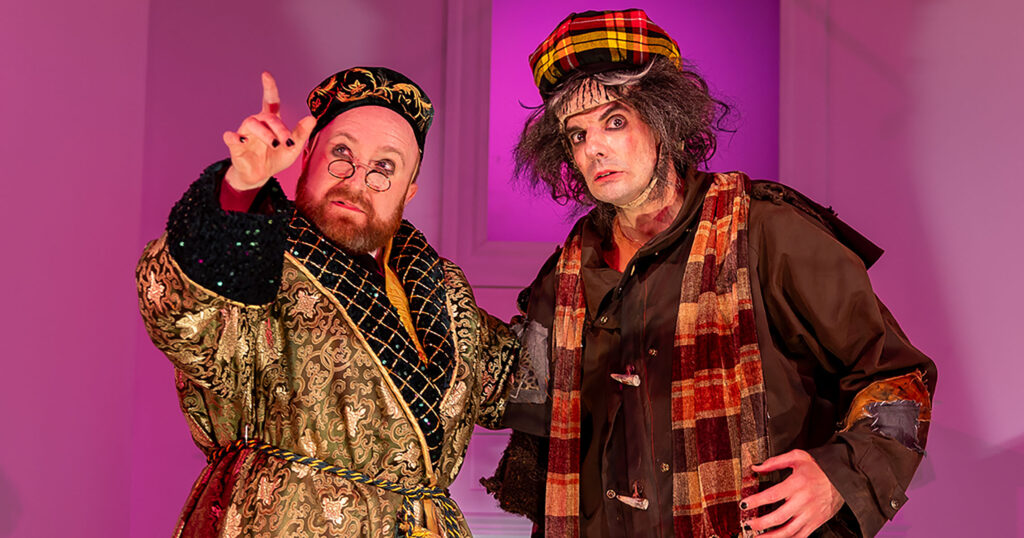
Ludlam’s script is nonsensical, eccentric, and fun. But, then, it’s supposed to be. High Camp is supposed to be exaggerated, flashy, and playful. When you add drag, it also becomes sexual and fabulously Queer (the play is intended to be performed by two people of the same sex so that cross-dressing is required).
With the help of two stellar backstage wardrobe runners (Rebecca Straniere and Emma J. Hunt), actors Paul Melendy and Gabriel Graetz manage more than 30 quick changes into layered, complex costumes that sometimes include wigs, hats, robes, dresses, jackets, and– for Melendy– a negligee. Melendy and Graetz are a force of nature– both as individuals and as a pair, working off of each other with great skill. Both actors master multiple accents, genders, and ages with incredible dexterity and flair. They will have you laughing ‘til your face hurts.
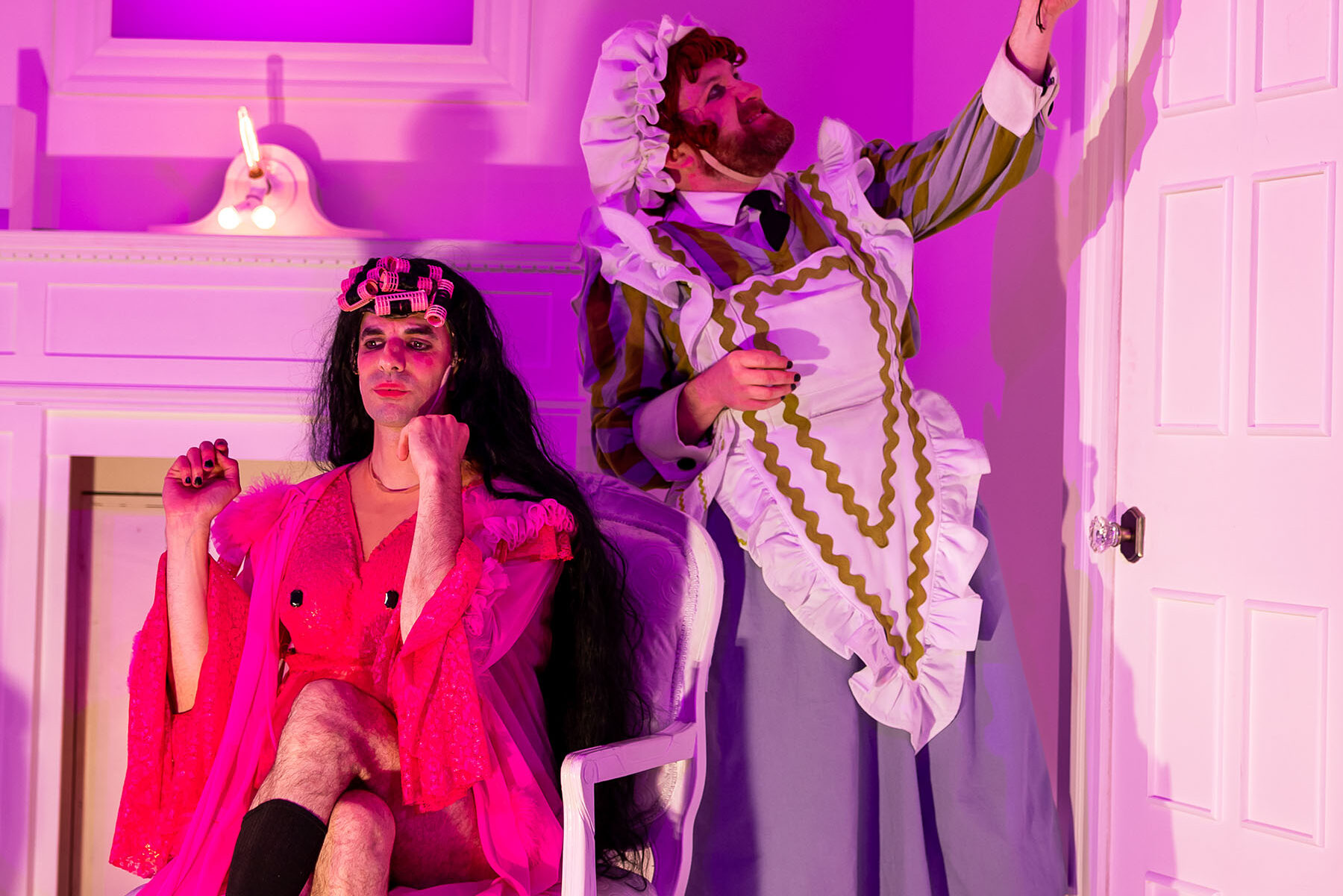
Central Square Theater’s fantastically entertaining production is helmed by David R. Gammons (previous CST directing credits include Vanity Fair and Frankenstein) who directs Melendy and Graetz with the specificity and finesse of a world-class choreographer. Gammons also designed the spare but effective all-white set that allows for not only the actors and their many colorful costumes to shine (cleverly designed by Seth Bodie), but also to showcase Jeff Adelberg’s stunning lighting design. If Melendy and Graetz weren’t so great, I would say that Jeff Adelberg’s lighting design was the real star of this show. His work is masterful, intentional and, somehow, a little cheeky and flirtatious. He and composer/sound designer Nate Tucker pair their work beautifully, with the full understanding that these two elements could make or break the show’s unbridled theatricality.
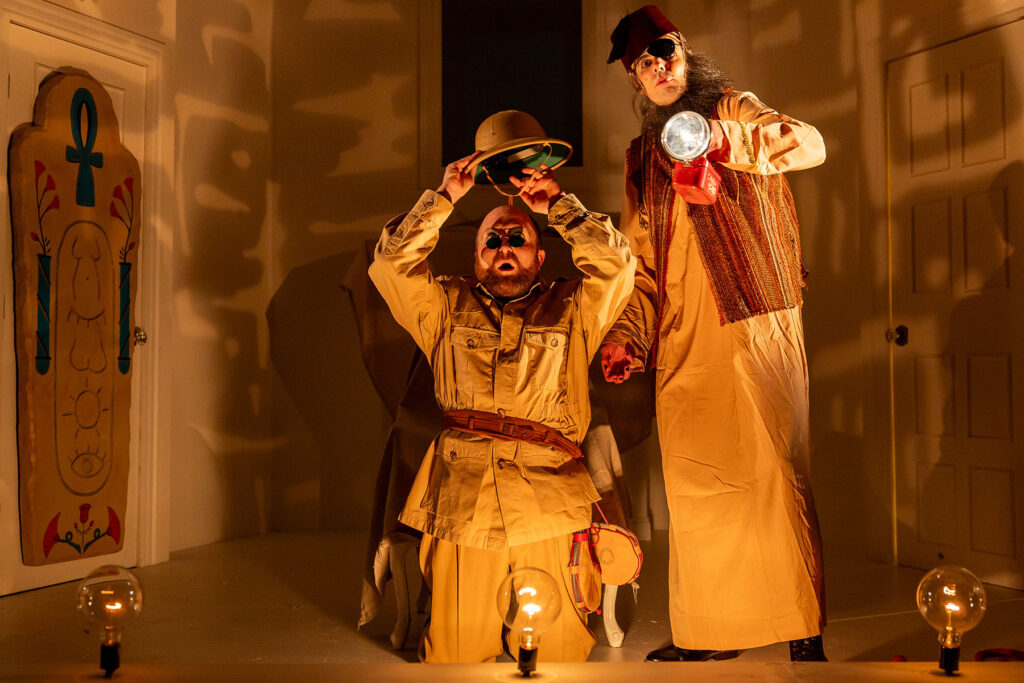
The Mystery of Irma Vep… is funny and ridiculous. But it is serious, too. The play was first performed in 1984, at the height of the HIV/AIDS crisis– just three years before Ludlum himself died from AIDS. With all the frenzied madness of “monstrous” characters trying to hide their darkness from each other (until they don’t), it’s easy to miss that …Irma Vep… is really about loss and the fear of death. One of the characters even laments being doomed to “kill the one he loves most.” Yes, you will laugh. But you may cry, too. I certainly did.