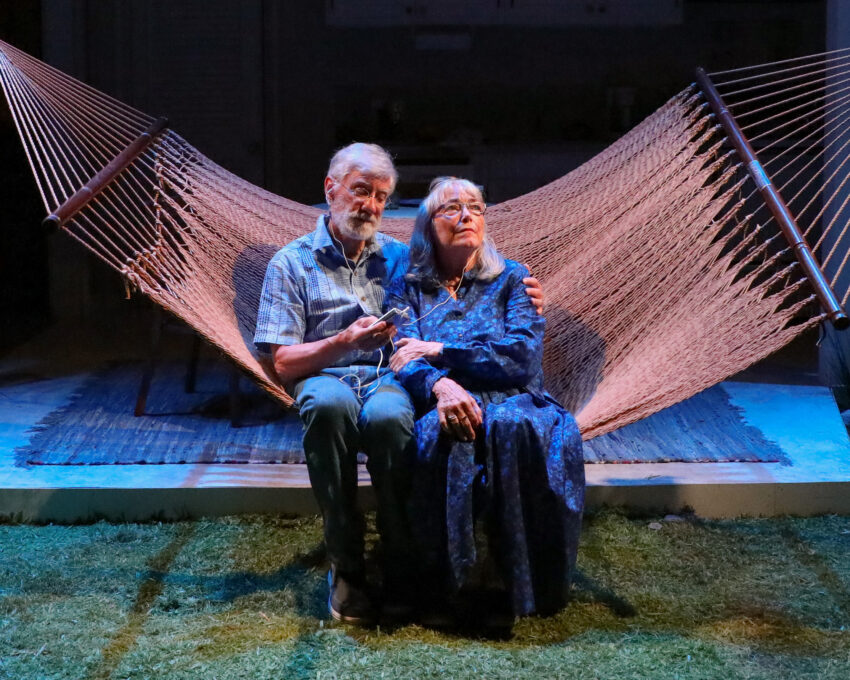
‘Lovesong’ — Written by Abi Morgan. Directed by David Auburn. Scenic Design by Alexander Woodward; Movement Direction by Isadora Wolfe; Costume Design by Amanda Roberge; Lighting Design by Daniel J. Kotlowitz; Composition and Sound Design by Scott Killian. Presented by Berkshire Theatre Group at the Unicorn Theatre, Stockbridge, MA through August 29.
By Shelley A. Sackett
We have all handled times when, faced with a fork in life’s path, we have had to decide which one to take. Moments, years or decades later, it’s hard to resist wondering how our lives might have turned out had we chosen differently, whether we should regret or rejoice in the one we selected.
In playwright Abi Morgan’s ‘Lovesong,’ in production through August 29 at Unicorn Theatre in Stockbridge, she gifts her audience with a glimpse at a couple at the end of a long and complicated marriage. Over 90 intermission-less minutes, we ride shotgun as Maggie (Karen Allen, resplendent) and Billy (a winsome David Garrison) remember themselves as newlyweds Margaret (Rebecca Brooksher) and William (Shawn Fagan) and, together, trace episodes in their four decades of marriage.
Along the way, there are shared moments of joy, silliness, heartbreak and passion. There are also moments of betrayal, boredom, isolation and retreat, any one of which might have sent any one of us on a path straight to a divorce lawyer. Yet, through it all, Maggie/Margaret and Billy/William stay the course, navigating the choppiest waters until, at last, they reach the safe harbor of old age.
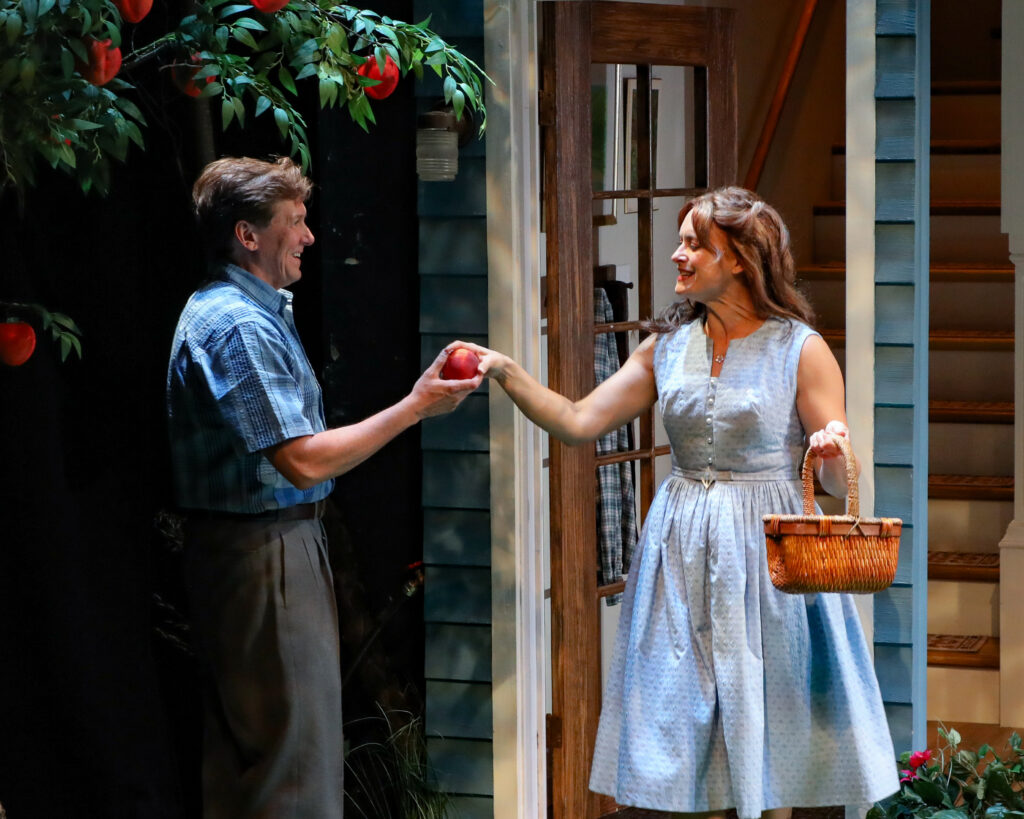
The trigger for this trip down memory lane is Maggie and Billy’s need to clean out the 40 years of stuff they’ve collected during their marriage as they downsize and move on (any more hints would be a spoiler). Each item they unearth sparks memories and instant time travel back to the moment when they first acquired it. Suddenly, their 30-something selves (Margaret and William) appear, reliving that moment as their 70+ selves watch their relationship slowly replay.
And here lies the intersecting brilliance of Morgan’s script, Pulitzer Prize-winning playwright David Auburn’s direction, and Isadora Wolfe’s movement direction. Like the lithest and most appealing dancers, the two couples are on stage together, gliding past each other, seemingly within millimeters, on Alexander Woodward’s stunning two-story set. Complete with kitchen, bathroom, bedroom, staircase and yard, this home is the perfect hearth for a blending of past and present in this sensitive portrayal of aging, memory and indelible connection.
As the play begins, a Medicare-plus-aged Billy stands on the porch, looking over a slightly overgrown lawn and smoking a cigarette. “When I clean my teeth, I always clean them twice… Because our teeth are our legacy, after bones and muscles have dissolved into dust and the earth, our teeth remain. Their value to archaeologists and paleontologists is infinite and undeniable. They reveal what we eat and how we live. I see it as my duty to preserve them,” he informs the audience.
Preserving legacy even seeps into his dreams, he explains. “In my sleep, I am younger.”
He and Maggie (a role that Allen effortlessly owns) talk about the size of the lawn, whether it has shrunk and whether the peaches are ripe enough to eat. Against the backdrop of drumbeat thrum and swelling music (composition and sound design by Scott Killian), they slowly climb the stairs to get ready for bed. Maggie opens the closet door, and Margaret steps out.
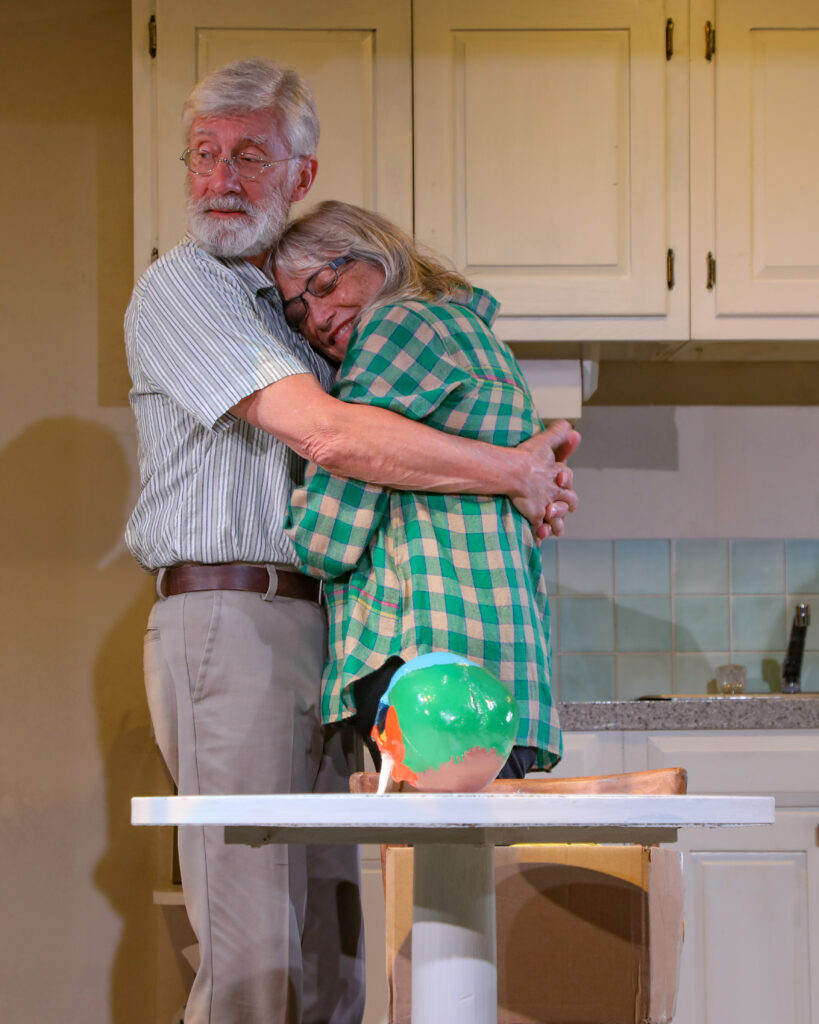
We first meet William and Margaret as newlyweds. Margaret is thrilled by their house, by the prospect of a future full of the patter of little feet. William is a freshly minted dentist who is chafing under the thumb of his boss. Even though the mortgage is stretching their budget to the breaking point, William wants to take out a loan to open his own practice.
He sits alone at the kitchen table, drink in hand. He downs it, goes to the freezer, removes the bottle of vodka, and refills his glass. Twice. When he tells Margaret his plan, she objects. When he tells her he already secured the location and loan, she hits the roof.
For the first time in this newborn marriage, disagreement has arisen. William sees taking a risk as a crucial element of the success of their future together. “There are going to be moments when you have to leap with me,” he says. “Do you trust me?”
The focus shifts back to the present as Billy and Maggie finish preparing for bed. “We can’t stave off the inevitable,” Maggie (Allen) tells Billy (Garrison), continuing the same conversation some 40 years later.
And, just like that, ‘Lovesong’ casts its magic spell. For the rest of the show, we will travel back to those moments that, for specific reasons private to their shared lives, are the bedrock of this couple’s marital narrative.
We witness the good, the bad, the sacred and the profane that take place over the lifetime of this union. They face many bumps in the road — from infidelity and boredom to learning to balance the need to be alone with the realities of marriage. They are loving and they are mean. They cope with childlessness and illness. They rejoice in eating the peach from the tree they plant.
Morgan has a featherlight touch as she hints at the future without tipping her hand. Auburn’s direction is equally understated, and Daniel J. Kotlowitz’s lighting renders the chronological shape-shifting both artful and credible.
It is the cast, however, who really make the conceit work. Allen doesn’t play Maggie; she is Maggie, from her first moment on stage to her last. As Billy, Garrison brings both a boyish charm and sage resignation. The two share palpable chemistry and artistic sympatico.
Fagan’s William wears his heart on his sleeve, moving from arrogant to insecure to sentimental. Brooksher imbues Margaret with a level-headed maturity and candor that meshes, clashes, and blends with her partner.
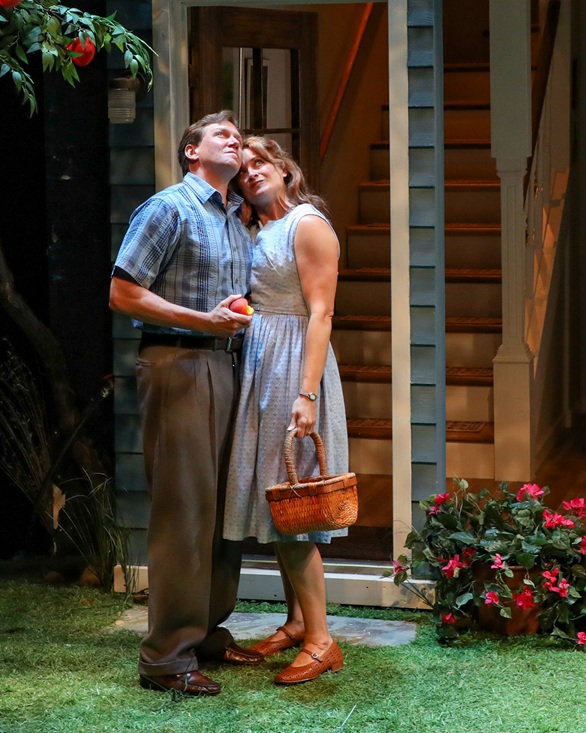
‘Lovesong’ offers its viewers a glimpse through the keyhole at a couple whose marriage survives those crises that present moments of soul-searching questioning: Can I stay in this marriage? Do I want to stay in this marriage? How many have been at that very fork in the road and wondered, decades later, how their lives might have turned out differently if they had chosen differently?
Maggie/Margaret and Billy/William are one of those couples that chose to struggle through together, to sacrifice the small things for the sake of the bigger picture. As the breathtakingly affecting ending illuminates, such a lifetime lived together is a reflection of life’s most resilient, fragile and intimate offerings. Or at least, it can be.
Highly recommended.
For more information, visit BerkshireTheatreGroup.org

What an incredible experience. As a 70 year old with a very long time husband this play and its cast spoke to me with incredible emotion. When the took their bows I was the lady in the back with tears streaming down.
And I was the woman in the third row sobbing right along with you.
SAS