
What the Constitution Means to Me – Written by Heidi Schreck; Directed by A. Nora Long; Set Design by Kathleen Chadwick; Lighting Design by Matthew Brian Cost; Costume Design by Emily Woods Hogue; Sound Design by Andrew Duncan Will. Presented by Greater Boston Stage Co., 395 Main Street, Stoneham, through April 26.
By Shelley A. Sackett
When What the Constitution Means to Me premiered at the Helen Hayes Theatre in New York City in 2018, the country was midway through Trump’s first term. The U.S. Constitution was a frequent headliner as his presidency had already raised significant constitutional questions regarding separation of powers, executive authority, congressional authority, civil rights, and violation of the anti-corruption Emoluments Clause.
All soon to be trumped by immigration policies that continue to occupy center stage eight years later.
With front-page articles about the Supreme Court’s “Shadow Docket” and the murky way in which the whims and interpretations of nine unelected people can uphold or strip away the rights we take for granted as guaranteed, a constitutional primer couldn’t be timelier.
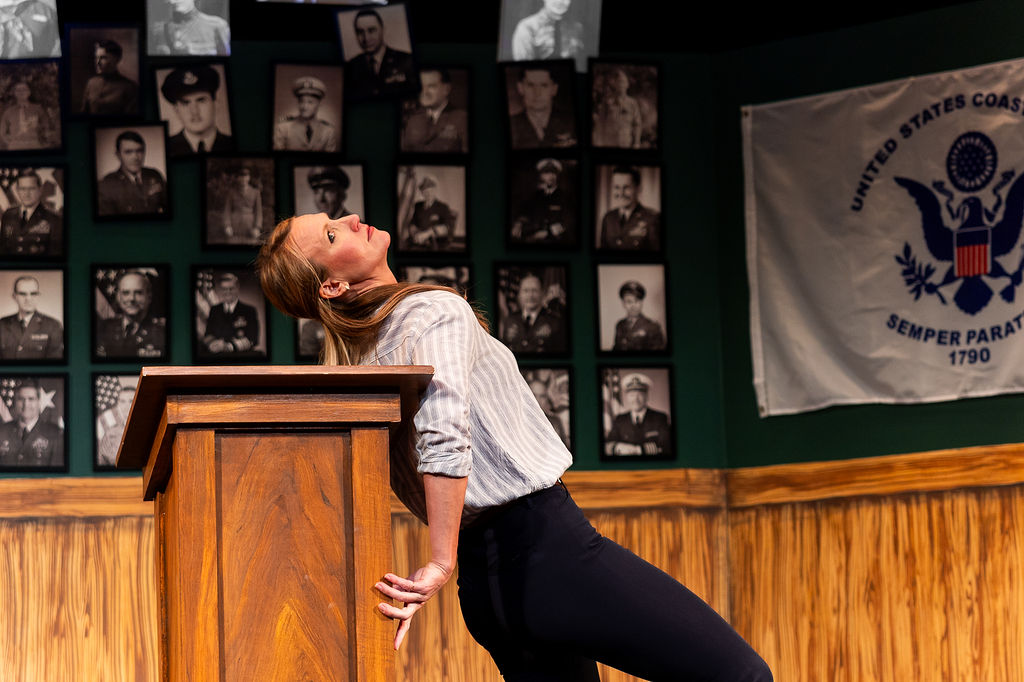
Reading the tea leaves is GBSC’s production of Heidi Shreck’s autobiographical Pulitzer Prize finalist and Tony Award nominee for Best Play. Under A. Nora Long’s direction and starring Janis Hudson in a tour-de-force performance as Shreck, What the Constitution Means to Me is theater that is both good for you and entertaining.
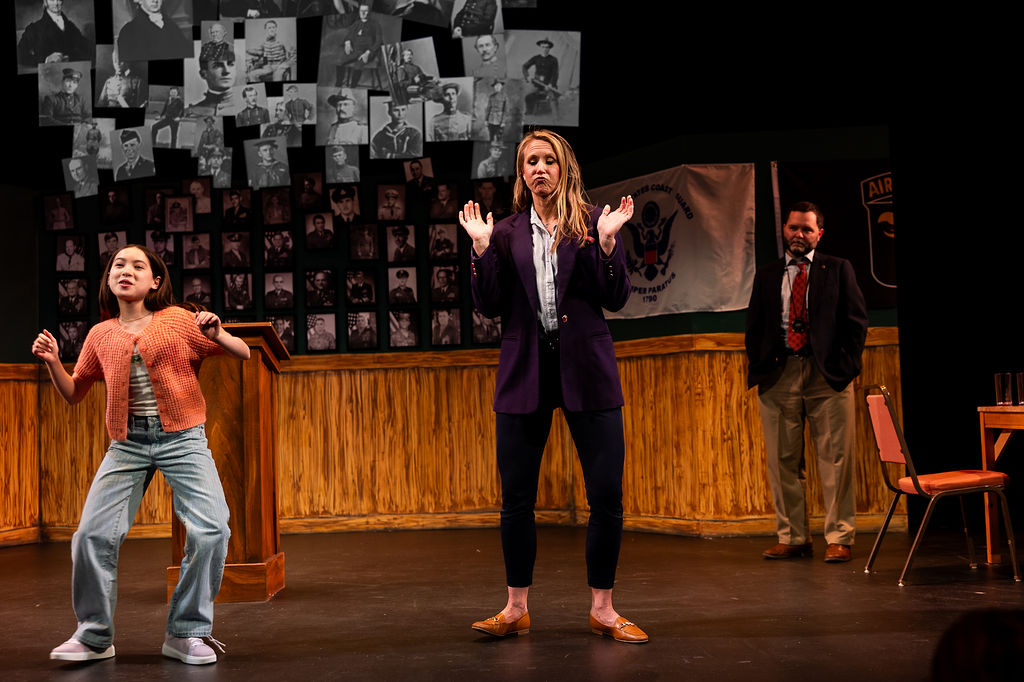
Shreck’s fast-paced, 90-minute near monologue is as political and academic as it is intensely personal. It is also funny, appalling, and even more relevant than when it débuted.
Deliberately breaking the fourth wall, Shreck sets up the play’s premise. She will play both her 15-year-old self, a teenager from Wenatchee, Wisconsin, and her current 40-something self, who will both comment (with incisive hindsight) on her younger self and trace what has happened over the last 25 years.
Set in a drab Legionnaire’s Hall, Shreck explains that she paid for college by traveling across the country (and winning) in competitive debates on the topic, “What the Constitution Means to Me.” She reenacts those debates, drawing on out-of-the-box metaphors (some inspired by her steamy, horny 15-year-old self) as she considers the merits of the Constitution and what it has meant to her and why. She gets misty-eyed when she talks about the Founding Fathers and how they performed a collective act of magic to create the Constitution from the petri dish of values that was then America. She is a true believer in its promise of equal and guaranteed protection for all and trusts in its ability to walk the walk, and not just talk the talk.

Shreck quickly broadens the scope as she explores her personal history (including an abortion), her family history, and actual events to unpack the inherent failures of the U.S. Constitution to live up to its promise. When she gets to herself in her 40’s, she reconsiders what the Constitution means to her now, with her adult awareness and experience.
She challenges us to reconsider the relevance and effectiveness of a document that is ingrained in racial bias and discrimination. Immigration, women’s rights, abortion, and domestic and sexual abuse exemplify areas where the law — and more importantly, its execution — offers different protections for different people. Time and again, a written citizen’s guarantee of protection under the law ends up being just an illusion.
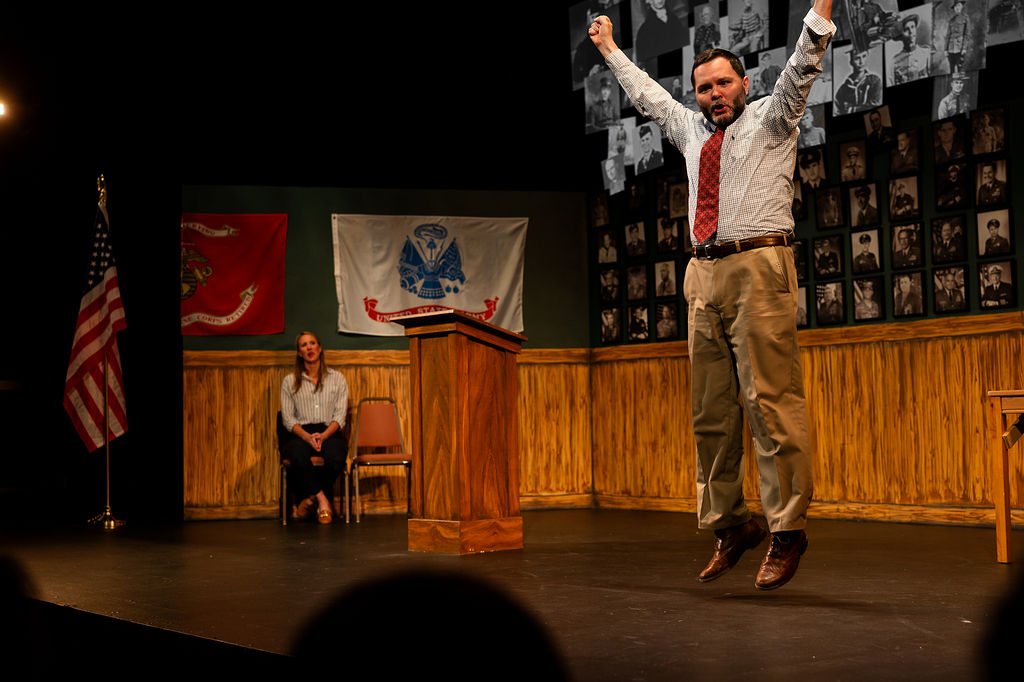
Although the play exposes and delves into the interstitial tissue of constitutional law (which was, full disclosure, my favorite subject in law school), it is not as gratuitous pedagogy or braggadocio. Shreck infuses her script with humor, wit, and drama. Impeccably researched, she also connects many dots with razor-sharp analysis and synthesis. Her deep dives into the 9th and 14th amendments and Douglas’s magic wand that famously implied a right to privacy (among others) from the gossamer concept of “penumbra” are as informative as they are enjoyable and comprehensible.
As Shreck, Hudson commands the stage easily, both a force to be reckoned with and an off-the-cuff, honest woman, impossible not to connect with. (Think Laura Linney in, well, anything). Joseph Marrella, as the Legionnaire facilitator, is a less effective near-distraction when Shreck is her adult self, but his touching story as Danny tips the scale back to neutral.
At the end of the play, Shreck invites a teenager (Maya Feldman and Ayannah Joseph in rotation) to debate whether the Constitution should be abolished or kept (Feldman, who would benefit from projection coaching, last Wednesday night). They flip a coin to see who will argue which side. At the end of the allotted time, an audience member is randomly chosen to decide the winner.
Not a day goes by when we are not reminded that our democracy is, indeed, imperiled. What the Constitution Means to Me (and its complimentary pocket-sized copy of the actual Constitution) drives home how much is at stake and how much we have lost already.
For more information, visit www.greaterbostonstage.org/.