Reviewed by Julie-Anne Whitney
Translations by Brian Friel; directed by Rose Carlson, dramaturgy by Josh Platt, lighting design by Erik Fox, set design by Jessica Algard, costume design by Vienna Volinsky, sound and prop design by Rose Carlson, dialect coaching by Mark Hessler, stage managed by Madelyne Gooltz. Presented by The Longwood Players at Chelsea Theatre Works at 189 Winnisimmet St. in Chelsea, MA through May 16, 2026.
First produced in 1980 in Derry, Northern Ireland, Brian Friel’s Translations has been translated into multiple languages and performed around the world for nearly fifty years. Written during the Northern Ireland Troubles– a heightened conflict between Irish nationalists who wanted a united Ireland and Unionists who wanted Northern Ireland to remain part of the U.K. (a centuries-long struggle that continues to this day)– the play’s themes of political division and the loss of cultural identity could not have been more timely or relevant.
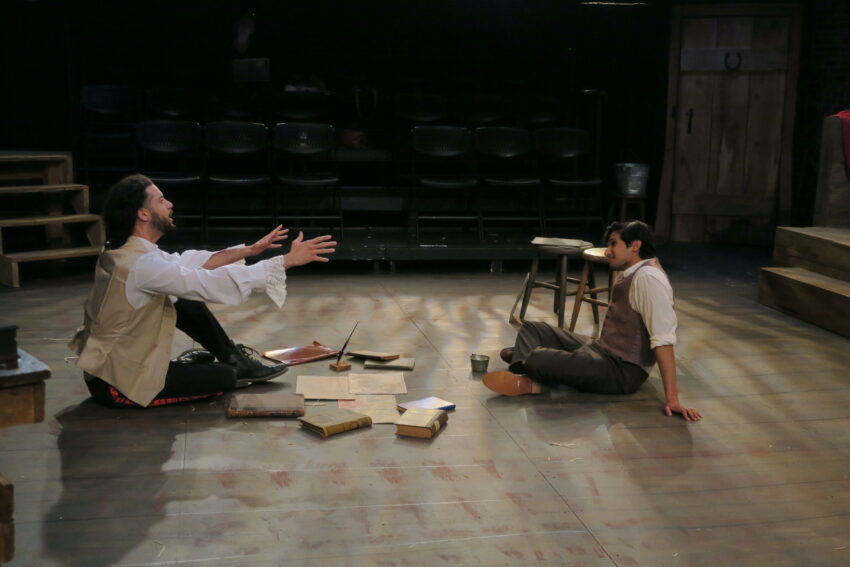
The play takes place in 1833 in the quiet village of Baile Beag. In a small hedge school, Manus (Matt Feldman) is preparing a classroom where locals come to learn reading, writing, and math in both the Irish and English languages. The class is disrupted when Manus’ younger brother, Owen (Raj Mukesh Bhuva), arrives with two British soldiers, Captain Lancey (Carlos Fruzzetti) and Lieutenant Yolland (Gabriel Pagan Gonzalez), who are planning a survey of the area to continue with their creation of an anglicized map of Ireland.
As Owen takes on the role of translator between the British and the Irish, he works on translating local place names with the idealistic Lieutenant Yolland who has fallen in love with Ireland and with Manus’ girlfriend, Maire (Via Gould). Yolland starts to question the ethics and intentions behind the British presence in Ireland and senses that “something is being eroded” in this unfamiliar culture he has grown to admire. Yolland then meets up with Maire and, despite not speaking the same language, the pair make a deep connection and share a kiss. When Manus learns of Maire’s betrayal, he confronts Yolland who then goes missing. The British soldiers begin a massive search for Yolland, and Captain Lancey threatens to kill all livestock, evict the villagers, and destroy their homes if Yolland is not found. The play ends with Owen bravely joining the resistance and his father prophesying about the inevitability of British conquest.
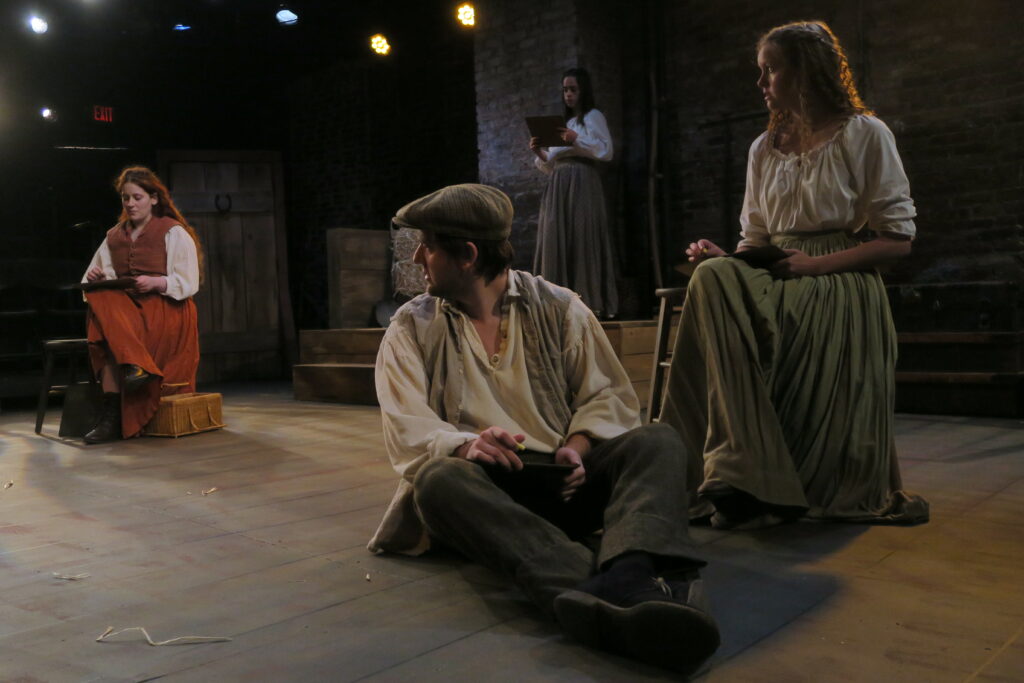
A recurring theme in the play is the barrier of language; how it divides countries, cultures, and communities. It’s not only the language the characters speak that separates them, but also the language of the heart. Their experiences, desires, and fears inform their beliefs which often differ from those with whom they are closest. Though Translations is written mostly in English, the audience is meant to imagine that the Irish characters are speaking in their native tongue. This dramatic conceit allows for the audience to understand what all the characters are saying, even when they don’t understand each other. The audience, then, is able to cross the language barrier in a way the characters cannot.
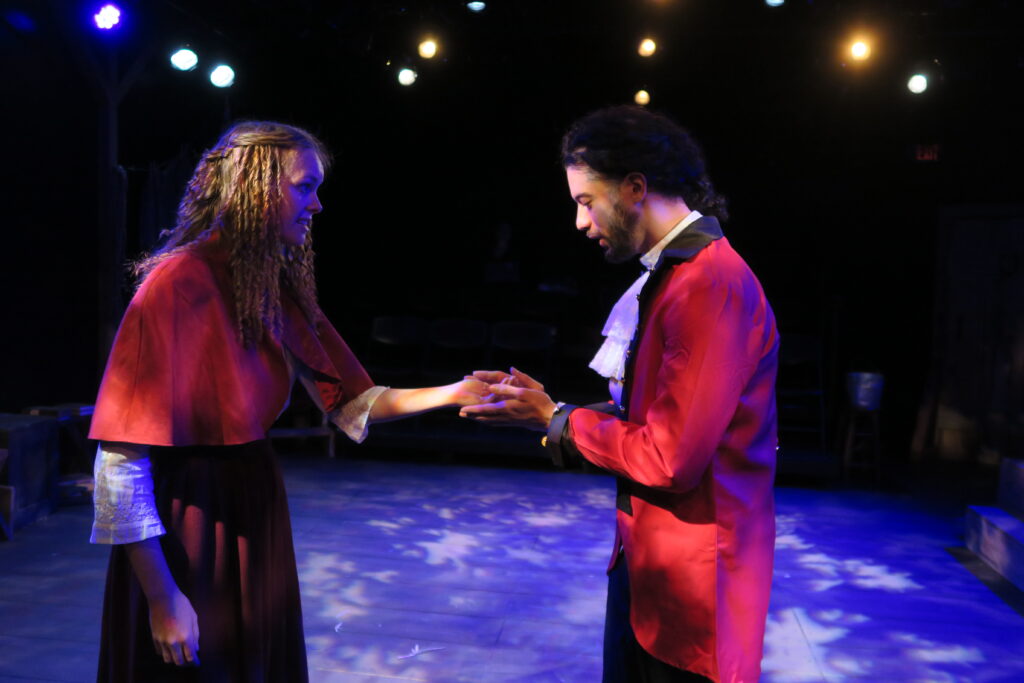
No where is this conceit more poignant than at the end of Act II when Yolland and Maire steal away to meet in the middle of the night. There is something deeply moving about two people trying– despite numerous differences– to understand and connect with each other. This short scene of gentle misunderstanding and charming miscommunication was a beautiful reminder that the things that divide us need not keep us apart forever.
The 10-person cast handled Friel’s long, pedantic scenes and overly expository speeches with conviction. Their dedication to their characters, to each other, and to the story was evident, which is a testament to good leadership in director Rose Carlson and dramaturg Josh Platt. While the cast’s commitment to the Irish dialect was admirable (As Manus, Matt Feldman’s accent was particularly believable), the actors were often difficult to understand. Perhaps it was a diction problem or an issue with the speed of speech, or maybe I’m just not used to hearing such strong, varied Irish accents, but the frequent inability to follow the dialogue was disappointing and– considering the play’s primary theme– rather ironic.
Dasha Artemchuk was a standout in the role of Sarah. As a young girl with a confidence-breaking speech impediment, Artemchuk manages to project a gentle, luminous power in a character that is almost entirely silent. She appears to hold back an ocean of emotion, with her sensitivity and stillness stealing every scene in which she appears.
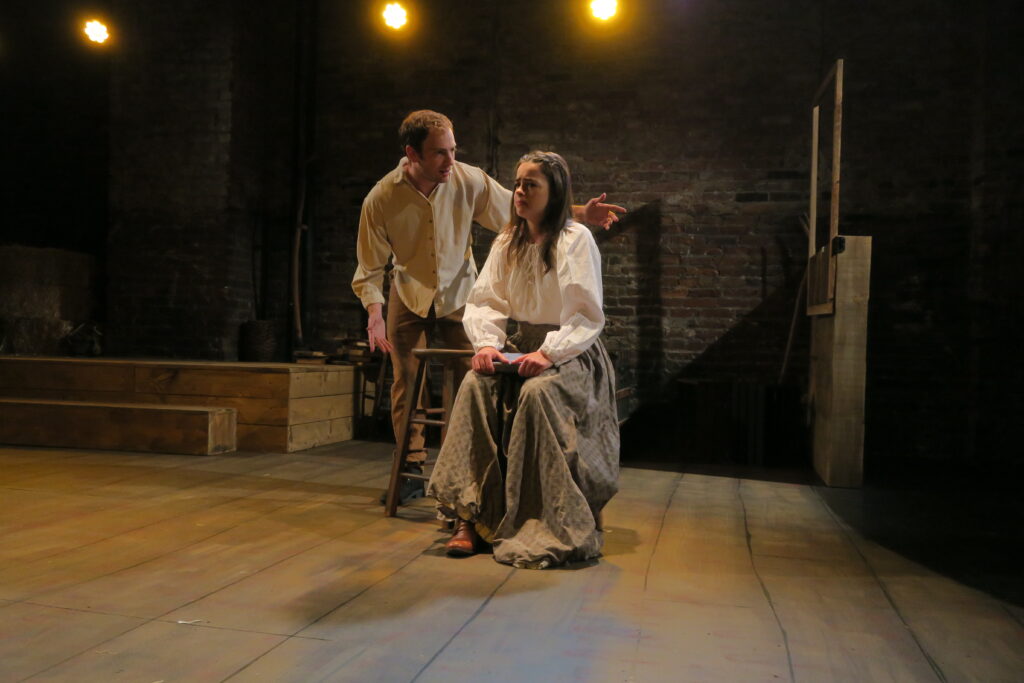
Jessica Algard’s set design was simple and understated, yet effective. The rustic but clean barn-like space created a liveable atmosphere for the actors. The wood and brick made the theater feel welcoming and comfortable (the addition of a small bird’s nest to the crook of a Y-beam was a particularly thoughtful touch).
While it was difficult to discern whether it was truly a design flaw or merely a limitation of a small theater, Erik Fox’s lighting design left me wanting. When the audience is lit, it ceases to feel like a performance. You can’t disappear into the world of a play when audience members in modern dress are just as visible as actors in 19th Century garb. It becomes impossible to suspend your disbelief– which is an essential part of theatrical magic.
The Longwood Players have created a sensitive, thoughtful production of a tenacious, challenging play. Brian Friel’s Translations is a story about people losing their language and their culture at the hands of a ruthless colonizer. It’s also a story about the power of communication and connection in the face of major political, social, cultural, and generational divides. This production may occasionally miss the mark, but choosing to tackle a play that discusses such complex, universal themes is still an admirable thing.