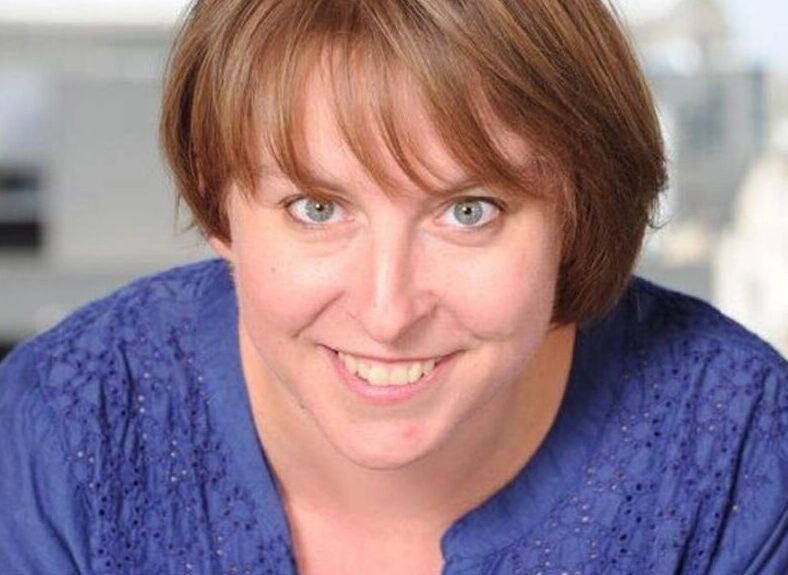
Moonbox Productions originated the Boston New Works Festival in 2020 as a result of the pandemic. Bridget Kathleen O’Leary, Director of New Play Development and Literary Engagement for Moonbox, recalled that the company “was trying to figure out, how do they uplift artists in the midst of this pandemic, when art isn’t being created. How do we keep people creatively engaged? Sharman Altshuler, who’s the artistic director of Moonbox, is really about how can she facilitate artists’ processes? How does she take things that people are excited about and help make them happen?”
This year sees O’Leary and her wife, Jo Williams, take on the task of producing the festival’s fifth year, which, as always, showcases the work of local playwrights. “There are so many talented theater creators in this town, but it’s still incredibly hard for playwrights and directors to get their work seen by producers and presenters,” O’Leary is quoted as saying in the festival’s press release. “With the pressure on theaters to program familiar titles that draw audiences, new works struggle to break through. Our festival creates a vital opportunity to showcase local artists — both emerging and established — and connect them with the mid-size and larger companies that can bring their work to the next level.”
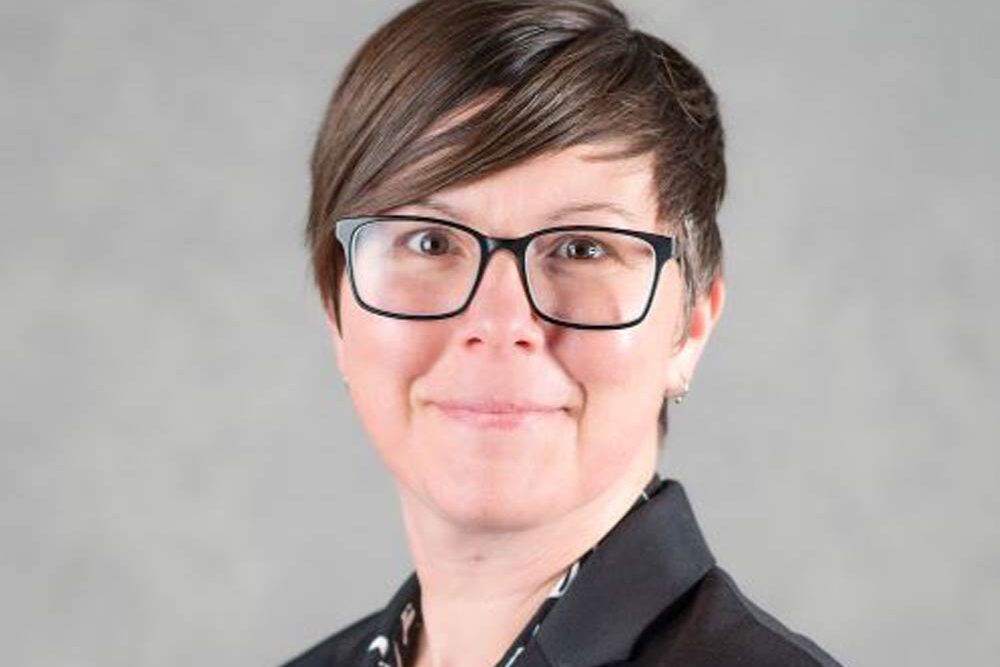
The New Works Festival is slated to run May 7–10 at the Arrow Street Arts Complex near Harvard Square — a first for the festival, which previously took place at the Boston Center for the Arts. This year’s edition will feature two full mainstage productions and four staged readings. The festival is also partnering with the Boston Theater Company to present the BTC’s Queer Voices Festival in conjunction with the Boston New Works Festival, bringing eight 10-minute plays with LGBTQ+ themes to audiences.
Bridget Kathleen O’Leary chatted with Theater Mirror recently about the upcoming festival, its slate of offerings, and why centering new work by local theater makers is so essential.
Theater Mirror: This is the festival’s fifth year. How will it differ from previous editions?
Bridget Kathleen O’Leary: This year’s a pretty huge difference. For the first four years, we were at the BCA, and we took over the entire complex. This year, we have moved to Arrow Street Arts, so we’ve essentially moved from five or six venues to two venues and a lobby that we’re converting into a space. We have 18 performances happening over four days. My wife is the executive producer, and I saw the many, many versions of a schedule that she put together. We have one that works really well. There’s a nice flow between the three spaces. There’s literally always going to be something going on, and I just love that.
Theater Mirror: Is the collaboration with Boston Theater Company’s Queer Voices a new aspect of the festival?
Bridget Kathleen O’Leary: This is our first time collaborating with the Boston Theater Company. Jo, my wife, has production-managed for them the last couple of years, and when we were thinking about how we wanted to approach production, having a 10-Minute festival seemed really fun and a nice mix. And why re-create the wheel when Boston Theater Company has something that works really well and serves a demographic that we want to celebrate as well? They’ve picked the 10-Minute plays, which has also just increased our footprint and how many playwrights we’re serving. We are serving 14 playwrights this year between production readings and the 10-Minute Festival, which, for me, is such a joy.
This is our second year working with Boston Playwrights’ Theater. They select one of their MFA playwrights who’s getting ready to have a thesis production, and we put it in our reading series to give them a 30-hour development process.
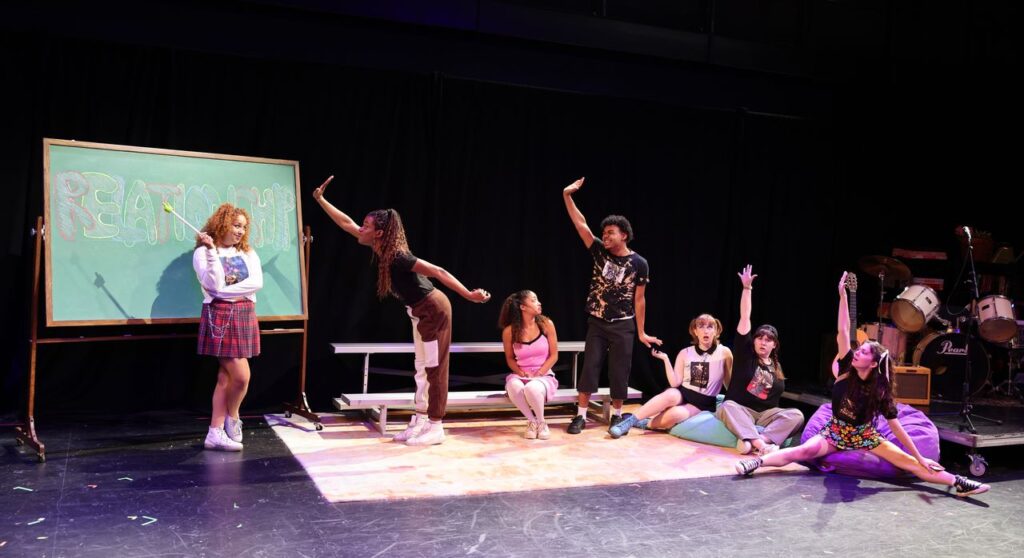
Theater Mirror: Does it feel hopeful, or maybe defiant, to stand up at this moment and have those short queer plays be part of the festival?
Bridget Kathleen O’Leary: Theater is supposed to be relevant. Theater is supposed to be compelling in addition to entertaining, right? It’s supposed to uplift us, but it’s also supposed to provoke us. I think right now it is essential that we continue to uplift the voices of our queer communities.
Theater Mirror: A major part of the festival’s goal is to break through what I think you called “the familiar titles barrier” in order to get new work in front of people who decide what gets produced on the city’s stages.
Bridget Kathleen O’Leary: A lot of the artistic directors that I know personally, I admire so much, and everything that they’re navigating right now. Theater artists are really fighting to keep their heads above water right now, and so I don’t begrudge them anything to do with their programming. I think audiences have to be curious. I think that they need to stop searching for the shine of a New York review; the buzz of Broadway needs to be not the driving factor for how we see theater. If you are someone who has stood in line to see Hamilton or Hadestown here at the Colonial, or anything that’s just come off Broadway and is coming into Boston, if you paid $100 for a ticket, you have to know that there was an audience that was first. There were people who sat in a development room, who sat in a first run-through or workshop production of those shows, and they get to walk around in the world and say, “I was there” — like, I actually was one of the first audiences. I think that is more exciting than being able to say that you just saw the Tony Award-winning blah, blah, blah, right? I think producers need to have the encouragement of audiences who are seeking out new and exciting things. Yes, go to New York! You should go to New York, you should get really excited about those shows, but then come home and be curious about what’s happening here.
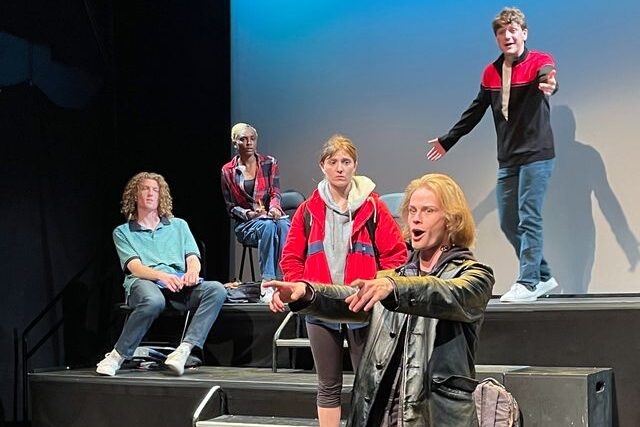
Photo by Adam Richens
Theater Mirror: Do these new works primarily represent emerging playwrights just emerging for the first time, just getting their first works done? Or are established playwrights also contributing?
Bridget Kathleen O’Leary: Established players are also contributing. A couple of years ago, we had Regie Gibson, who’s the current Poet Laureate of Massachusetts. He wrote a musical called The Juke, which was an extraordinary retelling of The Bacchae. We’ve had players like Patrick Gabridge. We’ve had John Minigan. These are writers who continue to get their work produced, not just in the Boston area, but regionally. This year, we have Deirdre Girard, who’s a local playwright who has gotten a lot of local traction, is with us. We have Ken Green, who moved here from Chicago, but he gets a lot of work all around the country. These are all writers who have chosen to make their life and their work here in the Commonwealth. So, we do have a lot of emerging playwrights that we serve in the festival, and we are serving emerging playwrights here, but we’re also serving established playwrights. I love that as well. I love that we get the diversity of voices that are coming across.
Kilian Melloy: The festival includes two fully staged productions: When Santa Fell to Earth, a musical by Laura Waxdal and co-lyricist and composer Mark Hartman, which is going to be directed by Alison Choat, and also Crime Fiction by Deirdre Girard, which will be directed by Shana Gozansky. When Santa Fell to Earth sounds very much like a parallel to certain situations in the current moment.
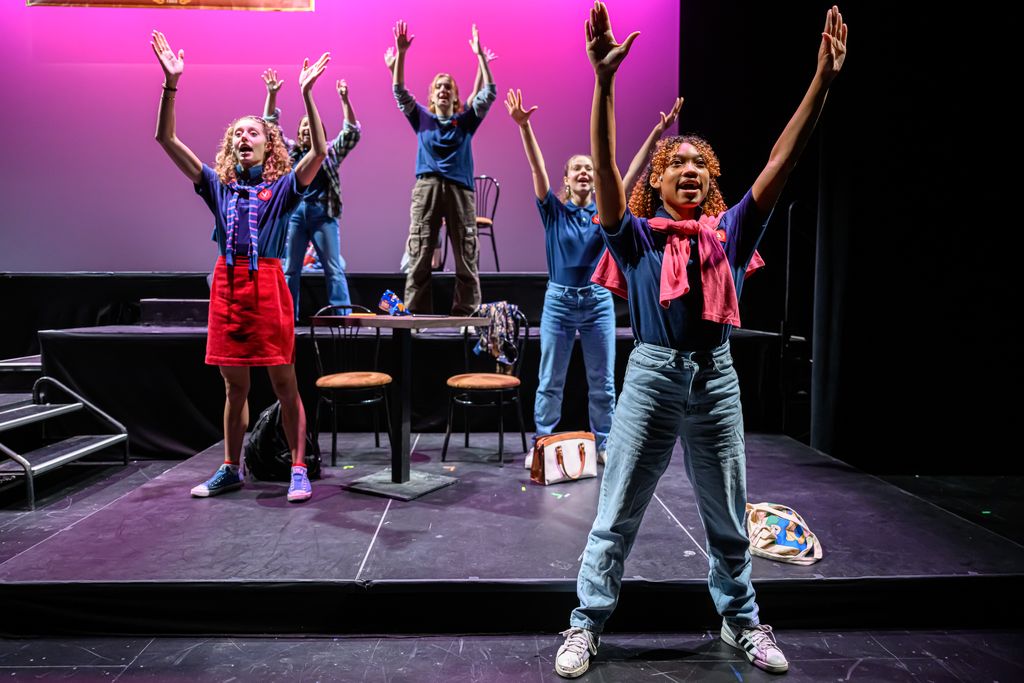
Bridget Kathleen O’Leary: When Santa Fell to Earth is based on a children’s book. There is Nicholas Goodfellow, who is sort of like the Robin Hood of Christmas, who comes to try to do good for the kids. And then you have the evil Santa, who’s trying to find money and power and take over. I sat through the first read-through, and we were all sort of sitting there being like, “Oh, wow, who knew that a children’s musical about the existence of Santa Claus could actually also be about right now?” I don’t even know that Laura was trying to be politically subversive, but it absolutely feels relevant right now to bad guys silencing good guys and people trying to fight for underserved communities.
Theater Mirror: Crime Fiction is a writer’s group murder mystery — it sounds like terrific fun.
Bridget Kathleen O’Leary: I’ve gotten to direct a Dierdre Girard play. I love her writing. I love her voice. I would have loved to have directed this, but I can’t with the festival. I can’t imagine a better person to hand this off to than Shana Gozansky, who’s also worked all over Boston. But Crime Fiction really is a thriller, and I love that. If When Santa Fell to Earth is unintentionally relevant right now, Crime Fiction is extremely entertaining. I think the spectrum of what theater can and should be is represented in the titles that we have this year.
Theater Mirror: Let’s talk about the staged readings. The array of work is amazing: White Phoenix, by Yide Cai, is a drama about siblings separated by adoption, one of them growing up in the U.S. and the other in China. That one is a collaboration with Boston Playwrights’ Theatre. Port of Entry, by Talya Kingston, is about the Muslim ban and its unexpected dimensions and impacts on real people, and M. Bevan O’Gara is directing that reading. And Ken Green’s Tell Her What She’s Won Johnny, directed by Audrey Seraphin, is about a woman named Ruth, the first Black woman to appear on a national game show — Ruth just wants a refrigerator, but there are expectations around representing a whole community. Is that based on a true story?
Bridget Kathleen O’Leary: I think that is a fictionalized account that Ken has put together, but he’s done it so well that I imagine people are going to finish watching that reading and Google immediately, trying to figure out who this Ruth is, and did she really exist?
Theater Mirror: That sounds so real. So do the other short plays, actually.
Bridget Kathleen O’Leary: The fun fact about Port of Entry is Talya actually wrote that, I think, in 2019, during the original Trump administration. It’s kind of sad that she wrote it that long ago, and here we are again. I think one of the best things about that one is it hits really hard, but it also hits with humor. That’s the easiest way to get the hard news.
Theater Mirror: The fourth staged reading is Catia’s Good: A Play About Gods in the Ghetto, directed by Afrikah Selah. It’s about a neighborhood dominated by a ruthless figure, and the power vacuum that succeeds him.
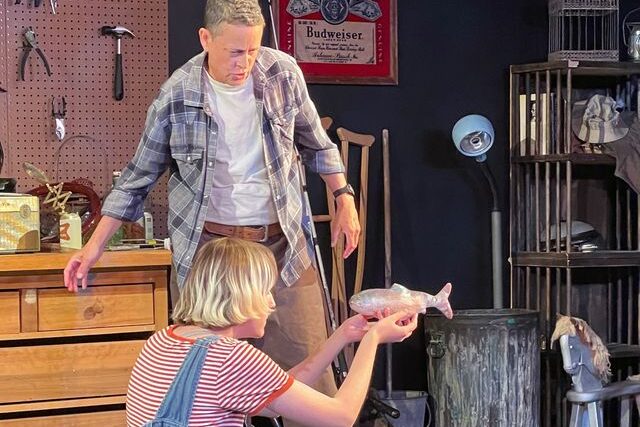
Bridget Kathleen O’Leary: That one excited me because Catia’s using Greek mythology and putting it in a modern context, in this particular neighborhood with characters who are all fighting in the same way that the Greek gods were fighting each other. It is another one that is done with humor. It was one of the plays I was most excited about when I got to read it in the selection process — it was like, “Yes, I want to see this writer take this play as far as she can.”
Theater Mirror: What is coming up in the future for you?
Bridget Kathleen O’Leary: I gotta tell you, I love producing. My time at New Rep taught me so much. I didn’t know until this year, when Jo and I started approaching the festival as producers, how much I really was going to love doing it. So, my hope is that what’s next for me is producing year six of the festival.
The Boston New Works Festival runs May 7 – 10 at the Arrow Street Arts Complex. For tickets and the full schedule, click here