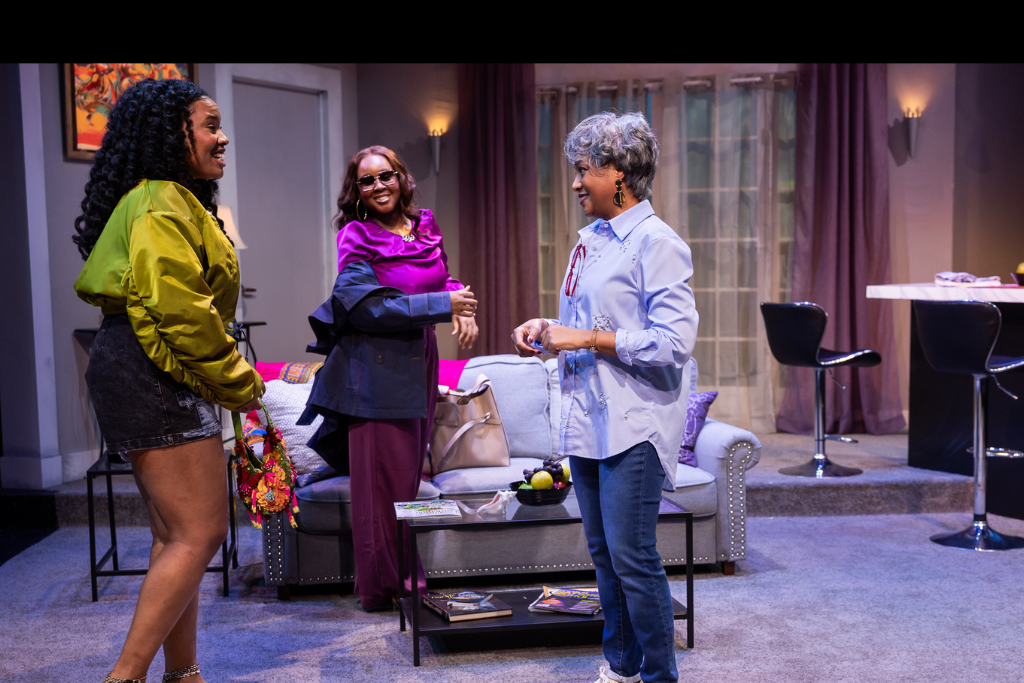
Angry, Raucous, and Shamelessly Gorgeous by Pearl Cleage; Directed by Jacqui Parker, Scenic Design by Janie E. Howland, Costume Design by Chelsea Kerl, Lighting Design by Karen Perlow, Sound Design by Aubrey Dube, Props by Julia Wonkka, Stage Managed by Nerys Powell. Presented by The Lyric Stage Company of Boston at 140 Clarendon Street in Boston, MA, through April 12, 2026.
By Julie-Anne Whitney
Aging is not usually perceived as an enjoyable part of life–particularly for women. As women age, they are wrongly seen as less interesting and appealing, less sexy and beautiful, and less useful and valuable. This is especially true for actors, singers, and dancers–professions that all but require women to remain young and beautiful, even falsely so, in order to stay successful.
At the center of Lyric Stage Company’s production of Pearl Cleage’s Angry, Raucous, and Shamelessly Gorgeous is Anna Campbell (Patrice Jean Baptiste), an older Black actress whose claim to fame was a one-woman show in which she performed–in the nude–all the male monologues from August Wilson’s plays. The controversial piece was both a praise of Wilson’s venerated writing, but also a protest of how his female characters were relegated to the background. Decades later, Anna is now set to receive a lifetime achievement award and, she believes, to give a farewell performance of “Naked Wilson” in a touring festival show. Her manager, Betty (Inés de la Cruz), doesn’t have the heart to tell Anna that she won’t be performing and pleads with festival producer, Kate (Deannah “Dripp” Blemur), to break the news. Anna’s fear of being replaced by an uninformed, inexperienced younger actor comes true when Kate reveals that she has hired Precious “Pete” (Yasmeen Duncan), an exotic dancer and adult film actor, to perform Anna’s iconic role. The play’s central conflict occurs when these four Black women from different generations and backgrounds must face their opposing views on art, activism, female power, and personal agency. What ultimately brings them together, though, is their shared experience of sexism– both within the Black community and the wider patriarchal world.
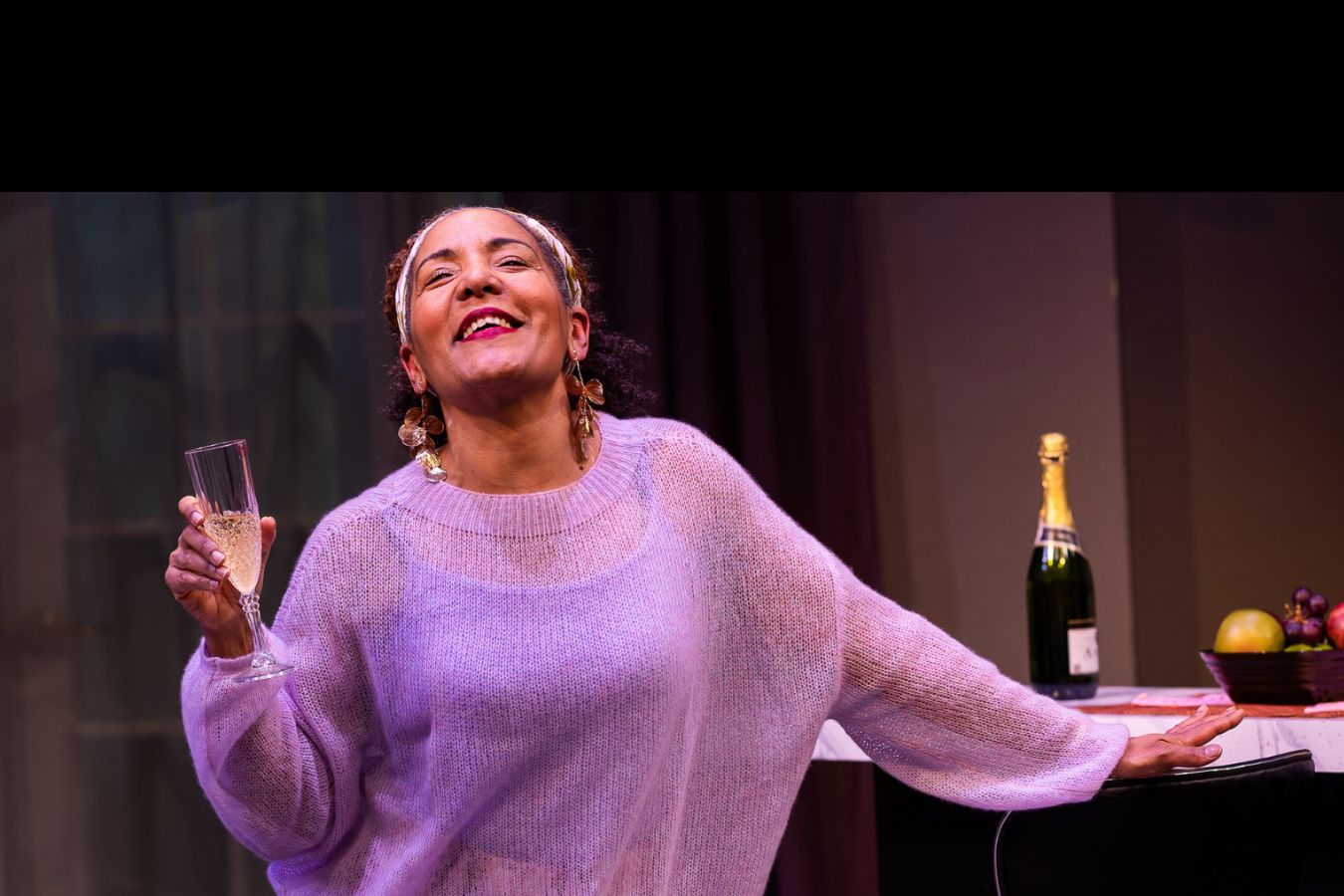
Despite the intriguing plot, Cleage’s script is quite a letdown. Very little actually happens in the play as the characters spend most of their time telling stories. All of the action happens off stage–from Anna’s infamous “Naked Wilson” performance and the time when protestors stormed the stage and removed her from the theater, to Pete’s altercation with an aggressive male spectator and her viral rooftop performance of Rose’s monologue from Fences. Theater is an art form that requires more showing than telling, and Angry, Raucous, and Shamelessly Gorgeous falls short on this.
The four-person cast did their best with the material they were given. Baptiste (Anna) occasionally commanded the space when the dialogue allowed her to, and Duncan (Precious “Pete”) brought some much-needed, albeit sometimes chaotic, energy into her scenes. Stumbling with their lines throughout, de la Cruz (Betty) and Blemur (Kate) gave shaky, unconvincing performances, which made it difficult for the audience to fully settle into the experience.
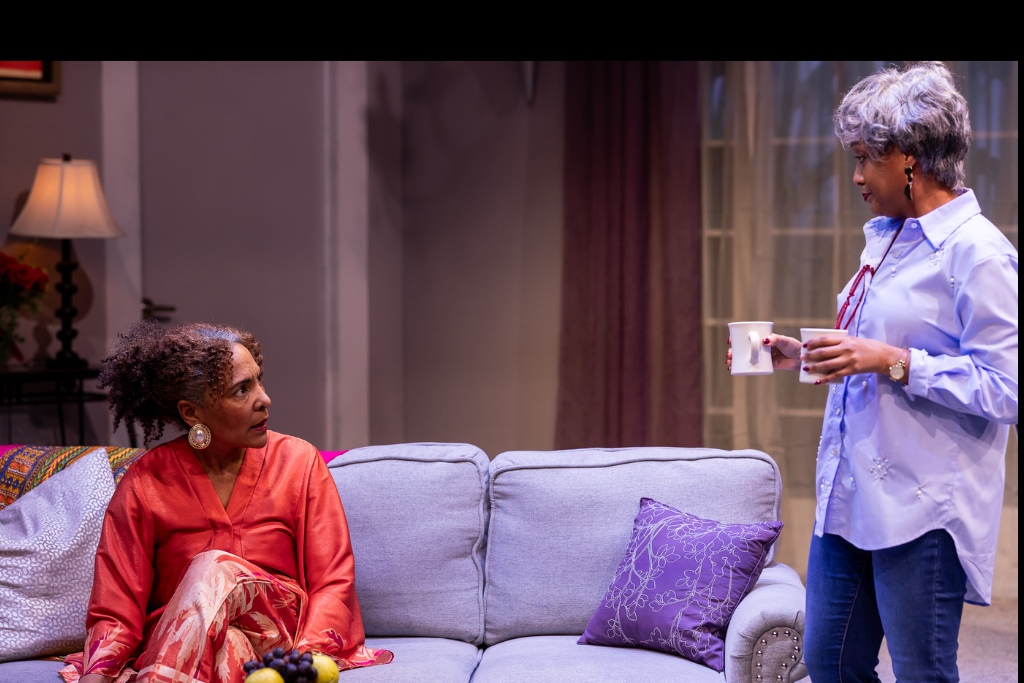
Sadly, the play also doesn’t give designers much opportunity to shine. Scenic designer Janie E. Howland created a convincing hotel room complete with French doors and a semi-realistic rain effect, which was lighting designer Karen Perlow’s only textured moment, as the static set and inactive plot didn’t allow for much else. Costume designer Chelsea Kerl created a few stand-out costumes for Anna–loose, flowy, comfortable fabrics with vibrant patterns and eye-catching jewelry that affirmed the character’s strong personality.
Stories that center older women and focus on female power and resilience are stories worth listening to. Cleage’s characters–women who, as Anna puts it, do things “on [their] own terms” – are characters we should know. We should always uplift Black playwrights, and we should be producing more plays that center Black women. But surely there must be better plays out there that can tell these stories more effectively. It is a disservice to the actors, the production team, and a willing audience to produce plays that leave everyone dissatisfied and disappointed.
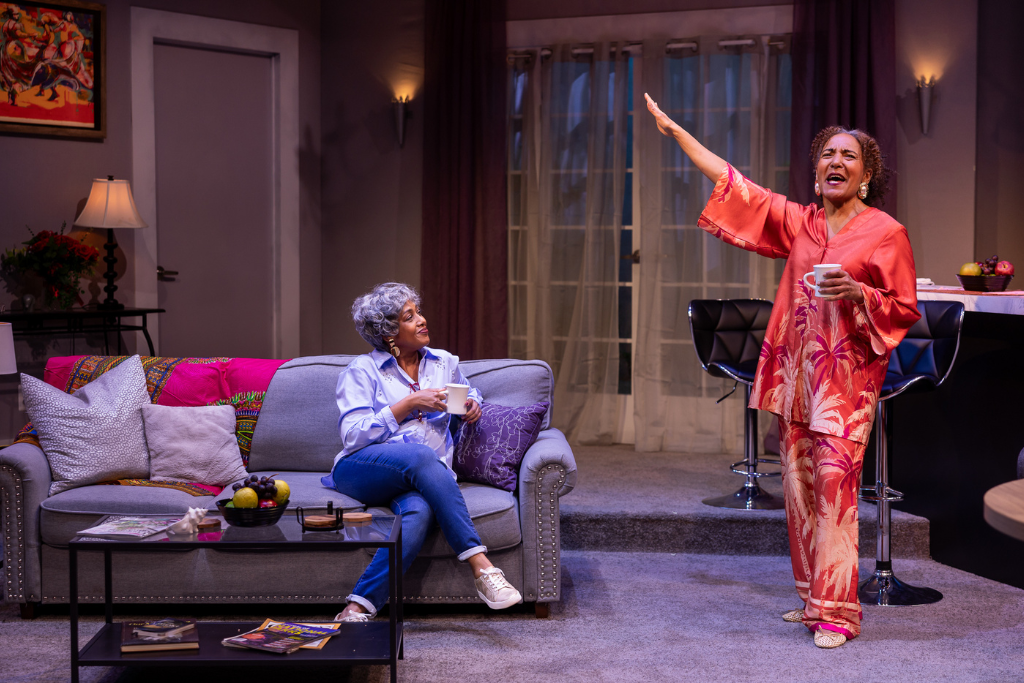
That being said, one thing Cleage’s play does well is emphasize the grief that many aging women feel when faced with the loss of their power and perceived value. Anna’s anger at being replaced by a younger, inexperienced woman is entirely valid. But her anger is also laced with fear–fear of being forgotten, of no longer being wanted or needed; fear of becoming invisible, of no longer being seen as relevant–which is something most women can relate to. Cleage’s play is a shamelessly loud reminder that older women are worthy of our time and should be treasured–for their wisdom and experience, for their unique perspective and valuable insight. Her message is clear: these women will no longer accept being pushed into the background, and they will make space for themselves–whether people like it or not.
For more information and tickets, go to: https://www.lyricstage.com/